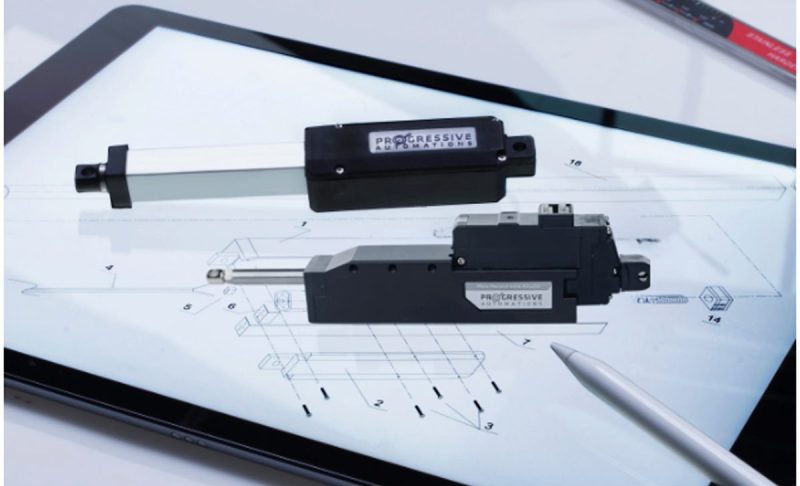
Linear motion, such as push and pull movements, is needed in many automation applications. Whether for manufacturing or other activities, these movements allow to lift, drop, or tilt objects. For many decades, hydraulic and pneumatic actuators were used to provide these movements. However, since the invention of the electric linear actuator, this has been the preferred solution in most cases and also unmasking counterfeit microchips.
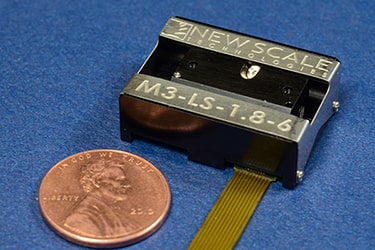
Electric actuators are easy to install and set up. Moreover, one can control the movement with superior precision. As a result, linear actuators can perform countless tasks in different settings. More recently, for example, they’ve been used for home and office automation. In many of these cases, actuators don’t need to have a large force and/or a long stroke. Sometimes, a micro linear actuator is enough for the task.
Micro linear actuators are used in applications in which a very short stroke is needed. Generally, the stroke of this type of actuator is between 10 and 100 millimeters. Most micro linear actuators are quite compact. For the same reason, they don’t have much force. There is little room in the casing to accommodate a powerful motor.
This type of actuator is the ideal solution when the application needs simple, yet clean and smooth, movement. Moreover, one can control the movement very accurately. These characteristics enable these actuators to function in applications such as:
- Robotics. Micro linear actuators provide fine movement to different types of robots. For instance, some robots have been created to assist surgeons with chirurgical procedures. In such applications, very fine movement and precision are a must. But there are many more robotic applications such as the adjustment and focusing of optical devices. These applications will continue growing as improved micro actuators become available in the market;
- Automotive Industry. Modern cars have many automated components. Doors, headlights, spoilers, mirrors, and more can be adjusted with a push of a button. Micro linear actuators provide the movement for all these applications;
- Home and Office Automation. The use of micro-electric actuators can turn your home or office into a more comfortable space. One of the most common applications is the automation of cabinets. But there are many more possibilities with this type of actuator.
What are the technical characteristics that make micro linear actuators suitable for this type of application? Let’s discuss them in detail.
Technical characteristics of micro linear actuators
Micro linear actuators, as mentioned, have small sizes. This makes them ideal for installation in very confined spaces. Because of the small motor a microactuator uses, the dynamic force is usually below 25 lb. But the short stroke allows for very fine movement. Also, the small motor doesn’t draw a large electric current. This means that their electricity consumption is minimal. When they are operated with batteries, they don’t deplete them quickly.
But one of the best characteristics of this type of actuator is its accuracy. The linear movement can be controlled with an accuracy of up to 100 micrometers. This is possible because a servo motor provides rotation. This type of motor is controlled with a special electronic circuit in most cases. This allows for more tech-savvy implementations.
Implementing a more tech-savvy micro linear actuator
Micro linear actuators are available at different speeds. However, this doesn’t mean that you’ll necessarily find an off-the-shelf option for your application. In such a case, the actuator’s speed has to be changed. The simplest way to do it is by changing the gears. This solution works, but by changing the speed in this way, the dynamic force is also altered. Thus, there are more tech-savvy ways to adjust the speed of a micro linear actuator. Let’s review them below.
1. Adjust speed with the controller
Most micro linear actuators are sold with a control board. This is an electronic controller that allows adjusting the speed and other parameters. Through the use of different input signals, the actuator’s speed can be adjusted to the speed you need. However, bear in mind that the maximum speed cannot be increased in this way. The linear actuator control (LAC) board allows adjusting the speed below the maximum permissible value.
2. Adjust speed via arduino
Arduino can be regarded as a general LAC board. The advantage is that you can customize the input and output signals. However, you cannot make the speed reach a higher value than the maximum provided by the motor.
3. Adjust speed by adjusting input voltage
Another way to reduce speed without major complications is by reducing the input voltage. The relation of speed to voltage is more or less linear. So, if you apply 6V to a micro linear actuator rated for 12V, the speed will be roughly halved. By using an adjustable power supply one can adjust the speed to the exact required value.
Conclusion
You probably will have to make some adjustments to an off-the-shelf micro linear actuator for your specific application. Speed is the most common parameter that should be adjusted. You can do it electronically. However, in such cases, you cannot increase the speed above the maximum permitted by the motor.
Other articles from mtltimes.ca – totimes.ca – otttimes.ca