

Understanding the Key Challenges in Global Logistics
Global logistics sits at the heart of international trade, enabling goods to move efficiently between manufacturers, suppliers, and consumers across borders. In today’s interconnected economy, logistics networks are more complex than ever, spanning multiple countries, regulatory environments, transport modes, and technologies. While this complexity creates opportunity, it also introduces significant challenges that can disrupt supply chains, inflate costs, and impact customer satisfaction.
Over the past decade, global logistics has been tested by geopolitical instability, pandemics, climate-related disruptions, labour shortages, and rapidly shifting consumer expectations. Businesses now face mounting pressure to deliver faster, cheaper, and more sustainably while maintaining resilience in the face of uncertainty. Understanding these challenges, and more importantly, how companies are responding to them, is critical for anyone involved in global trade, shipping, or supply chain management.
Key Challenges in Global Logistics
Supply Chain Disruptions and Uncertainty
One of the most significant challenges in global logistics is supply chain disruption. Events such as port congestion, natural disasters, geopolitical conflicts, and public health crises can quickly ripple through global networks. Delays in one region often result in shortages, missed delivery windows, and higher costs elsewhere.
The interconnected nature of modern logistics means that even minor disruptions can escalate into major operational issues. Many businesses discovered during recent global crises that their supply chains lacked visibility and flexibility, making it difficult to respond quickly when conditions changed.
Rising Transportation and Fuel Costs
Transportation costs continue to rise due to volatile fuel prices, increased demand for shipping capacity, and regulatory changes aimed at reducing emissions. Ocean freight rates, air cargo pricing, and last-mile delivery costs have all experienced significant fluctuations in recent years.
These pressures affect not only freight but also passenger and leisure transport sectors. Broader maritime transport trends are regularly examined in cruise industry reporting on MTL Times, which highlights how fuel volatility and operational efficiency challenges span both commercial and tourism-driven shipping.
Port Congestion and Infrastructure Constraints
Many of the world’s major ports are struggling with congestion caused by increased trade volumes, limited infrastructure investment, and labour shortages. Delays at ports can result in extended dwell times for containers, missed connections, and knock-on effects across entire logistics networks.
In some regions, ageing infrastructure is unable to support modern shipping demands, while in others, rapid growth in trade has outpaced development. These constraints make it harder for logistics operators to maintain predictable delivery schedules and service reliability.
Regulatory Complexity and Compliance
Global logistics must navigate a complex web of international regulations, customs requirements, and trade policies. Changes in tariffs, sanctions, and border controls can significantly affect shipping routes and costs.
Regulatory challenges are closely tied to global mobility and cross-border movement. Ongoing analysis of these issues can be found in MTL Times travel-related coverage, which explores how policy, documentation, and border requirements influence international transport and trade flows.
Labour Shortages and Workforce Challenges
Logistics relies heavily on skilled labour, including drivers, warehouse staff, port workers, and supply chain planners. Labour shortages in key markets have increased competition for talent and driven up wages, adding further pressure to operating costs.
At the same time, logistics roles are becoming more technologically advanced, requiring new skills in data analysis, automation, and digital systems.
Sustainability and Environmental Pressures
Environmental sustainability has become a defining challenge in global logistics. Governments, investors, and consumers are demanding lower emissions, greater transparency, and more responsible supply chain practices.
Meeting these expectations while maintaining efficiency and profitability requires significant investment in cleaner technologies, alternative fuels, and improved logistics planning.
How Companies Are Solving These Key Challenges
Improving Visibility Through Digital Supply Chains
To address uncertainty, companies are investing in digital platforms that provide real-time visibility across their logistics networks. These tools allow organisations to monitor shipments, anticipate delays, and adjust routes dynamically.
Industry reporting such as logistics-focused analysis on MTL Times highlights how digital transformation is improving supply chain transparency and operational resilience across global markets.
Diversifying Suppliers and Transport Routes
Rather than relying on single suppliers or shipping corridors, companies are diversifying sourcing strategies and transport routes. Nearshoring, multi-sourcing, and regional distribution hubs reduce exposure to geopolitical risk and region-specific disruptions.
This approach prioritises resilience and continuity over short-term cost savings.
Using Automation to Offset Labour Shortages
Automation is increasingly being deployed to counter labour shortages and improve consistency. Robotics, automated picking systems, and smart warehouses enable higher throughput while reducing dependency on manual labour.
These systems also support faster fulfilment and improved accuracy, both of which are essential for meeting modern customer expectations.
Reducing Costs Through Smarter Transportation Planning
Companies are reducing logistics and transportation costs by consolidating shipments, optimising routes, and using multimodal transport solutions. Shifting freight from air to sea or rail where feasible is a common cost-control strategy.
According to the World Bank’s Logistics Performance Index, countries and businesses that invest in integrated logistics planning achieve better reliability, lower costs, and stronger trade competitiveness.
Strengthening Compliance With Digital Tools
Digital customs platforms and automated documentation systems help companies comply with international trade regulations more efficiently. These tools reduce clearance delays, minimise errors, and provide traceable audit records.
By centralising compliance processes, businesses can adapt more quickly to regulatory changes across multiple jurisdictions.
Advancing Sustainability Initiatives
Sustainability has become a strategic priority in global logistics. Companies are investing in fuel-efficient fleets, alternative fuels, and carbon tracking systems to meet environmental targets.
Guidance from the World Trade Organization on sustainable trade and logistics emphasises the importance of aligning environmental responsibility with long-term economic growth.
Final Take
Global logistics faces mounting challenges driven by economic volatility, regulatory complexity, rising costs, labour shortages, and sustainability pressures. However, companies that invest in technology, diversify risk, and embrace smarter logistics strategies are better positioned to succeed.
By improving visibility, automating operations, strengthening compliance, and reducing environmental impact, logistics leaders are building supply chains that are more resilient, efficient, and future-ready.
Frequently Asked Questions
What are the biggest challenges in global logistics today?
The biggest challenges include supply chain disruptions, rising transportation costs, port congestion, regulatory complexity, labour shortages, and sustainability requirements.
How do supply chain disruptions affect global logistics?
Disruptions lead to shipment delays, inventory shortages, increased costs, and reduced customer satisfaction. Because global logistics networks are interconnected, disruptions often have cascading global effects.
How are companies reducing logistics and transportation costs?
Companies are reducing costs through route optimisation, shipment consolidation, automation, diversified sourcing, and long-term carrier partnerships.
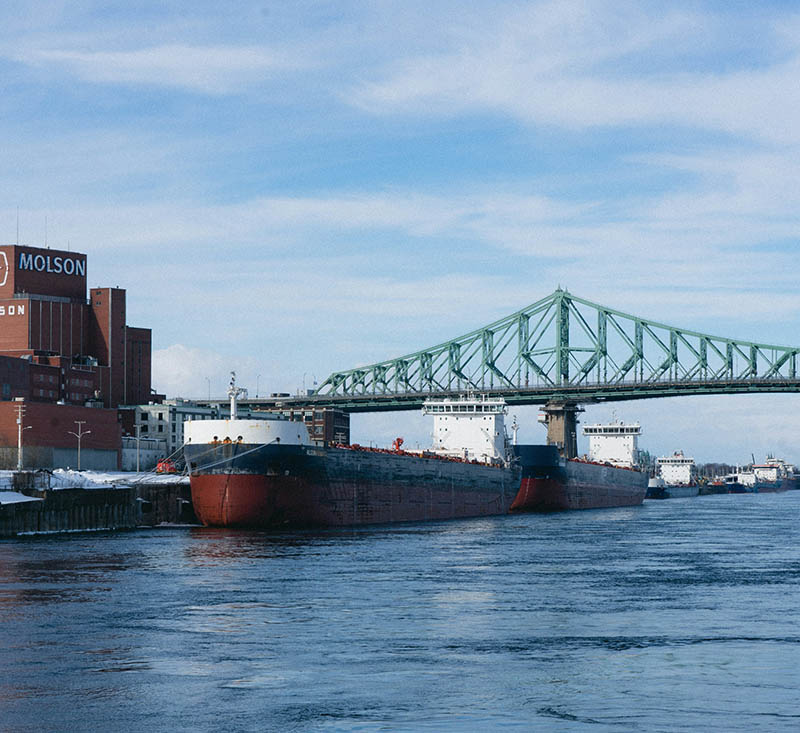
lead photo Port of Montreal by Walid Amghar on unsplash
Other articles from totimes.ca – otttimes.ca – mtltimes.ca