Long before it became Canada’s cultural capital and one of the world’s great French-speaking cities, Montreal was an important gathering place for Indigenous peoples. Over nearly five centuries, it has grown from a small missionary settlement into a thriving metropolis known for its history, festivals, architecture, cuisine and multicultural spirit. Here’s a look at some of the defining moments that shaped the city we know today.
Indigenous Roots and Early European Contact
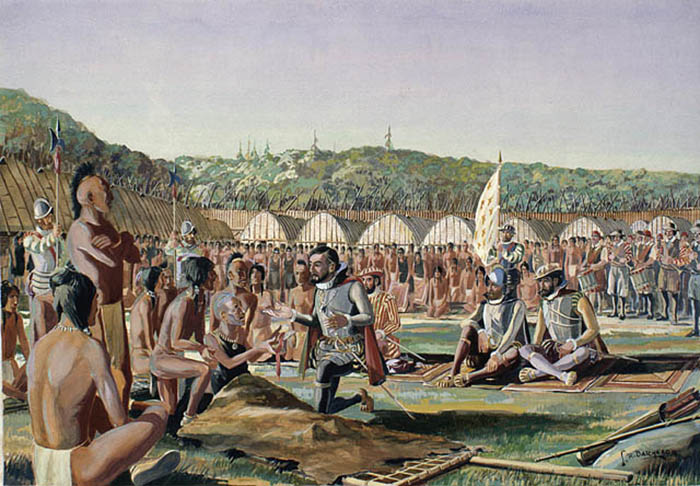
Before European arrival, the area now known as Montreal was inhabited by the St. Lawrence Iroquoians, who spoke Laurentian and established villages such as Hochelaga. In 1535, French explorer Jacques Cartier visited Hochelaga during his search for a passage to Asia, marking the first recorded European contact with the region. Captivated by the mountain overlooking the settlement, Cartier named it Mont Réal (Mount Royal), from which the city would eventually derive its name. The area’s strategic location along the St. Lawrence River made it an ideal place for trade, travel and settlement long before Europeans arrived.
French Colonization
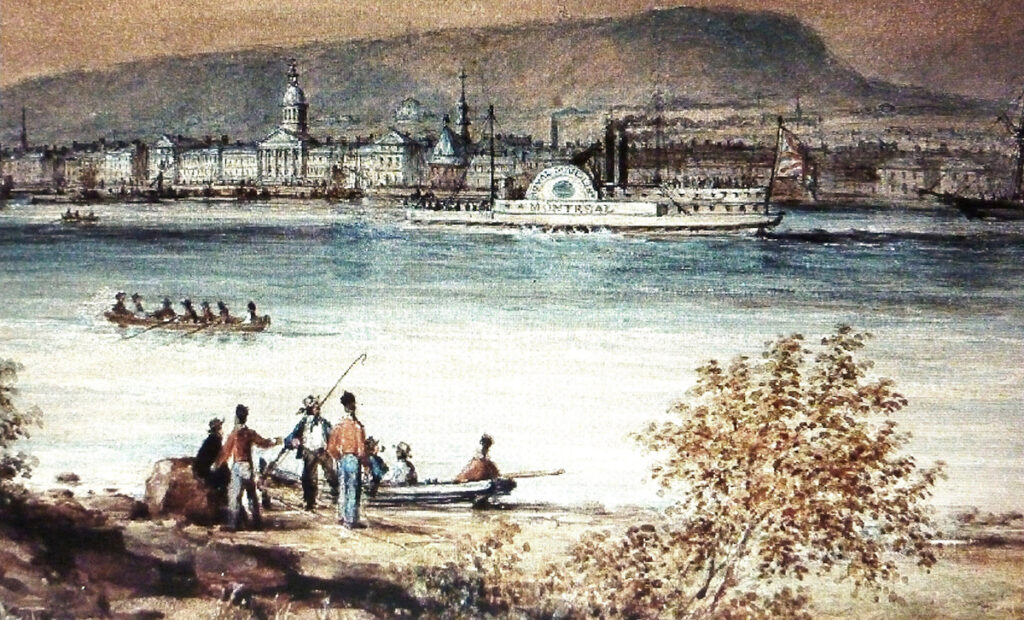
In 1642, Paul de Chomedey, Sieur de Maisonneuve, founded Ville-Marie, a missionary settlement that later became Montreal. The settlement included dwellings, a chapel and a hospital, and was frequently defended against attacks by the Haudenosaunee (Iroquois) Confederacy during the Beaver Wars.
Early institutions included the Hôtel-Dieu hospital (1645), established by Jeanne Mance, and the first school for girls, founded in 1658 by Marguerite Bourgeoys, who would become one of Montreal’s most celebrated pioneers. Ville-Marie quickly developed into an important centre of the fur trade, thanks to its strategic access to the St. Lawrence River and the Great Lakes.
British Conquest and Expansion
Montreal surrendered to British forces in 1760 during the Montreal Campaign and officially became part of British North America following the Treaty of Paris in 1763. British merchants, alongside French Canadians, helped transform the city into a thriving centre for commerce and finance.
The city briefly served as the capital of the Province of Canada between 1844 and 1849. During this period, the opening of the Lachine Canal in 1825 and the rapid expansion of railways connected Montreal to Toronto, Portland and other major centres, fueling economic growth and industrialization.
In 1852, a devastating fire destroyed more than 1,200 homes and left nearly 9,000 people homeless. The disaster led to significant rebuilding efforts and modernized fire safety standards, helping shape the Montreal that exists today.
Industrialization and Economic Development
By the mid-19th century, Montreal had become the largest city in British North America and Canada’s undisputed commercial and financial capital. Following Confederation in 1867, it continued to dominate the country’s banking, manufacturing and transportation sectors for decades.
Its economy flourished through fur trading, shipping, manufacturing and finance, with industries producing flour, sugar, textiles, clothing, wood products and alcoholic beverages. Montreal also became home to the headquarters of both the Canadian Pacific Railway and later the Canadian National Railway, cementing its role as Canada’s transportation gateway.
During this period, waves of immigrants from Ireland, Italy, Scotland and Eastern Europe helped shape Montreal’s neighbourhoods and contributed enormously to the city’s cultural diversity. Today, their influence can still be seen throughout the city’s architecture, churches, restaurants and traditions.
20th Century Growth and Cultural Significance
The first half of the 20th century saw Montreal continue to expand as Canada’s largest city. Saint Joseph’s Oratory, completed over several decades under the inspiration of Brother André, became one of the world’s largest pilgrimage sites and remains one of the city’s most recognizable landmarks.
In 1909, the Montreal Canadiens were founded. Over more than a century, the legendary hockey club has become one of the city’s greatest cultural institutions and the most successful franchise in NHL history.
Montreal’s population surpassed one million during the 1950s, accompanied by major infrastructure projects including the Metro system, improvements to the Port of Montreal and the opening of the St. Lawrence Seaway.
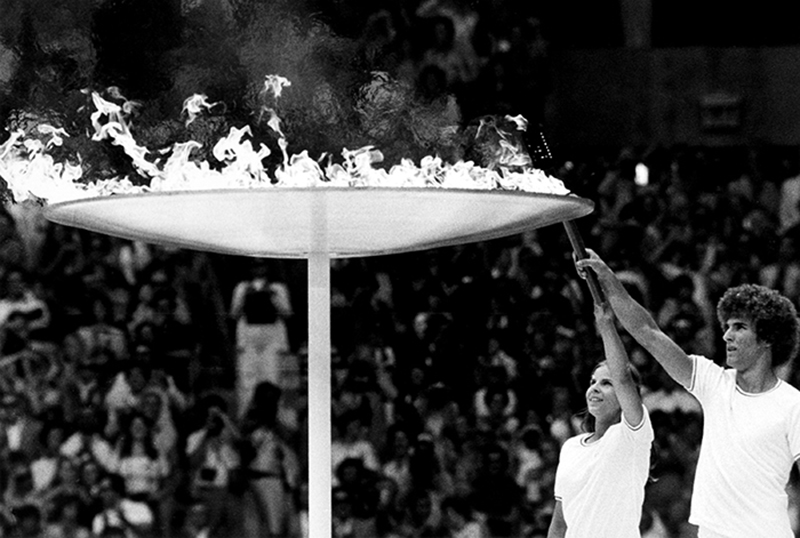
The city reached the international spotlight by hosting Expo 67, widely regarded as one of the most successful World’s Fairs ever held, followed by the 1976 Summer Olympic Games. While the Olympics left Montreal with decades of debt, they also transformed the city’s skyline with landmarks such as the iconic Olympic Stadium, which remains one of Canada’s most recognizable sporting venues.
The Olympic Stadium later became home to the Montreal Expos, Major League Baseball’s first franchise outside the United States. Originally founded in 1969 and initially playing at Jarry Park, the Expos moved into Olympic Stadium in 1977. The team thrilled generations of fans with stars such as Gary Carter, Andre Dawson, Tim Raines, Larry Walker and Pedro Martínez, while the 1994 Expos were widely considered one of baseball’s best teams before a players’ strike abruptly ended the season. Financial challenges and declining attendance eventually led to the franchise relocating to Washington, D.C., in 2005, bringing an emotional end to one of Montreal’s most beloved sports institutions.
The preservation and restoration of Old Montreal also gained momentum during this period, ensuring that one of North America’s finest collections of historic French colonial architecture would be protected for future generations.
The October Crisis and the FLQ
The 1960s were marked by significant political and social change during Quebec’s Quiet Revolution. Amid growing calls for Quebec sovereignty, the Front de libération du Québec (FLQ), a militant separatist group, carried out bombings, robberies and other violent attacks throughout the decade.
Their campaign culminated in the October Crisis of 1970, when British Trade Commissioner James Cross and Quebec Labour Minister Pierre Laporte were kidnapped. Laporte was later murdered, prompting Prime Minister Pierre Trudeau to invoke the War Measures Act—the only time it has been used during peacetime in Canadian history.
The Quebec Referendums
Quebec nationalism continued to shape Montreal throughout the late 20th century. In 1980, Quebec held its first referendum on sovereignty, asking voters whether the province should pursue a path toward political independence. The proposal was defeated by a margin of 59.56 per cent to 40.44 per cent.
A second referendum followed in 1995 and produced one of the closest votes in Canadian history. The proposal for sovereignty was again rejected, this time by an exceptionally narrow margin of 50.58 per cent to 49.42 per cent. The political uncertainty of the period contributed to some corporations and financial institutions relocating their headquarters from Montreal to Toronto.
Montreal Today

Today, Montreal is one of the world’s largest French-speaking cities and the largest francophone city in the Americas. Home to more than 120 cultural communities, it remains one of Canada’s most diverse and cosmopolitan urban centres.
The city has evolved into a global leader in aerospace, artificial intelligence, biotechnology, information technology and video game development, while its world-renowned universities continue to attract students and researchers from around the globe.
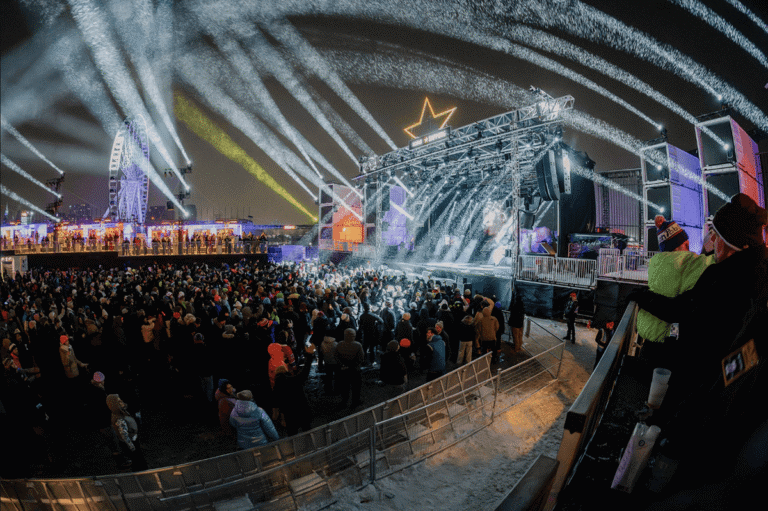
Montreal’s famous festivals—including the Montreal International Jazz Festival, Just for Laughs and the Montreal International Fireworks Competition—have earned it an international reputation as a city that celebrates creativity year-round.
The city’s rich history is reflected in its architecture, museums and cultural institutions, while the Underground City (RESO), one of the largest pedestrian networks in the world, showcases its innovative approach to urban living.
Montreal’s story is one of continual reinvention—from Indigenous gathering place to French colonial settlement, British commercial powerhouse, industrial giant and modern international metropolis. Its remarkable blend of history, culture and innovation continues to make it one of North America’s most distinctive cities.
A Personal Note
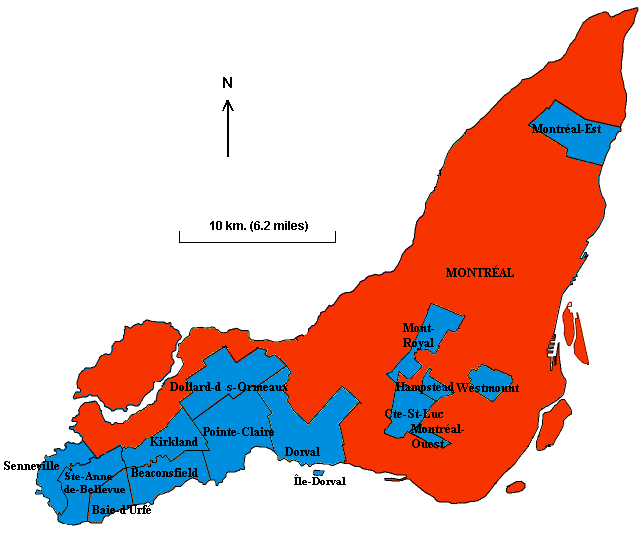
Bottom line? I’m proud to be a Montrealer who learned to speak French. I don’t always know exactly the right word, and sometimes English still slips in—but that’s part of Montreal too. It’s a city where two languages, countless cultures and a shared history come together to create something truly unique.
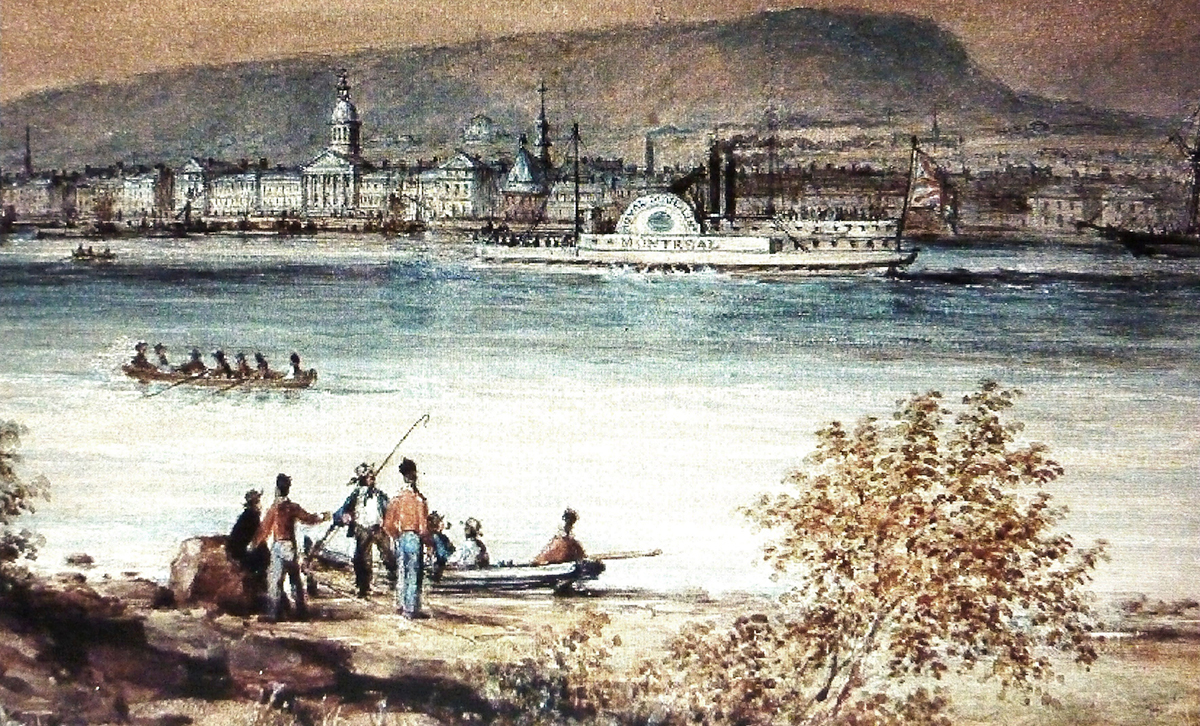
feature image Depuis l’Île Sainte-Hélène vers 1853. By Philippe Du Berger – Montréal, CC BY 2.0, https://commons.wikimedia.org/w/index.php?curid=26769