Bob Silverman, the Impossible Hero by John Symon
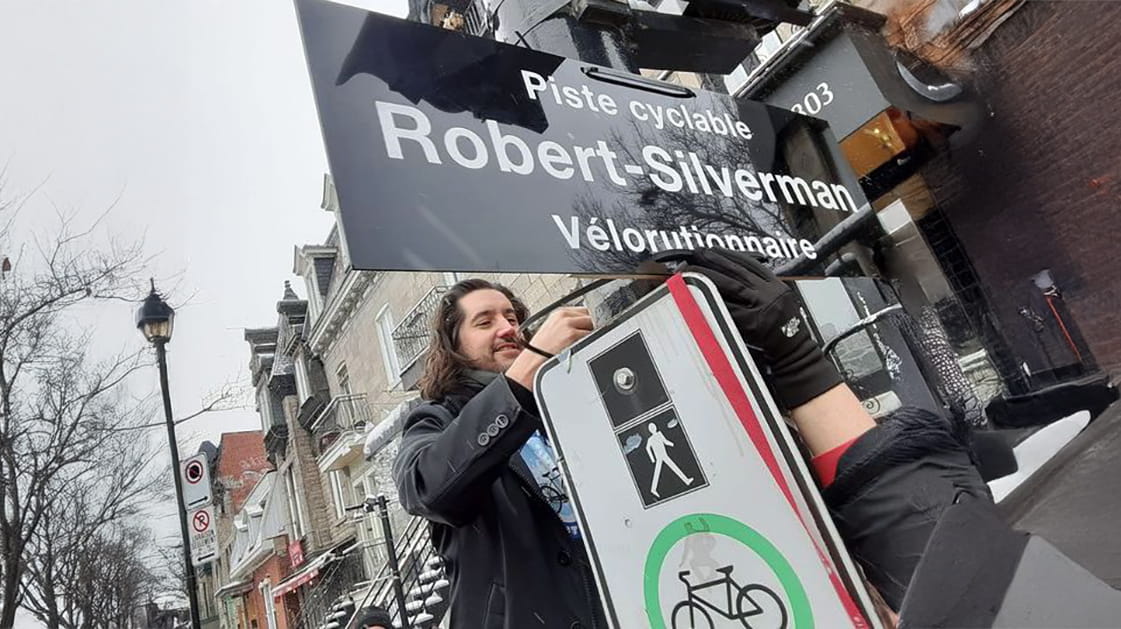
Bob Silverman profoundly changed the landscape of Montreal. The bike activist was arrested—with wet paint on his hands — for painting the first “unofficial” urban bike lanes in the city, and ended up in Bordeaux Prison for his crime. Today, Montreal has some 1,000 km of bike lanes & paths, including the REV (bicycle boulevard) on St-Denis Street, which is named after Silverman. This is largely thanks to Silverman and his colleagues at le Monde à bicyclette.
With very little money, Silverman championed the use of colorful street theatre and die-ins to change public opinion. He used humour to ridicule his opponents, apparently terrifying former mayor, Jean Drapeau. When bridge authorities declared that bicyclists could not cross Jacques Cartier Bridge, le Monde à bicyclette lobby group and its allies blocked the bridge to car traffic. The bridge was quickly reopened for bicyclists.
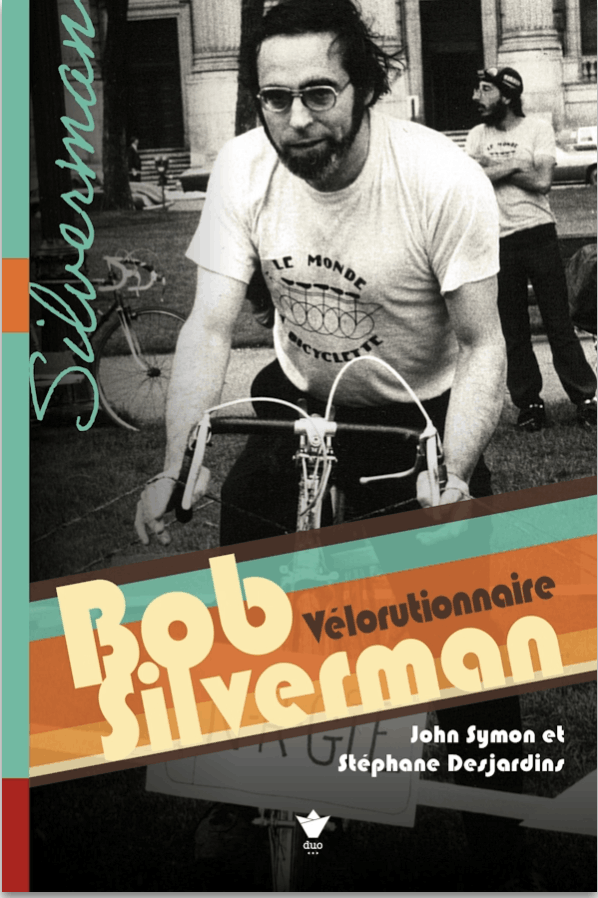
“Friends and foes alike described Silverman as ‘exasperating’ and ’wacky’; he was persistent and came up with very creative ideas,” explains former Montreal Times reporter John Symon. “I don’t think that we’ll ever see another like him.”
When transit authorities refused to let bicyclists use the metro to cross the St. Lawrence River to Londueuil, Silverman dressed up as Moses and called on the Almighty to part the waters. This netted him press coverage across Canada. Blackmailing a cabinet minister and court challenges were also part of Silverman’s toolbox. In a few decades, Silverman and friends achieved what had seemed impossible: Montreal was transformed into the most bicycle-friendly city in North America.
But Silverman was much more than just the man “Bicycle Bob.” In 1962, he helped bring Bob Dylan to Montreal for free performances. Soon after, Silverman went to Cuba, where he cut sugarcane with “Che” Guevara. Other characters in the cast include: Leonard Cohen; Pierre Foglia; Jack Layton; Claire Morissette; and Armand Vaillancourt. Hollywood almost made a movie out of his life story.
Silverman and his colleagues can claim much credit for the creation of BIXI rental bikes. Silverman was also largely responsible for bringing outdoor volleyball to Montreal parks.
The Gazette called Silverman “a prophet before his time.” Upon his death in 2022, former mayor Valerie Plante acknowledged Silverman’s contributions to Montreal. A eulogy was read out in Quebec’s National Assembly.
“Silverman was a friend of mine,” relates Symon. “He asked me to write his biography, ‘warts and all’. Stéphane Desjardins later joined the project as a co-author. Unfortunately, Silverman died before we completed the book.”
Desjardins, a Journal de Montreal columnist, worked with Silverman at le Monde à bicyclette.
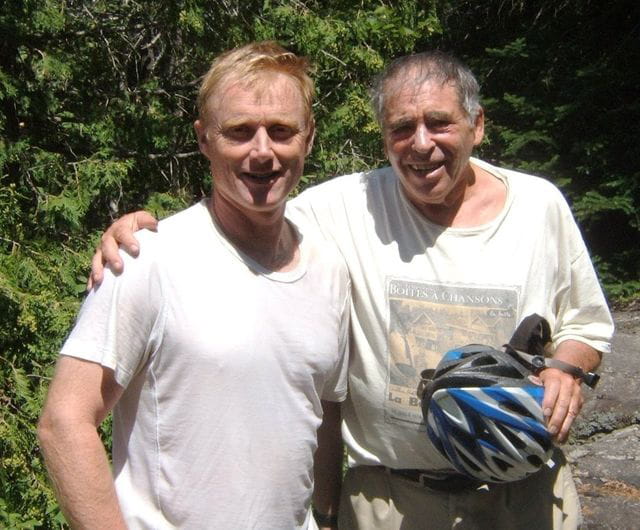
The two authors portray Silverman’s upbringing, his inspirations and his methodology. They attempt to show what made the man tick. The research included dozens of interviews and a scouring of archived news articles. Some 400 references indicate to readers where the information comes from.
Bob Silverman, the Impossible Hero is published by the University of Ottawa Press and available in bookstores for $30 as a paperback in English or French. A hardcover version is also offered as well as electronic versions.
The English title refers to how Silverman joked about preferring to attempt the impossible; just doing what is easy proved too boring.
by John Symon
lead photo The REV bike path on Montreal’s St-Denis Street was named after Silverman. Photo ©J. Symon