Over the last decade or two, scientists have begun focusing their research efforts on studying the impact that indoor air quality can have on human health and well being. With modern architecture inclining towards designs that use up as little energy as possible, cheaper construction materials and more airtight spaces have come into prominence. Although such designs do a lot in helping reduce energy expenses, they do not take indoor air quality and ventilation into consideration. Failing to do so results in designs that do not allow air to move in and out freely. This, in turn, causes the retention of harmful contaminants that are produced because of the use of cheaper, low-cost building materials. In recent years, numerous studies have been conducted that point to the same conclusion – indoor air quality has a major bearing on human health and a variety of factors (the most prominent of which is modern construction practices) are responsible for the deterioration in indoor air quality all over the globe.
Indoor air that is completely free of toxins, particulate matter, and pollution is vital for good health. People are spending more time indoors than ever before, whether its for work, fun or entertainment. Studies suggest that a lot of health problems such as respiratory issues, tiredness, lethargy, allergies, migraines, irritation in the eyes, etc, are caused by spending long periods of time in environments with poor indoor air quality. Various cancers, tumors, and other chronic respiratory illnesses are also the result of really harmful indoor air pollutants. Conditions such as asthma (which affects over 300 million people worldwide) although can be passed on genetically, is more often than not the result of poor indoor air quality. Children happen to be the most affected, especially those from developing nations where problems such as poor neighborhood planning, the widespread use of asbestos, dampness, and air pollution are rampant.
What is indoor air quality dependent on?
Indoor spaces that do not have enough ventilation and are in close proximity to sources of pollution experience the worst air quality. These sources of pollution include those that release toxic gases and particulate matter into the air. Synthetic construction materials that are so prominently used in the construction industry today (especially in countries that experience cold weather) are cheaper, tend to retain heat better, but also prevent the free flow of air. The lack of sufficient ventilation causes the levels of indoor pollution to rise drastically. This is because the pollutants do not have any way of escaping. Regions that experience hotter climate as well as higher humidity levels have the worst indoor air quality in the world. Humidity and hot weather not only cause the longer retention of air pollutants but also cause their concentrations to increase significantly.
Common sources of indoor pollution
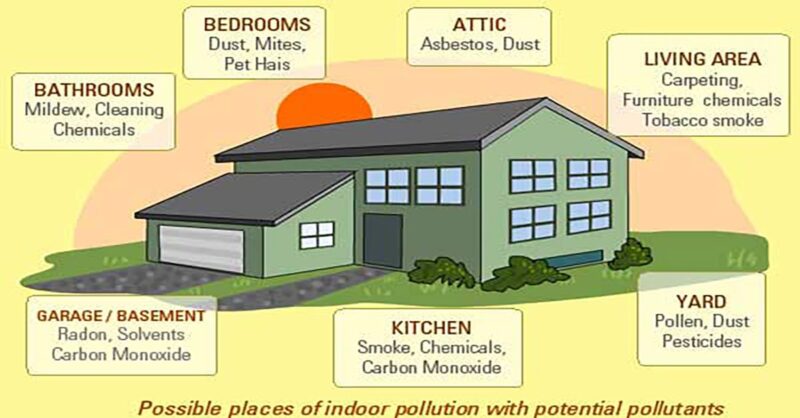
The most familiar sources of indoor air pollution include cigarette smoking, stoves (that make use of wood, coal, kerosene, gas, or oil), furniture (especially of the antique variety), construction materials, asbestos, carpets, dampness (in walls, ceilings, and tiles), pets that aren’t regularly groomed or taken care of, chemicals contained in commonly used cleaning products and disinfectants, heating and air conditioning systems, humidifiers, as well as radon pollution.
Lesser-known agents causing indoor air pollution
- Furniture made from pressed wood
Cupboards, cabinets, stools, chairs, and other furniture made from pressed wood also cause indoor pollution. Pressed wood is made by gluing the byproducts and waste (such as sawdust, chips, shavings, and other tiny wood particles) from carpentry projects, using strong adhesives. Once glued together the wood is then subject to extreme pressure and high temperatures to help it bind together well and also be molded to whatever shape desired. Furniture made from pressed wood is often cheaper and doesn’t last as long because of the fact that the glue that binds the loose particles of wood together starts wearing off quickly. Once the adhesive begins losing its strength, these particles begin disintegrating, adding to the existing contaminants that pollute the air indoors.
- Toxic Gases
Leaky stoves that aren’t able to properly contain the gas, kerosene, or wood that they run on, contribute to indoor pollution levels over time. The amount of carbon monoxide that can exist indoors therefore can reach extreme levels of toxicity. Exposure to such high levels of toxicity can cause cancer. Furnaces and hearths that aren’t designed with proper vents that let the smoke flow outdoors freely, also lead to the build of a host of really harmful gases. Cleaning products might seem harmless, but the high concentrations of toxic chemical agents (typically of the tetra and tri-chloroethylene variety) that they contain, make them extremely hazardous to health. The gases that these cleaning products emit can combine with the existing particulate matter, resulting in a lethal concoction of indoor air pollutants.
- Molds
Microbial growths in indoor spaces can give rise to a range of allergies and respiratory problems. They can also hamper the functioning of the immune system causing numerous auto-immune conditions. Preventing microbial growths is all about reducing humidity and dampness indoors as much as possible. Fixing leaky faucets, plugging drainage holes, securing broken pipes and malfunctioning plumbing systems, etc, can go a long way in hindering the growth of various types of fungi, molds, and mildew. According to a WHO study, dampness was the leading factor behind poor indoor quality. Dampness is not just an issue faced in developing countries, but also developed ones. Overlooking dampness and giving the slightest room for molds and fungi to grow can prove to be a fatal mistake. This is because molds are often hard to detect and even harder to get rid of. They are persistent and have a habit of returning even after being painstakingly removed. Microbial growths can also cause severe damage to surfaces of all kinds, be they wooden, brick, cement, or synthetic surfaces. They are also known to weaken and compromise the structural integrity of buildings quickly. Dealing with and getting rid of microbial growths can also prove to be quite expensive.
Whether you live in an apartment or an independent, single-family home, thinking about the indoor-quality of your home, identifying issues immediately, and rectifying them instantly is the best way to stay healthy and ensure the well being of your entire family. gatewaymechanical.ca.
Other top articles from mtltimes.ca and totimes.ca

What is indoor air quality

Quebec’s updated back to school plan – What every parent needs to know