

A deal collapses. Not over price, not over terms, but over one question a lawyer asks six months later: can you actually prove this person signed? The document was e-signed, sent, filed, forgotten. Now nobody can show who clicked, when, or whether a clause was quietly reworded afterward. This happens far more often than anyone admits, and almost never because the electronic signature was illegal. It was perfectly legal. It was simply undefended. The federal government’s own guidance on e-signatures is refreshingly blunt on the point: a signature needs no particular form to bind you, whether the ink is wet or the mark is a click. What matters is everything sitting behind that mark.
Four things make an electronic signature stick
Strip away the software and the sales decks, and a defensible signature comes down to four plain ideas. The signer meant to sign. The signer agreed to do it electronically. The mark ties back to a specific person. The document can be shown to be unchanged since. Consent, intent, identity, integrity. Miss one, and you own a signature that works beautifully right up until someone contests it.
Canadian law is unusually relaxed about the “how”. Part 2 of the federal Personal Information Protection and Electronic Documents Act, in force since 2004, defines an e-signature as letters, characters or symbols in digital form attached to a document. A wide net. A typed name at the foot of an email counts. So does a stylus scrawl on a tablet, a scanned wet signature, or logging into a system and clicking “I approve”. In practice, most business agreements now sign electronically without anyone thinking twice.
The openness is deliberate. The law does not care whether you paid for a famous platform or used a plain PDF. It cares whether the four pillars hold. A manager approving a leave request by logging in and clicking has, in the eyes of the statute, signed. Whether they can later prove it is a wholly separate question, and that is where the real work lives.
Electronic, digital, secure: three words, three realities
Here is where the vocabulary trips almost everyone. “Electronic signature” is the umbrella term. Under it sits everything from a checkbox to a cryptographic certificate, and the distance between those two ends is enormous.
A basic electronic signature captures intent, and little more. A digital signature, which Canadian federal law calls a secure electronic signature, does something heavier: it leans on asymmetric cryptography and public key infrastructure to lock identity and content together, so the file itself betrays any tampering. Ottawa’s own guidance treats a digital signature and a secure e-signature as technically the same animal. Knowing exactly what counts as an electronic signature, and where a digital one takes over, is not academic hair-splitting. It decides whether your signature is merely valid, or genuinely hard to attack.
| Aspect | Standard electronic signature | Secure / digital signature |
| What it is | An electronic mark that records intent | A cryptographic signature built on PKI |
| Typical form | Typed name, checkbox, scanned signature | Certificate-based mark, encrypted and time-stamped |
| What it proves | Consent and a claimed identity | Verified identity, document integrity, non-repudiation |
| When challenged | Strength depends on the surrounding trail | Stands largely on its own technical proof |
| Best suited to | Purchase orders, NDAs, internal approvals | Statutory declarations, share certificates, regulated files |
| Weight in Canada | Valid and enforceable | Valid, with a legal presumption in its favour |
The practical read is simple. For a purchase order or a confidentiality agreement, a standard e-signature with a clean audit trail is plenty. For a share certificate, a sworn statement, or anything a bank or court will lean on, the built-in identity chain of a secure signature earns every second it costs.
The documents that still demand ink
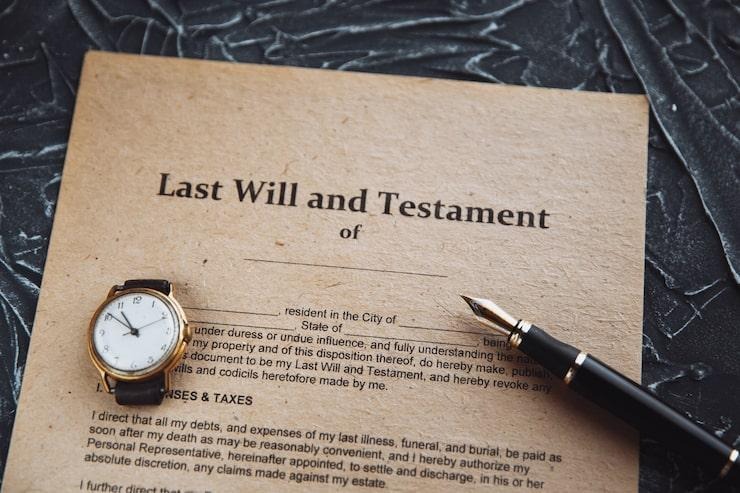
Contrary to the paperless sales pitch, the fully digital office has hard limits, and Canada draws them on purpose. Wills top the list. Powers of attorney over someone’s finances or personal care usually join them. So do records that create or transfer an interest in land. Promissory notes are best left on paper, signed as a single original, to dodge the mess of several competing “authentic” copies.
The map also shifts the moment you cross a provincial line. Every province and territory except Quebec built its rules on the Uniform Electronic Commerce Act, a model text from 1999. Ontario runs on its Electronic Commerce Act of 2000. British Columbia and Alberta each lean on an Electronic Transactions Act passed in 2001. Quebec, as ever, wrote its own framework. The through-line survives the differences: routine commercial paper signs electronically, while high-stakes personal and property instruments often will not.
One quirk catches businesses dealing with the state. In Ontario and Alberta, a public body has to actively agree to accept an e-signature, and it may impose its own reliability standards first. Assume nothing when the party across the table wears a government badge.
The audit trail is the actual product
Strip a serious signing platform down to its bones, and the signature itself is almost incidental. The value lives in the record wrapped around it. Every send, view, click, signature and decline gets time-stamped and logged, then bundled into a completion certificate bound to the file. Alter a single character afterward, and a cryptographic fingerprint stops matching.
That record is what wins arguments. A wet signature on paper proves someone signed something, at some point. It cannot fix the date, cannot prove a page was never swapped, cannot place the signer’s device at the scene. A proper audit trail does all three. Forging ink is a centuries-old craft. Forging a full cryptographic log is a different order of difficulty altogether.
Picture the split screen. On one desk, a signed paper contract sits in a drawer, its date resting entirely on good faith. On the other, a signed PDF whose log shows the counterparty opened the file at 2:14 on a Tuesday, from a named account, and signed ninety seconds later. Only one of those survives a determined challenge. The paper looks reassuringly solid until the day it has to defend itself, and then it says almost nothing.
So the real question for any business is not whether to sign electronically. That argument ended years ago. It is how much proof each document deserves, and whether the tool you already use is quietly capturing that proof, or quietly leaving it on the floor.
Questions people actually ask
Is a typed name at the bottom of an email a real signature?
In most commercial cases, yes. Federal and provincial law both accept a typed name as a valid e-signature when it shows intent to sign and the sender can be identified. The soft spot is not validity, it is evidence. A bare email chain holds up far worse than a platform’s audit log if the matter ever turns into a fight.
Can someone wriggle out by claiming they never signed?
They can try, and this is precisely where the trail earns its keep. Canada runs an open model: an electronic signature is presumed binding unless the other side proves otherwise. A secure signature, or a solid audit record, swings that burden hard against anyone suddenly shouting “that wasn’t me”.
Do both parties need the same signing software?
No. Nothing in Canadian law ties enforceability to a shared vendor. Each side may sign in whatever compliant way it prefers. Reputable platforms are engineered to satisfy PIPEDA, the provincial acts, the US frameworks and Europe’s eIDAS at once, which is why a signature made in one is usually honoured across borders.
What genuinely cannot be e-signed in Canada?
The recurring holdouts are wills, powers of attorney over finances or personal care, and documents transferring land. Several federal and provincial rules also demand a secure signature for affidavits, sworn declarations and witnessed signatures. When a decision is personal and hard to undo, expect to reach for a pen.
Is a secure electronic signature worth the extra friction?
For everyday agreements, rarely. For anything a regulator, bank or judge will scrutinize, almost always. A secure signature carries a built-in, verified identity chain and a legal presumption that the named person signed, which buys you far more protection than the extra minute it costs.
Does an electronic signature weaken over time?
The mark itself does not, but the proof around it can. The certificates behind a secure signature carry validity periods, and long-lived records sometimes need their integrity re-anchored so a file signed today still verifies a decade from now. For routine deals this never comes up. For contracts built to outlast their signers, ask a provider how it preserves the evidence, not just the signature.
The habit outlives the paperwork
The technology settled this debate long ago. The law settled it too. What lingers is muscle memory, the reflex to print, sign and scan a page that never needed to meet a printer. The companies pulling ahead are not the ones with the flashiest signing tool. They are the ones who decided, on purpose, which documents deserve a quick mark and which deserve a fortress of proof. Make that call once, wire it into how you work, and the office printer goes quiet on its own.