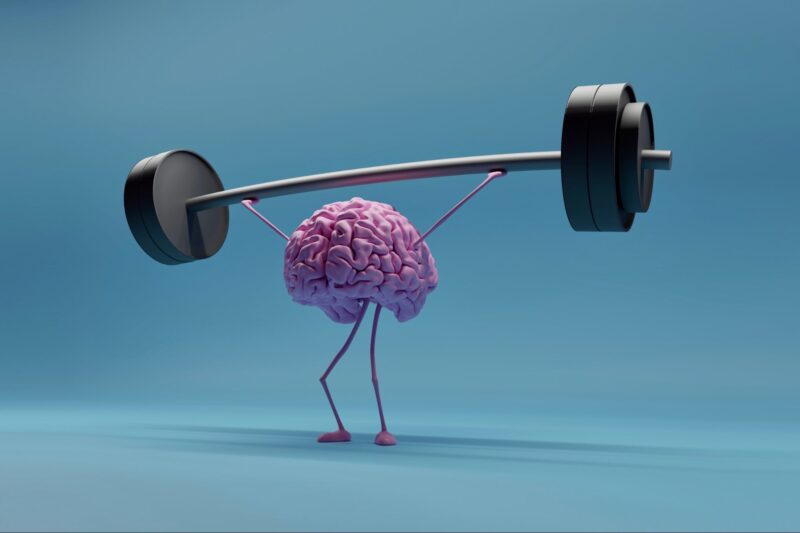
Go to the gym regularly? That’s great! But did you know that our brain also needs exercise? It prevents age-related diseases and improves sleep and mood. What is brain fitness and why should you try it?
Why is it important to exercise your brain?
We usually don’t know what is going on in our brain and describe our condition as some feeling or sensation. An imbalance in the functional regulation of the brain due to stress, poor nutrition, lack of proper rest and other factors can cause chronic fatigue, anxiety disorders, and many other pathological conditions. Modern technologies allow us to “see” these pathological and usually latent processes and transfer them to us in a familiar, understandable form (sounds or images). Everyone can learn to control the activity of his brain. This will improve your psychological state and well-being, become more productive, develop attention, reaction speed.Brain training or neurofitness helps in this.
What is brain fitness?
It has nothing to do with solving crossword puzzles or logical problems. Neurofitness, or as it is also commonly called – neurofeedback training – is a therapeutic method of learning to control brain functions, which is essential for both those who want to improve their skills when they are playing online slots Canada and those who need to perform better at work.
Its essence is to teach you how to control the workings of your brain. The learning process is built on the brain’s ability to change through the mechanism of neuroplasticity. Neuroplasticity and self-regulation are basic functions of neurons. They allow our brains to adapt, repair, and allow us to learn new skills.
How does this happen?
A neuro fitness specialist (or mind therapist) attaches several sensors to your head. During training, they measure small electrical signals of the brain, and then – with the help of a special program – turn them into sound and video. That is, the computer program creates a real-time visualization of the bioelectrical activity of the brain. For example, it’s necessary to train the transition to the state of relaxation. A mind therapist gives instructions – if the brain rhythms indicate the transition into the desired therapeutic state, the program on the screen changes the image, sound and other parameters. Feedback facilitates the process of learning physiological control, and the computer program makes available information that we do not normally perceive.
In this way, a person can interactively influence the rhythms of the brain by tracking and recording his or her sensations. The more often you practice this, the better you will consolidate the necessary skill. It teaches you to consciously move into the necessary therapeutic state on your own at any given time.
What are the benefits?
You’ll learn how to switch your brain into the right mode yourself – that is, you’ll become more productive or more relaxed when you need it. As with any training, the repetition and complication of the neurofeedback training program develops and consolidates the new state. Already after 5-10 sessions, it is much easier to achieve, and the patient acquires the ability to reproduce it at the necessary moment.
What problems neurofitness solves
Brain fitness helps in the treatment of certain diseases. Neurofeedback training improves the prognosis for hypertension, bronchial asthma, panic attacks, chronic headaches, sleep disorders, neurotic and stress-related disorders. Neurofeedback training is especially good when the use of medication is undesirable (allergic reactions, resistance to drug therapy) or when one wants to avoid medication (for example, sleep disorders, anxiety and neurotic conditions).
Other articles from mtltimes.ca – totimes.ca – otttimes.ca

Airspace to Russian aircraft closed by Canada and European Union

Mtl Wine Gal bringing affordable high-end private imported wine to your table

The New COVID-19 travel rules for Canada