Even in Canada, the sun’s ultraviolet (UV) rays can quietly harm your eyes. Over the years, too much UV exposure can cloud your eye’s lens or even raise your risk of eye disease. For example, cataracts (clouding of the lens) affect millions of Canadians, and UV light is a known factor in their development. Harsh UV can also harm your cornea and retina, leading to eye cancers or painful conditions.
How Can Ultraviolet (UV) Light Harm Your Eyes
UV rays can injure different parts of your eye over time. For example, long-term UV exposure gradually breaks down the proteins in your eye’s lens, which can accelerate cataract formation. Cataracts slowly blur your vision and are a leading cause of vision loss in Canada. UV light can also damage cells in and around the eye, slightly increasing your chance of ocular cancers (like intraocular melanoma).

In other words, more UV exposure raises the odds of lens clouding and UV-linked tumors. Chronic sun exposure also encourages benign growths on the eye’s surface. These include pinguecula (a yellowish bump on the white of your eye) and pterygium (“surfer’s eye,” a fleshy wing-shaped growth on the cornea), both strongly tied to UV radiation.
Finally, intense short-term UV exposure – for example from skiing or mountain hiking where snow or ice reflect strong sunlight – can burn the cornea, causing photokeratitis (often called snow blindness). Snow blindness is a painful “sunburn” of the eye that makes your eyes red, gritty, sensitive to light and teary․
- Cataracts and Eye Cancers: UV rays penetrate the eye and gradually cloud the lens, speeding up cataracts. Over many years, this lens has clouded and blurred my vision. Cumulative UV also slightly raises your odds of UV-linked eye cancers (for example, melanoma inside the eye or cancers on the eyelids).
- Growths on the Eye: Chronic sun exposure can cause pinguecula and pterygium – non-cancerous growths on the eye’s surface. Pinguecula appears as a yellowish bump on the white of the eye and pterygium as a triangular fleshy tissue growing onto the cornea. Both are closely linked to UV exposure. These growths may itch or make the eye feel dry, and if they become large they may need medical treatment or surgery.
- Snow Blindness: When sunlight reflects off snow, ice, or water, you get an extra dose of UV into your eyes. This can temporarily “sunburn” the surface of your eye (cornea and conjunctiva) and cause photokeratitis. Snow blindness brings pain, redness, and blurry vision – much like a severe sunburn of the eye – but it is usually reversible. It feels uncomfortable and may take a few days to heal, but it will resolve if you rest your eyes and keep them cool.

How to Protect Your Eyes From Sun Damage
The good news is that simple habits can greatly cut your UV risk. Below are five practical tips you can follow today to shield your eyes:
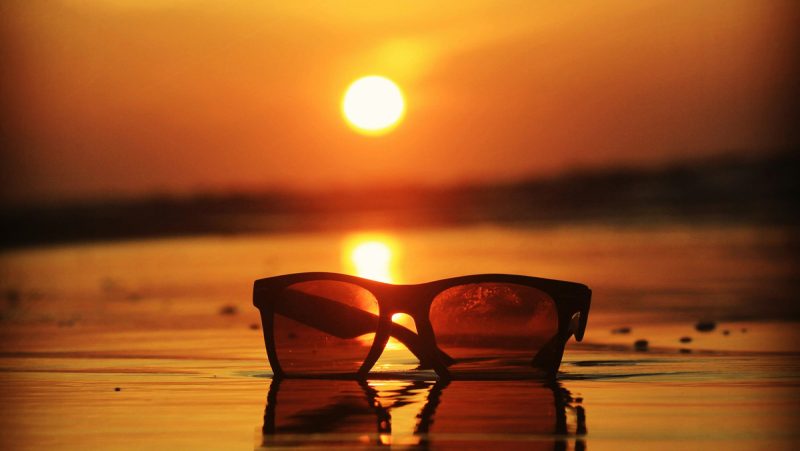
- Wear UV-blocking sunglasses: Always put on quality sunglasses that block 100% of UV-A and UV-B rays. This single step cuts the UV reaching your eyes, slowing the damage that causes cataracts and other problems. Look for labels that say “UV400” or “100% UV”. Wraparound frames or large lenses offer extra side protection from stray rays. Even on cloudy days or in winter, UV rays penetrate the clouds, so wear your sunglasses year-round. Invest in prescription sunglasses if you also need vision correction.
- Choose a wide-brimmed hat: In addition to sunglasses, wear a hat with a brim at least 10 cm (4 inches) wide. A broad hat shades your eyes and face, blocking about half of overhead UV. For example, a baseball cap helps a little, but a hat that covers your forehead and temples provides much more eye protection. In very bright conditions (beach, snow, or water), combining a hat with wraparound sunglasses gives the best coverage.
- Avoid the strongest sun hours: Plan outdoor time outside of peak UV hours (roughly 10:00 am – 4:00 pm). The sun’s rays are strongest in the middle of the day, so minimizing your exposure during these hours lowers the total UV reaching your eyes. If you must be outdoors at midday, take extra precautions: find shade, wear sunglasses and a hat, or use an umbrella. Reducing your time in the sun when the UV index is high (especially in summer) is one of the most effective ways to protect your eyes.
- Protect your eyes year-round: Remember that UV eye damage is cumulative. You’re exposed to UV in all seasons, even if it’s cold or overcast. Snow, water, and even concrete can reflect UV light, increasing exposure. For example, on sunny winter days, the UV reflecting off snow can be very intense. So get into the habit of wearing your sunglasses and hat whenever you’re outside, not just in summer.
- Never look directly at the sun: Avoid staring at the sun even for a moment. Direct sunlight is extremely intense on your retina, the light-sensitive tissue at the back of the eye. Looking at the sun can cause solar retinopathy – permanent retinal damage – and there is no cure for it. This includes avoiding bright sunsets, sunrises, or solar eclipses without proper eye protection. If you see a solar eclipse, use specialized eclipse glasses; otherwise, just enjoy sunlight indirectly.
You greatly reduce your eyes’ UV exposure if you follow these steps. Simple precautions like these let you enjoy the outdoors in Canada while keeping your vision safe and taking care of your eyes.
Other articles from mtltimes.ca – totimes.ca – otttimes.ca