
From Refugee to Mayor of Montreal – A true Canadian Success Story
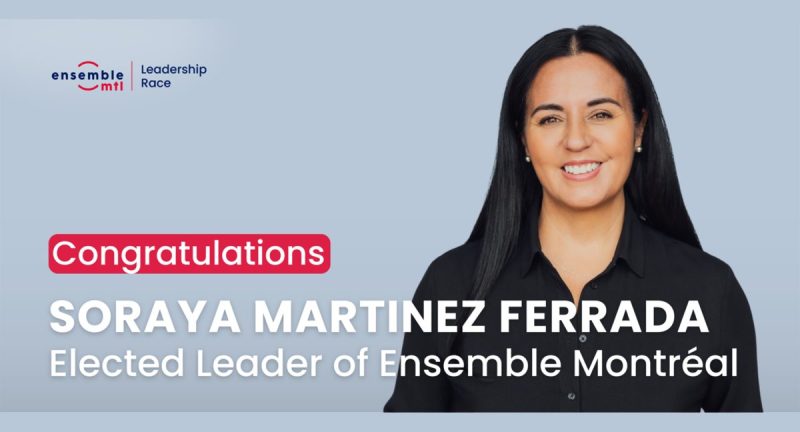
Last night, November 2, 2025, the city of Montréal chose a new leader: Soraya Martínez Ferrada was elected mayor, signalling a clear shift in the city’s political direction and offering a fresh chapter for Canada’s second-largest municipality.
Election results and what they signify
Martínez Ferrada and Ensemble Montréal secured a strong victory. According to the election summary her party won a majority of seats on City Council—33 seats—with a vote share of around 43.3 %. She defeated her main challenger, Luc Rabouin of Projet Montréal, to become the new mayor of Montréal.
Her win marks a turning point: after eight years under outgoing Mayor Valérie Plante and a left-leaning administration, Montréal voters opted for a candidate promising a different style of governance.
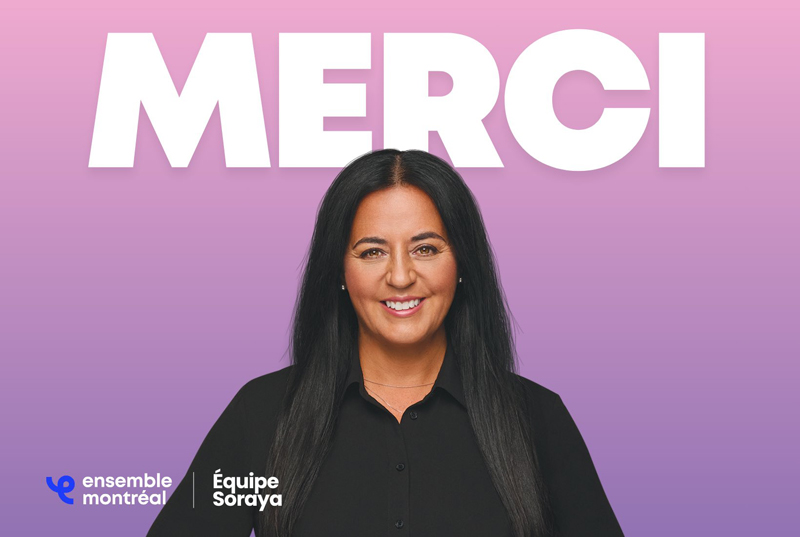
After the election, Mahyor-elect Martinez Ferrads released the following translated statement (in French) on X:
“I chose Montreal.
And today, I am honored that Ensemble Montréal has chosen me as its
leader!
It is with enthusiasm and determination that I embark on this new adventure to build a city worthy of our ambitions. Montreal deserves unifying leadership that listens to its people.
Starting next week, I will begin a tour of the boroughs to meet with Montrealers. I look forward to meeting you and hearing your concerns and priorities.
Your voice will be at the heart of my actions.
Thank you all for your trust! Together for Montreal!”
From municipal beginnings to federal politics
Her first elected office came in 2005 when she became the city-councillor for the Saint-Michel district in Montréal. She served until 2009, then worked in the provincial and municipal public-service spheres before pivoting to federal politics.
In the 2019 Canadian federal election she was elected Member of Parliament for the riding of Hochelaga (a riding in Montréal’s east) under the federal Liberal Party banner—a first for the Liberals in that riding since 1988. In 2023, Montreal’s new mayor entered the federal Cabinet as Minister of Tourism and Minister responsible for the Economic Development Agency of Canada for the Regions of Quebec.
Then, in early 2025 she made a significant pivot: On 6 February 2025 she announced she would not seek re-election federally and would instead run for mayor of Montréal. Soon after she became leader of the municipal party Ensemble Montréal by acclamation in February 2025 and was designated its mayoral candidate.
The campaign: change, housing and mobility
Martínez Ferrada’s mayoralty bid came at a time when Montréal was grappling with multiple urban challenges: an affordability and housing crisis, increasing pressure on public transit and active-transport infrastructure, and concerns over municipal finances.
Her campaign platform emphasised six key priorities: housing, homelessness, public safety, cleanliness, mobility, and responsible financial management. She committed, for example, to launching in her first 100 days a “mayor’s roundtable” for improved coordination across boroughs, and to an audit of all cycling infrastructure to remove or upgrade lanes considered unsafe.
Ahead of the election Martinez Ferrada conveyed her frustration with the inaction of the Plante-Rabouin council:
“For months, I’ve walked the streets of this city, meeting residents in every neighbourhood. I’ve listened to their concerns about housing, safety, cleanliness, and mobility. But above all, I’ve heard their frustration with the inaction and lack of concrete results from the Plante-Rabouin administration.”
A personal journey rooted in resilience
Born in Santiago Chile in August 1972, Martínez Ferrada arrived in Canada with her family in 1980, fleeing the dictatorship of Augusto Pinochet. Growing up in the East End of Montréal, she and her mother rebuilt their lives in a new country.
Her early years were shaped not only by transition, but also by community-engagement: very early on she understood the importance of public service and accessibility. She would later reflect on her own upbringing, including relying on food banks, as the foundation for her commitment to social justice.
Eductated in Montréal, Martínez Ferrada holds a Master of Management from HEC Montréal (2005).
The tasks and challenges ahead – homelessness and the bike lane mandate
Martínez Ferrada’s mandate begins with high expectations. Housing alone is a towering issue: her 100-day plan includes a tactical intervention group on homelessness, registry of vacant city-owned lots, and increased support for non-market housing.
On the mobility front, her pledge to audit and potentially re-work the city’s bike-lane network is a signal of a more pragmatic, consultation-driven approach—she explicitly linked some lanes’ rapid roll-out to anxiety among merchants and residents.
Restore order to the city budget
Financially, Martínez Ferrada has said the city must “restore order” to its budget, target administrative inefficiencies (including cutting about 1,000 management/professional positions) and reduce reliance on debt.
But the road ahead is not without obstacles. Voter turnout has been low in Montréal’s recent elections (around 38 % in 2021). Maintaining momentum, building trust and delivering results early will be critical to convert her electoral mandate into sustainable governance.
What this means for Montréal
Martínez Ferrada’s election carries symbolic as well as practical weight: she is the first Latin-American Canadian to lead Montréal. Her rise from refugee to mayor speaks to Montréal’s evolving diversity—and could signal a new era of inclusive municipal politics.
Her campaign’s emphasis on listening and “bringing Montréalers together” hints at a shift away from partisan divides and toward pragmatic problem-solving. Secondly, her experience at both municipal and federal levels gives her a broader perspective and networks that may benefit the city in attracting investment and federal-provincial collaboration.
Finally, her platform’s focus on front-line services (housing, homelessness, mobility) aligns with many of the residents’ everyday concerns—if she can deliver, it may restore some faith in municipal government after years of citizen frustration over delays, tax increases and complex processes.
Final Thoughts
Soraya Martínez Ferrada’s election as mayor of Montréal is much more than a change in leadership—it’s a generational and directional shift. With a compelling personal story, seasoned political experience and a clear agenda, she does have tools to make her mark. Of course, the next several months will be crucial. Will her “new approach to governance” transform Montréal’s administration and address its most pressing issues? Montréalers will be watching.
As she herself put it:
“If we want everyone to feel heard, we must put partisanship aside … From now on, we will work together, without political banners.”
Only time will tell whether this promise becomes the reality for the city.
Other articles from totimes.ca – otttimes.ca – mtltimes.ca