

Montreal’s tech scene feels like a bustling neighbourhood market. You can bump into AI research, game studios, SaaS teams, and founders running pitch practice in the same week. The city also has a strong talent pipeline and a long history of building in the community.
Jonathan Haber is a useful guide to this world. He has worked in customer success, product operations, and product enablement in Montreal, then built an advisory firm that helps early-stage teams tighten onboarding, messaging, and operating cadence. He has also spent years around founders through mentorship and pitch events.
Why Montreal punches above its weight
Montreal benefits from density. The city has universities, research institutes, and a steady stream of new companies. One ecosystem tracker counts 793 startups in Montreal and notes growth in 2025.
The city also sits inside a province that draws real venture capital. A Quebec market overview for 2024 reports 108 venture deals totaling about $2B, and says Quebec represented 18% of Canadian VC deals and 25% of invested capital that year. A separate Montreal-focused brief also points to roughly $2B in VC investments across 100+ deals in Quebec in 2024.
Montreal has another advantage: it is easy to find other builders. John describes it as a city where you can test an idea in public without turning it into a big ceremony.
“I helped run startup forum nights at McGill, and the best part was watching people show up with a rough landing page and leave with three clear edits from five different founders,” says Haber.
AI is real here, not a buzzword
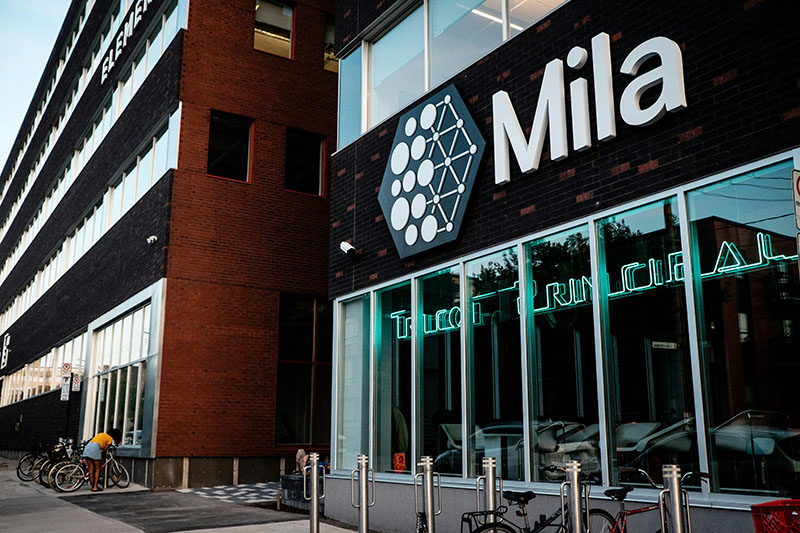
Montreal’s AI story has roots and scale. Mila, founded by Yoshua Bengio, says its community includes about 700 researchers plus over 130 students, and it describes itself as the largest concentration of academic deep learning researchers. That kind of concentration changes the texture of a city. It creates meetups, spinouts, research collaborations, and hiring pipelines.
Startup Genome says Montreal’s startup ecosystem generated $39B in value from mid-2021 to 2023. That number signals momentum, but it also raises expectations. Teams feel pressure to move fast. They hire too early. They ship before they can explain what they ship.
“I have seen founders land a strong intro because Montreal is excited about their space, then lose the follow-up because their onboarding felt like a maze,” explains Haber.
The real Montreal advantage is the mix
Montreal is not a one-trick tech city. AI is big, but it is not alone. You see B2B SaaS teams working on collaboration tools and workflow automation. You see HR and people-ops products. You see customer support tooling. That mix matters because it creates cross-pollination.
John’s own career mirrors that blend. He started close to the customer at MileBridge Software. He then moved into product operations at NorthHarbor Systems, where he built playbooks and feedback loops tied to activation and retention. He later led onboarding and in-app guidance work at Cooper & Field Labs. Those roles sit in the practical middle of tech, where success is usually decided.
“At MileBridge, I could tell in the first week if a customer would renew, because the ones who stayed could reach a first win without calling support twice,” Haber adds.

What people get wrong in this scene
Montreal teams often overbuild before they lock the story. The city is full of smart builders. That can turn into feature momentum. It can also turn into product sprawl.
Jonathan learned this the hard way at LatticeDesk. The product was eventually sunset after a strategic pivot. The lesson he took away was blunt: validate positioning before expanding features.
Quote from Jonathan: At LatticeDesk, we had a list of features we were proud of, but our best customers kept asking a simpler question: What is this for on Monday morning?
Another common miss is the handoff problem. Many Montreal teams are small. One person holds sales, onboarding, and support early on. When the team grows, those responsibilities split, and context gets lost. The work still happens, but it becomes slower and louder.
What is likely to get harder next year
Funding can be uneven at the early stage. A Canadian VC market report for 2024 notes total investment of $7.86B across 592 deals, but seed-stage investment was $510M across 201 deals, described as the lowest in recent years. That kind of pattern can hit first-time founders first.
At the same time, Quebec’s overall VC picture can look strong in dollars, while deals shift in shape. In 2024, Quebec VC deal volume fell 25% versus 2023, while invested amounts rose 35%. That can mean fewer checks, larger checks, and tougher competition for attention.
For individuals, this usually shows up as higher standards. Hiring managers want proof. Users want value faster. Teams want cleaner execution.
Quote from John: When budgets tighten, nobody has patience for a setup flow that needs a 45-minute call and a shared spreadsheet to work.
What will work in Montreal?
Keep the product promise small and sharp
Start with one clear use case. Make it easy to explain. Make it easy to try.
Action steps:
- Write a one-sentence promise for your product.
- Pick one type of user who needs it most.
- Cut any feature that does not support the first win.
Treat onboarding like the product
Onboarding is not a help center problem. It is a product design problem. John has spent years watching onboarding decide renewals.
Action steps:
- Define the first win in plain language.
- Map the shortest path to that win.
- Add in-app guidance for the top two confusing steps.
- Track where people drop off and fix that step first.
Use a weekly scoreboard that people can read in 30 seconds
In product operations, Jonathan introduced a weekly metrics scoreboard tied to activation and retention. It forced clarity. It reduced opinion fights.
Action steps:
- Pick one activation metric and one retention signal.
- Review them every week at the same time.
- Tie one decision to the data each week.
Write decisions down fast
Small teams forget decisions. Growing teams re-argue them. A simple decision log prevents both.
Action steps:
- Create a shared decision log.
- For each decision, write: decision, why, owner, next step, date.
- Review the last two weeks every Friday.
Quote from Jonathan: I have seen teams cut their meeting time just by writing down who owns the next step, because half the “alignment” talk was really “ownership” confusion.
Practical advice for individuals building a career in Montreal tech
Montreal rewards builders who can do two things at once: ship and explain.
Action steps:
- Learn one customer-facing skill (support, onboarding, interviews).
- Learn one systems skill (metrics, documentation, cadence).
- Join one community loop (pitch nights, office hours, demo nights).
- Keep a portfolio of fixes, not just features.
Quote from John: My fastest career growth came from fixing the boring problems that everybody complained about and nobody owned.
The takeaway
Montreal is strong because it combines research depth, startup energy, and real operator talent. The next year will reward teams that reduce friction, sharpen positioning, and make onboarding feel easy. It will also reward individuals who can create clarity under pressure.
If you want one simple play: choose one of the action lists above and run it for 30 days. Track what gets faster. Track what gets quieter. Then keep the parts that work.
Final note from Jonathan Haber: “Success in Montreal is not about louder launches. It is about steady systems that help good work land.”
Other articles from totimes.ca – otttimes.ca – mtltimes.ca