For many Canadians, Flanders Fields is something learned in school, heard during Remembrance Day, or remembered through the haunting words of John McCrae. For many in Montreal, it can still feel like distant European history. But Flanders Fields is deeply connected to Quebec and Canada, and on its soil, part of our national story was written.
Between 1914 and 1918, more than 620,000 Canadians served in the First World War. More than 66,000 never returned. Many came from Quebec, including Montreal and its surrounding communities. Their lives and sacrifices remain etched into the landscapes of Belgium and beyond. Walking these fields is not simply about learning history. It is about standing where Canada was tested, shaped, and remembered.
The connection between Montreal and Flanders Fields is both national and deeply personal. French Canadian volunteers from Montreal filled the ranks of Quebec battalions and reinforcement depots, helping sustain Canada’s war effort overseas. Their names are found in cemeteries, memorials, and books of remembrance across Europe.
One story that powerfully connects Montreal to this wider wartime landscape is that of Private Ivano Forget, born in Montreal on 13 July 1893. He enlisted voluntarily in November 1917, giving his home address on Christophe-Colomb Street in Montreal. A machinist by trade, he joined the 2nd Depot Battalion of the 2nd Quebec Regiment, later transferring to the famed 10th Reserve Battalion.
His story reminds us that the war’s toll extended far beyond the battlefield itself.
After sailing from Montreal to England in September 1918, Ivano Forget never reached the front in Belgium. During the height of the influenza pandemic, he fell gravely ill and was admitted to the 2nd Scottish General Hospital in Edinburgh. There, on 30 October 1918, just two weeks before the Armistice, he died from influenza pneumonia. He was 25 years old.
His death gives Montreal’s connection to Flanders Fields an even wider human meaning. The First World War was not only about mud, trenches, and artillery. It was also about disease, separation, and lives lost far from home in the final shadow of victory.
For Montrealers, this makes remembrance deeply personal. Ivano Forget was not simply a service number. He was a young man from the city, a son living with his parents, a skilled machinist, and one of countless Quebec volunteers whose lives were interrupted by war. His story bridges Montreal and Europe in a way that feels immediate and human.
For Canadians, Flanders remains the place where the country proved itself through battles such as Ypres and Passchendaele. Yet stories like Forget’s widen that understanding. They remind us that sacrifice took many forms, whether on the battlefield, in hospitals, or during the influenza pandemic that swept through the military camps of Europe.
Many visitors from Montreal discover these emotional links in unexpected ways. Some trace French Canadian surnames in memorial registers. Others are struck by how carefully Belgian communities continue to preserve Canadian memory more than a century later. In places such as Ypres, Zonnebeke, and Poperinge, Canada’s role is still taught, honoured, and deeply respected.
Flanders Fields is not only about mourning. It is about understanding the cost of peace and the responsibility of memory. Museums, preserved trenches, cemeteries, and personal stories bring the war into human focus through letters, photographs, and artifacts. These moments resonate strongly with Quebec visitors, where remembrance and identity remain closely linked.
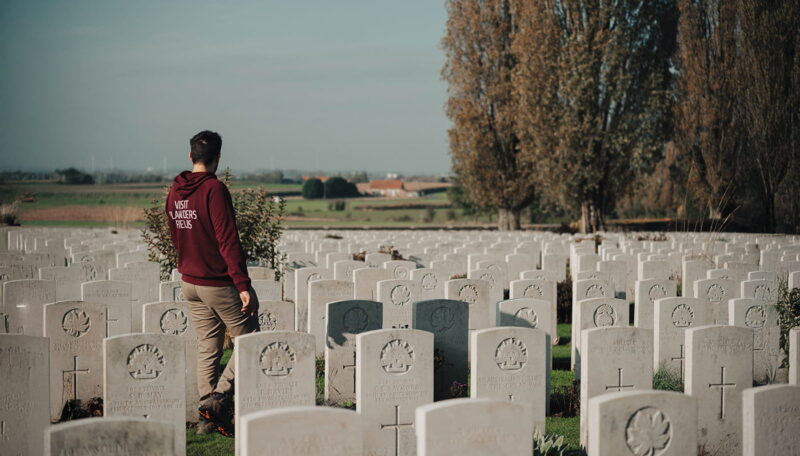
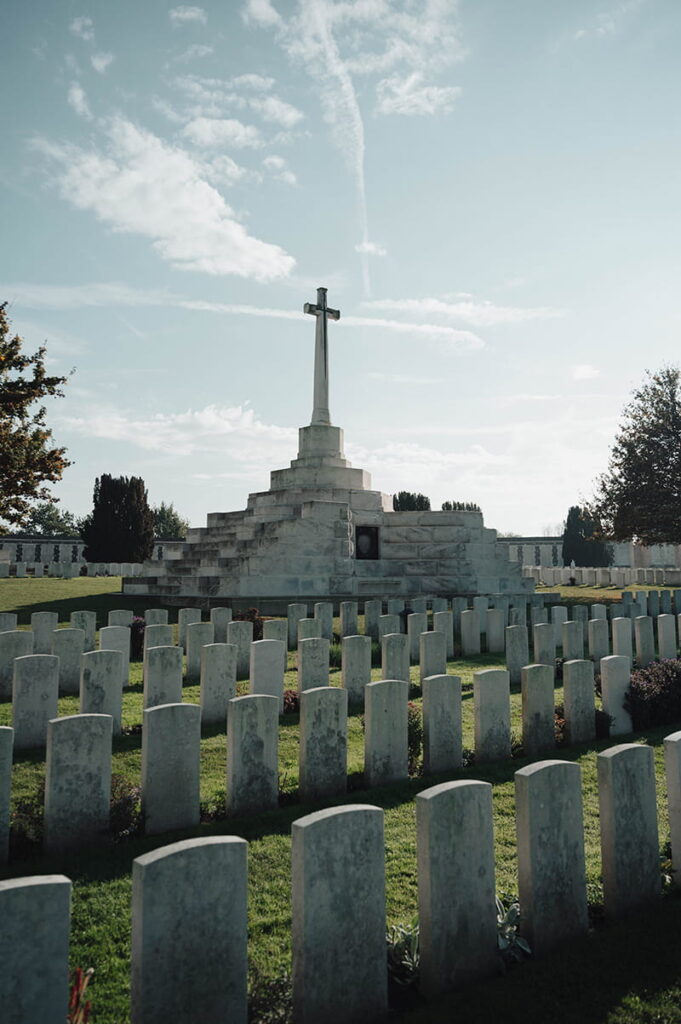
For Montrealers used to city life, the journey offers rare space to pause. A walk among the white headstones of Tyne Cot, a moment at Essex Farm, where McCrae wrote his poem, or even a reflection on the wider wartime journeys of men like Ivano Forget, invites gratitude and perspective.
Travel to Flanders Fields is also remarkably accessible. Belgium’s compact geography makes it easy to combine remembrance with cultural exploration. Flemish towns, medieval cities, excellent food, and warm hospitality all add depth to the journey. For Canadians from Montreal, this blend of history and reflection creates an especially meaningful experience.
At Visit Flanders Fields, many Canadians arrive curious and leave deeply moved. They expect history, but often discover something more personal. For Montrealers, whose city sent so many young men overseas, the journey feels intimate. It is not simply about where battles were fought. It is about honouring people like Private Ivano Forget, who left Montreal in 1918 and never returned home.
In an age when travel often revolves around landmarks and leisure, Flanders Fields offers something different: purpose. To stand in these quiet landscapes is to understand that Canada’s freedoms, memory, and place in the world were shaped here and by the journeys of people far beyond the front itself.
For Montrealers and all Canadians, visiting Flanders Fields is not simply a trip abroad. It is a journey into the heart of shared history, remembrance, and the human stories that still connect Canada to Europe today.
By Niels Declercq
Niels Declercq is the owner of Visit Flanders Fields, offering personalized historian-led tours of Flanders and Canada’s story overseas.
Other articles from totimes.ca – otttimes.ca – mtltimes.ca