MONTREAL, February 3, 2026 — Since 1955, the Quebec Winter Carnival (or Carnaval de Quebec) has attracted Quebecers from across the province, and tourists from around the world, to Quebec City for nearly two weeks’ worth of festivities, celebrations and special events that turn the provincial capital into a true winter wonderland.
140 Years Ago, Montreal was Quebec’s Winter Carnival City

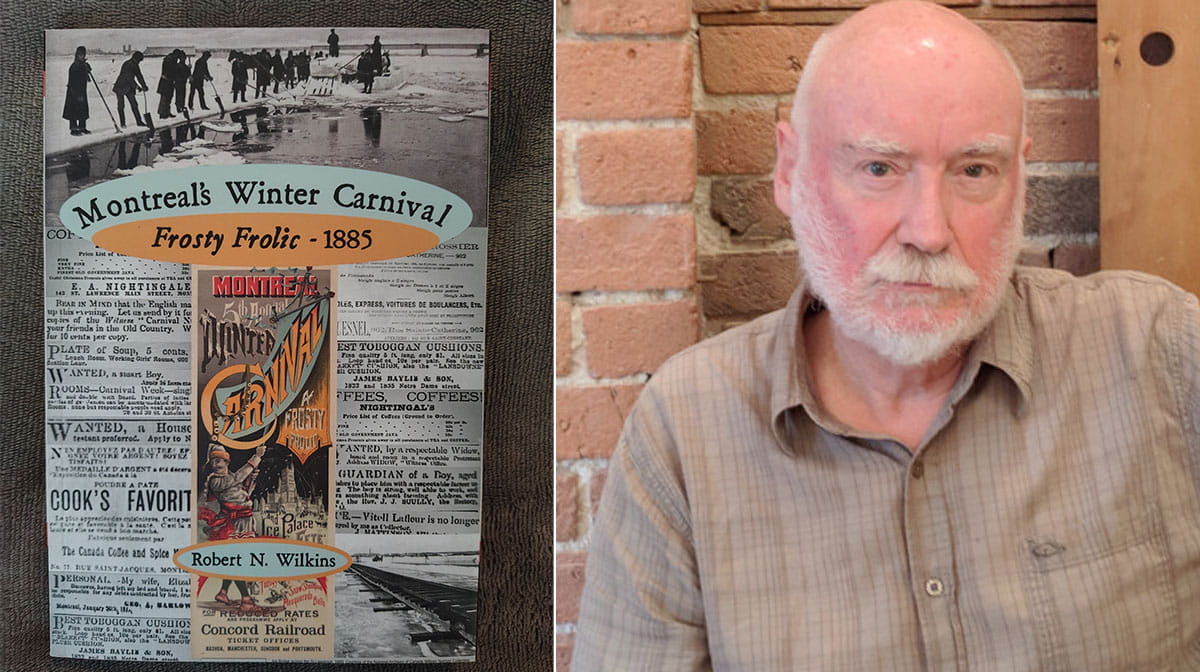
However, 140 years ago, Montreal had that distinction. During that period, Montreal’s annual winter carnivals (which were also known as the “Frosty Frolic”) turned the largest city in Canada at the time into a winter fantasy land that was filled with artistry, pageantry, splendour, competitions and outright fun. Montreal historian Robert N. Wilkins‘ latest book focuses on a typical Montreal Winter Carnival during those glory days, in particular the 1885 edition.
1885 was Not a Good Year in Montreal
That year was not a particular good one for the city. In April, a smallpox epidemic hit Montreal with an iron fist. After 15 months, the widespread illness — and the subsequent vaccination riots — claimed the lives of over 3,000 Montrealers. Therefore, the Winter Carnival provided a bright spot for the city before this tragic health crisis struck its citizens.
Wilkins’ book recaptures this festive atmosphere that enveloped Montreal during the first two months of 1885. As with his previous historical tomes, he conducts diligent archival research to tell the story, especially digging through old editions of two newspapers: La Presse and The Montreal Witness, to provide a contemporary look at how an event was organized and carried out on such a massive scale.
Taking a Close Look at How it all Came Together
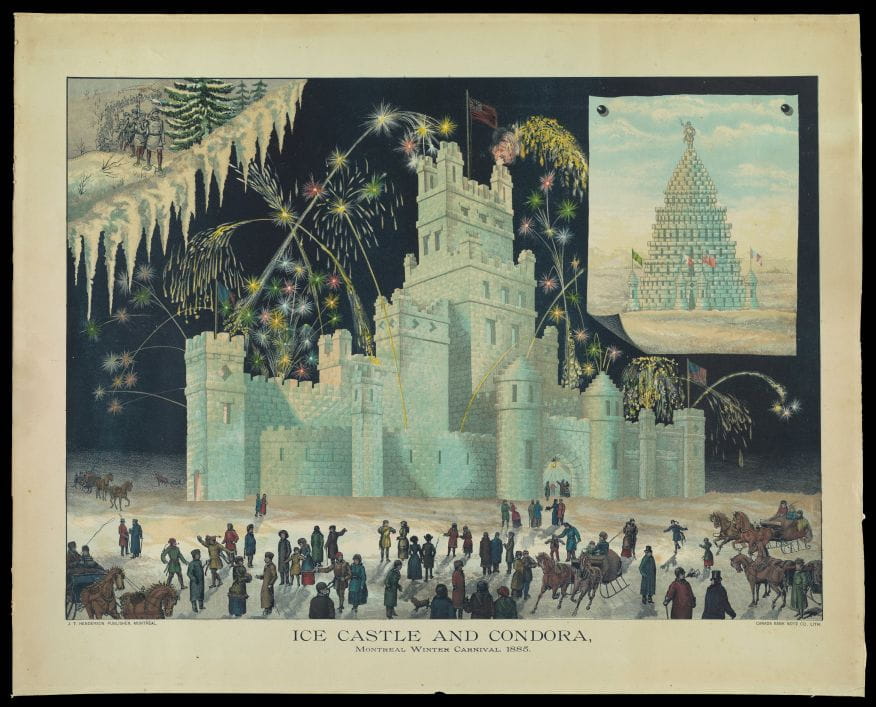
The day-by-day format takes a look at how it all came together — in both English and French — and leaves nothing out. The construction of the three attractions that served as the carnival’s focal points (the Ice Castle, the pyramid-shaped Condora monument, and the majestic Ice Lion sculpture); the numerous fancy dress balls (especially the one that took place at the Windsor Hotel); the mass of visitors who not only came from across Montreal and Quebec, but also Ontario and parts of the northeastern U.S.; the popular man-made toboggan slides and “boulevard”, which was an ice road that connected Montreal to Ile Ste. Helene (where a temporary Hunter’s Camp was built) and the South Shore; the sports competitions, which included an exhibition of a relatively new winter sport called hockey; and the VIPs and special guests who attended the carnival’s festivities (including then-Prime Minister Sir John A. Macdonald and Governor General the Marquess of Lansdowne, who was an enthusiastic participant).
Setbacks and Hardships
And Wilkins balances his account with some of the concerns and problems that plagued the carnival, like the January thaw that affected the cutting of ice blocks from the frozen St. Lawrence River, which directly affected the construction of the three main ice attractions. Then there was the swarm of pickpockets who swooped down on unsuspecting tourists and visitors, including one incident when one individual was checking in to his hotel, only to discover later that his $250 pocket watch was stolen from right under him (thanks to a crafty pickpocket who stealthily cut through the victim’s coat in order to get to the coveted watch).
Local Newspaper Accounts
One thing about the included newspaper coverage that works to the book’s advantage is that the journalists of that time had the skill and talent to offer detailed prose of what went on throughout the carnival at a time when photographs were not readily available for reproduction in daily newspapers, and the only illustrations that appeared on its pages were of the hand drawn type. As well, the written accounts were not only detailed, but kind of flowery and rather sophisticated in nature.
For example, here is part of the Montreal Witness’ account of the opening of the Montreal Tobogganing Hill on Ile Ste. Helene: “A large number of quaintly clad figures in constant procession, two long lines of many colored lights, which, seen from a distance, seemed like so many will-o’-the-wisps glimmering in seductive array, a rapid succession of fiery meteors which, rushing into space, seemed to dispute the beautiful sovereignty of the benignant moon, rushing figures descending with the speed of lightning to the nether world in mad velocity, pretty shrieks of gasping rapture and fear melodiously piercing the fine air, as time and space seemed to recede to an immeasurable distance and all the recollection was swallowed in the overpowering sensation which, though of momentary duration, seems worth a century of dull life — this, in brief, was the opening of the Montreal Tobogganing Hill last night.”
And to add some kind of levity, and a testament to Wilkins’ excellent research work, he reproduces a selection of personal ads from the pages of the Witness that might have been straightforward in 1885, but look somewhat odd these days.
Here’s one from someone seeking a place to live: “Wanted, by a respectable Widow, board and room in a respectable Protestant family.”
And then there’s one from a jilted husband: “Personal. My wife, Elizabeth Burrowes, having left my bed and board, I will not be responsible for any debts contracted by her, from this date.”
A Fascinating Montreal Time Machine Experience
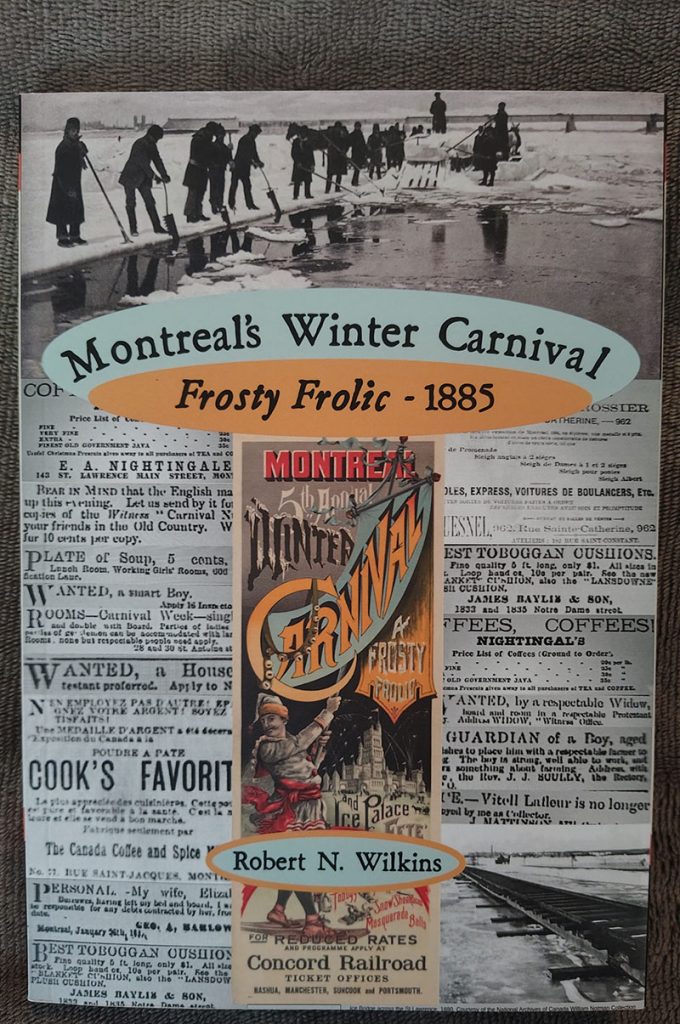
Montreal’s Winter Carnival Frosty Frolic — 1885, is a fascinating time machine of a book that takes the reader back in time to a Montreal that is no more, when a couple of weeks during the dead of winter gave a major city a lot of warmth and a much needed reason for celebration (just like the Montreal en Lumiere Festival today), and before it became internationally known as a festival city, Montreal earned itself a wide reputation as a carnival city.
published by Corner Studio, $24.99

Review by Stuart Nulman
Other articles from totimes.ca – otttimes.ca – mtltimes.ca