
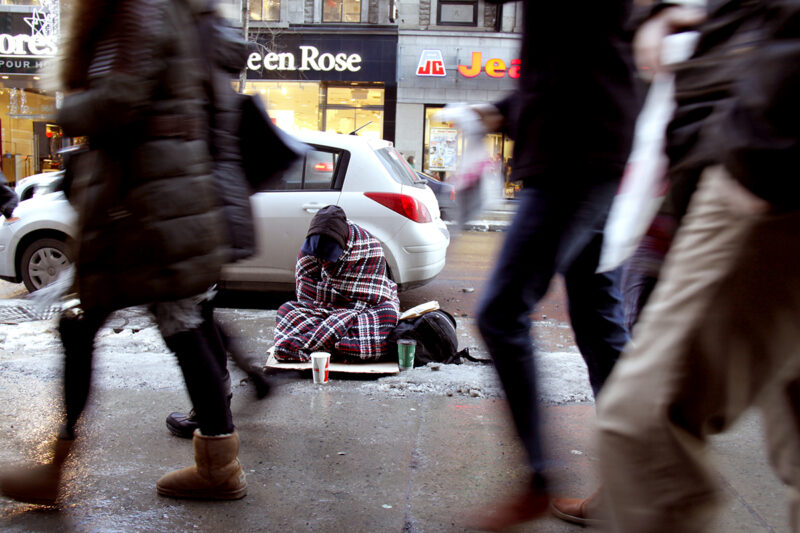
Homelessness – In a province often celebrated for its rich culture and strong social programs, the growing homeless crisis in Quebec tells a different story. Recent data revealing a 44% rise in the unhoused population since 2018 serves as a jarring wake-up call. As Cory Chamberlain from Ace Media delves into the complexities surrounding this issue, it becomes evident that immediate action is critical. The Union des municipalités du Québec (UMQ) summit, which recently convened to tackle the matter, offers a starting point, but the road ahead is long and fraught.
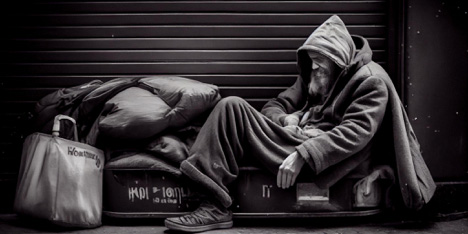
The Crisis Landscape of Homelessness
Social Services Minister Lionel Carmant unequivocally cited a housing crisis as the catalyst. Montreal Mayor Valérie Plante called for an annual construction of 2,000 housing units to meet the city’s demand. However, the province’s pledge of $20 million for shelters, which translates to just above $15 million in new money, was met with widespread skepticism, including from Plante and Quebec City Mayor Bruno Marchand.
Statistically, the inefficacy of current funding levels is palpable. According to a report by the Canadian Observatory on Homelessness, it costs approximately $7,000 per year to provide a shelter bed to an individual. By that estimate, $15 million would only be sufficient to support around 2,100 individuals—barely making a dent in the 10,000-strong unhoused population.
International Models: Learning from Finland
Marchand drew attention to Finland, a country that successfully committed to eradicating homelessness through robust policies on affordable and social housing. According to official data from the Finnish government, their approach has led to a 35% reduction in long-term homelessness. This leads us to ponder, could Quebec emulate such success?
Reimagining Housing Investments
The call for additional affordable housing units should be heeded with an investment far exceeding $20 million. Policy analysts suggest that allocating between $50-100 million could lead to a more considerable reduction in homelessness rates.
Regular Census and Actionable Data
Marchand’s call for an annual homelessness census is not only timely but essential. Constant data monitoring could reveal trends and allow for a more dynamic policy response.
A Holistic Approach
The idea isn’t merely to move people off the streets but to provide them with the tools to remain off the streets. Employment training, mental health support, and addiction services must be integrated into housing projects. For example, a commitment of $10 million toward community and skill development programs could yield long-term financial gains. According to a study by the Homeless Hub, every dollar invested in housing and support services saves $2.17 in spending on emergency services, shelters, and healthcare.
Public-Private Synergy
Tax incentives could catalyze private investment into social housing projects. Such collaborations could prove to be a game-changer, with a projected potential to cut homelessness rates by 25% in the next five years, according to policy experts.
Federal Oversight
Given the scale and complexity of the problem, federal intervention becomes indispensable. The national government could bring in additional funding and facilitate the import of successful models from other countries, such as Finland.
The Imperative for Immediate Action
As the proverbial dust settles on the UMQ summit, the spotlight on homelessness in Quebec has never been brighter or more urgent. Leaders have convened, data has been presented, and international models of success have been outlined. What’s lacking is not knowledge or resources but rather the political will to make a significant impact on a worsening crisis.
The roadmap is clear: a synergistic, multi-tiered strategy involving significant financial investments, actionable data, and public-private collaborations could make a radical difference. Mayor Marchand has argued that the know-how to solve the problem exists; what remains is to muster the collective will to implement these strategies. As the crisis continues to evolve, so too does the cost—both financial and ethical—of inaction.
Other articles from mtltimes.ca – totimes.ca – otttimes.ca