A restaurant owner is checking their phone on a quiet Tuesday morning. They’ve just noticed that they’ve got six 1-star reviews on their Google listing overnight. Two of them are complaining about poor customer service, one of them is talking about a service they don’t actually offer and the rest don’t have any text.
Sudden spikes like this can be worrying. It may be review bombing (when several people try to affect your online reputation by leaving reviews), but it could also be due to a busy evening, a genuine issue or a story being shared.
It’s important to always investigate the pattern. For the first 48 hours, it’s a great idea to gather the facts and make a note of what has occurred and what needs to be reported to Google.
What Is Review Bombing on Google?
Review bombing is usually done when a large number of reviews are left in a short period of time to affect the rating or create a change in public opinion. These can be left by people who have never interacted with your business. There may be a campaign after an online argument, a post going viral or a dispute with someone who holds a grudge. They can leave 1-star reviews with no text or multiple reviews saying the same thing.
Google does have guidance around review bombing. Its policies cover fake engagement and unusual volumes or patterns of reviews intended to affect a rating. However, this doesn’t mean that Google will always remove a set of negative reviews.
A real customer has the right to leave a negative review. For example, if 10 customers have had a poor experience at your Montreal restaurant, then these may all be genuine.
Why It Matters in Montreal
Many people would look at your rating if they wanted to book a brunch spot in Mile End, a mechanic in Saint-Laurent or a moving company before July 1. If you’re a smaller shop, you might notice quite a big change to your average rating if you suddenly get several 1-star reviews.
There is a study by ReviewsBoost looking at how resilient your rating is to 1-star reviews. Overall, the main takeaway is that if you have fewer reviews (20), then you won’t have as much protection as if you have many more (1,000). This means it’s important for newer businesses to keep an eye out for any unusual patterns. However, don’t overreact.
Montreal Times has also advised customers to look past the star ratings when looking for local services. It has an article looking at the hidden costs of cheap moving deals in Montreal, suggesting you should “read the reviews”. This is a great reminder for businesses, as customers may care just as much about how you respond.
4 Signs to Look Out For
There isn’t an exact way to know if someone is running a review bombing campaign. However, there are a few things to look out for.
- Multiple 1-star reviews in a short amount of time.
- Unusual similarity in language across different reviews or the same specific complaint.
- Multiple reviews mentioning something that doesn’t relate to your business.
- A sudden increase in reviews after a public argument or a call asking people to leave reviews.
These are just signs to look out for. Just because someone doesn’t have a profile picture doesn’t mean they aren’t a real customer. They may have paid cash or visited with a friend, so they wouldn’t show up in your bookings. Multiple complaints can also point to a genuine issue.
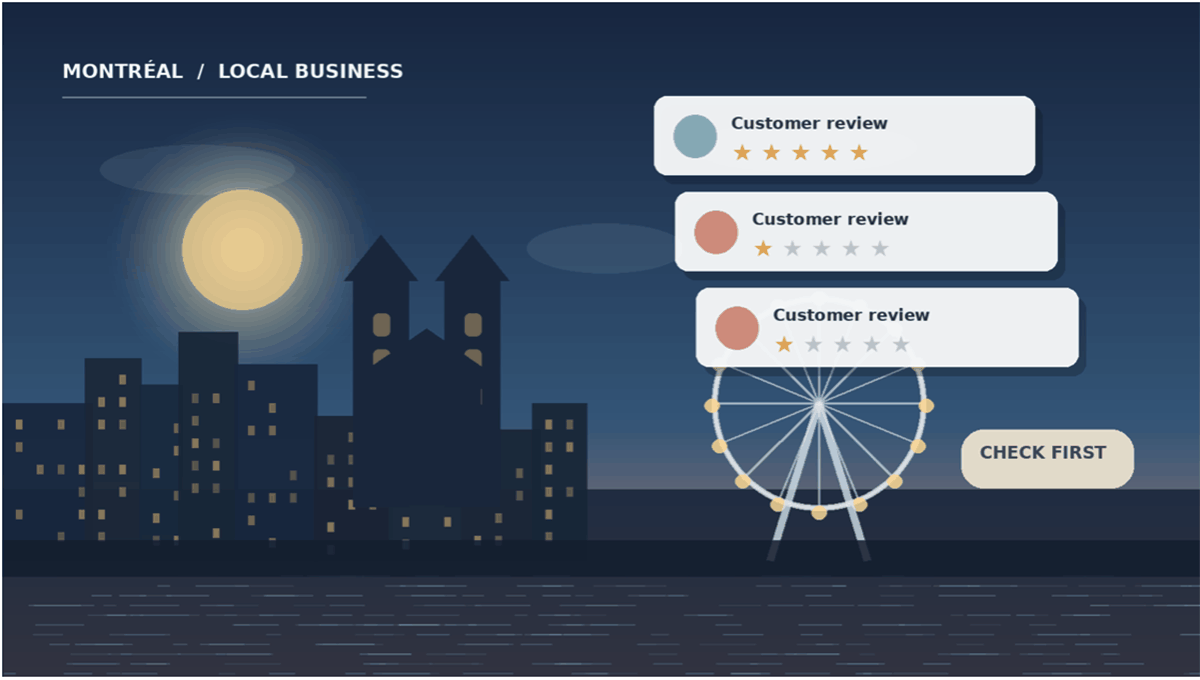
Image Source: Original illustration created for this article
Things to Do in the First 48 Hours
1. Document What You Can
Note down the links to the reviews, dates and star ratings. If the timing or the same language is important, take screenshots of the reviews. Have a simple log to refer back to.
If someone says they went at a certain time, check your opening hours. Don’t ask for any unnecessary personal details. The aim is to verify the claims, not to find out who they are or shame them.
2. Talk to Your Staff
Ask the staff what happened whilst they were working. Were there any delays with orders, issues with bookings or any confusing messages on social media? Whilst it can be uncomfortable to have a sudden increase in complaints, it’s important not to dismiss genuine feedback as fake.
If there was a genuine issue, then make sure you sort it out. Customers will be more likely to trust you if you admit to what happened.
3. Check for Policy Violations
If you have evidence of fake interactions or policy violations, then you can report the reviews. Go to your Google Business Profile and select the relevant reviews. Google has instructions on how to report a review. Choose the reason that fits and keep it factual.
4. Make a Calm Response
Whilst waiting for Google to act, potential customers will still see the reviews. Make a short response to show you’re taking it seriously.
“We take feedback seriously and are looking into the concerns raised. We have not been able to confirm the details of this experience. If you visited our business, please contact us directly so we can investigate.”
Depending on what’s best for the customer, consider responding in French. Montreal businesses often use both languages, so make sure your response is clear. Don’t publish any personal details, accuse anyone of being a competitor or offer incentives.
Don’t Try to Boost Your Average with Fake 5-Star Reviews
A sudden drop in your rating can make you want to ask friends to leave positive reviews or offer discounts for 5-star ratings. However, this can create another issue. Google does not allow fake or incentivised reviews.
You can still ask real customers to leave honest reviews. Keep your request neutral and make sure any feedback is from a genuine experience. Having a credible profile is more beneficial in the long run.
When to Ask for Help
As a business owner, you may be able to manage a few suspicious reviews yourself. If you start to get a large cluster, it may be difficult to work out what’s going on, especially if you have multiple branches, potential conflicts of interest or lots of previous attempts at reporting.
Using a Canadian service like ReviewRemoval.ca can help you determine if the Google reviews are violating any policies and help you create your removal requests. Make sure to ask what policy it may be, what evidence is needed and what will happen if Google doesn’t remove the reviews. No one can guarantee that regular negative feedback will be removed.
Keep an Eye on Reviews
After the initial rush has passed, keep an eye on the reviews for the next few weeks. Has the unusual pattern continued? Has Google acted? Have you needed to update your responses? If there was a genuine issue, then make sure the business has resolved it.
For a café, salon or local contractor in Montreal, a few bad reviews can feel like a huge issue. The best thing to do is try to separate fact from suspicion, follow the correct processes for reporting and keep providing excellent service. This gives your business a fair chance of recovering and you won’t treat every unhappy customer as your enemy.
contributed post