Saving the City – Montreal will always be regarded as a great cosmopolitan city. But since the late Jean Drapeau retired as its mayor in 1986 after 29 years in office, there were times that Montreal became an ungovernable city.
During municipal election campaigns for most of that 29-year period, Drapeau and his Civic Party ran with little or no opposition. That changed in 1974, when the Montreal Citizens’ Movement (MCM) was established as a response to Drapeau’s increasing autocratic ways, and ran a field of candidates during that year’s election.
As of 1986, when the late Jean Dore was elected as Montreal’s mayor, and through the terms of his successors in the mayor’s chair – Pierre Bourque, Gerald Tremblay, Michael Applebaum and Denis Coderre – Montreal became increasingly ungovernable. It became a growing list of urban and administrative decay. For example, the distinction of being known as the Poverty Capitol of Canada; the water meter scandal; Applebaum’s 2013 arrest on corruption charges; the 375th anniversary celebration debacle; and the Formula E race fiasco.
And like the rise of the MCM starting in 1974, another municipal political party was being established as a response to the growing corruption that permeated the Tremblay administration. During the early 2000s, a party called Projet Montreal was having its genesis as a grassroots organization under the guidance of Richard Bergeron, a municipal employee who was an expert in public transportation. Known for his encyclopedic knowledge of transportation and his ability to compile and write thorough studies and reports on that subject – that for most part went unnoticed – Bergeron created Projet Montreal with some rather environment-oriented platforms in mind, such as bringing back tramways to the streets of Montreal for the first time since they were removed in 1959, and turning Montreal into a green, human-scale type of city.
For the next decade and a half, Projet Montreal – although forming a solid support base in the Plateau district during its early years – was going through its share of growing pains before they became a force to be reckoned with in municipal politics, and regarded as a viable alternative to Denis Coderre’s arrogance of power at city hall. It all culminated in 2017, with Projet Montreal’s leader Valerie Plante winning a convincing victory over Coderre and becoming the first woman to be elected as Mayor of Montreal.
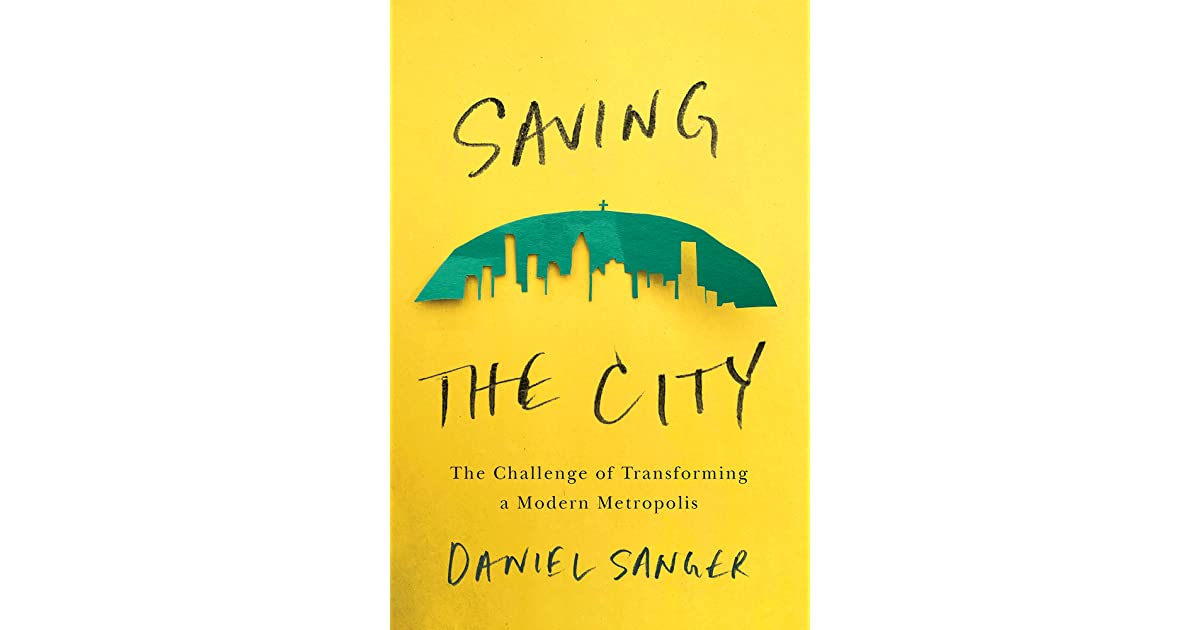
Daniel Sanger, a veteran journalist who was practically present at the creation of Projet Montreal (he worked for the party’s administration arm for nearly 10 years), gives a fascinating first-hand account of this turbulent period in Montreal’s recent history with his book Saving the City.
What at first is a book that could be conceived as a dry, cerebral one is actually an engaging look at modern municipal politics from the grassroots level in the backrooms, kitchens, living rooms and church basements where Projet Montreal evolved. And Sanger’s journalistic background (he was the founding editor of the lamented and much missed Montreal Mirror, as well as a reporter for The Gazette, the Canadian Press and The Economist) – not to mention his years as a Projet Montreal insider – makes him the ideal person to chronicle the rise of a municipal party from obscurity to the halls of power.
Sanger’s penchant for detail and thoroughness makes this book read like a political TV drama a la House of Cards. Richard Bergeron is seen as the visionary and man of ideas of this new grassroots party, but his more scholastic approach to urban affairs and local politics increasingly makes him the person who should not be the public face of Projet Montreal; Luc Ferrandez, one of Projet Montreal’s first councilors, is the person who can fulfill that public face role, but regardless of his commitment to his Plateau constituents, his self-centred nature and approach to the duties of a city councilor (he rarely attended party caucus and municipal council meetings), made him the rebel and enfant terrible figure, who was filled with the arrogance of power); and Valerie Plante, the councilor who literally came out of nowhere, and was known for her progressive attitude when it came to serving her community – although she was seen as an individual who wasn’t exactly filled with ideas or a vast knowledge of urban affairs – even though the party executive (especially Bergeron) didn’t think she had what it took to be part of the team, let alone get elected to council under the Projet Montreal banner. As well, Sanger gives the proper due credit to the people who were the unsung heroes of the rise of Projet Montreal from its earliest days, like Patrick Cigana, Christine Gosselin, Francois Limoges and Claude Mainville.
As well, the book is almost like a primer on how to create a city political party, especially one with a single – yet vital – issue that forms its foundation. Through their moves for things like wider sidewalks, more bike paths and less auto traffic in the downtown core, it shows how Projet Montreal manage to accomplish these issues that identified their raison d’etre, but learned the hard way the mechanics of how a municipal administration operates and the slow, time-consuming manner it goes through for such issues to be addressed and hopefully resolved.
Filled with plenty of backroom maneuvers, discussions, strategies, personality and ego clashes, not to mention backhanded betrayals (especially when Bergeron joined forces with Denis Coderre in 2014 and ran for re-election in 2017 with team Coderre), Saving the City is an important, expansive work dealing with a chapter of recent Montreal history, and how a small group of progressively-minded people quietly started a political party with the mission of resuscitating a great Canadian city and making it governable again.

Other articles from mtltimes.ca – totimes.ca – otttimes.ca

Montreal’s best pizza slice

Caerula Mar Club a new standard in paradise – South Andros Bahamas