On April 10, 1912, the White Star ocean liner company launched the crown jewel of its fleet from the English port city of Southampton. Named the “Titanic”, its maiden voyage was to cross the Atlantic Ocean towards its targeted destination of New York City.
It goes without saying that sadly, it never made it there.
Four days after it set sail, on the evening of April 14, the Titanic—which was deemed as “unsinkable”—struck an iceberg. Within two hours, this “Ship of Dreams” sunk two-and-a-half miles to the bottom of the Atlantic off the coast of Newfoundland, taking about 1,500 of its 2,200 passengers and crew with it. The remaining 700 people who survived this unspeakable maritime disaster were rescued hours later by the ocean liner RMS Carpathia, which brought them to safety in New York.
More than 110 years since the tragedy, the story and mystique of the Titanic and its tragic sinking has been the subject of endless fascination around the world, thanks to countless books (i.e., the bestselling account A Night to Remember by Walter Lord), documentaries, movies (for example, James Cameron’s 1997 Oscar-winning epic) and the historical discovery of the wreckage by Robert Ballard in 1985.
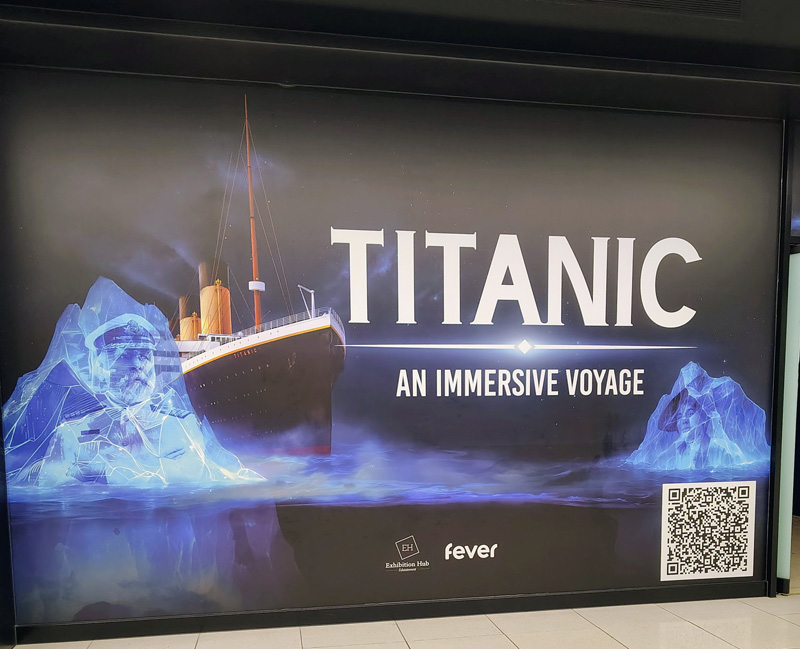
Titanic: The Immersive Voyage
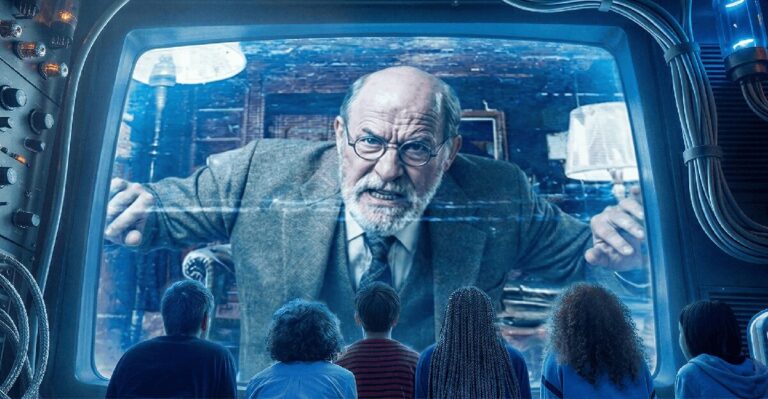
Now the complete story of the Titanic, its sinking and its legacy, is told in an interactive, all encompassing touring exhibition called “Titanic: The Immersive Voyage”, which is currently docked at Place Bonaventure.
The Experience
As one enters the exhibition space, there are numerous Titanic factoids that line the corridor on the way to the exhibition entrance, which effectively serves as a kind of introductory orientation to the ship’s history and its growing mystique (a personal favorite is the one that tells about “Futility”, a novel that was published in 1898 and tells the story of the sinking of a ship after it hits an iceberg; the name of that certain ship was the “Titan”).
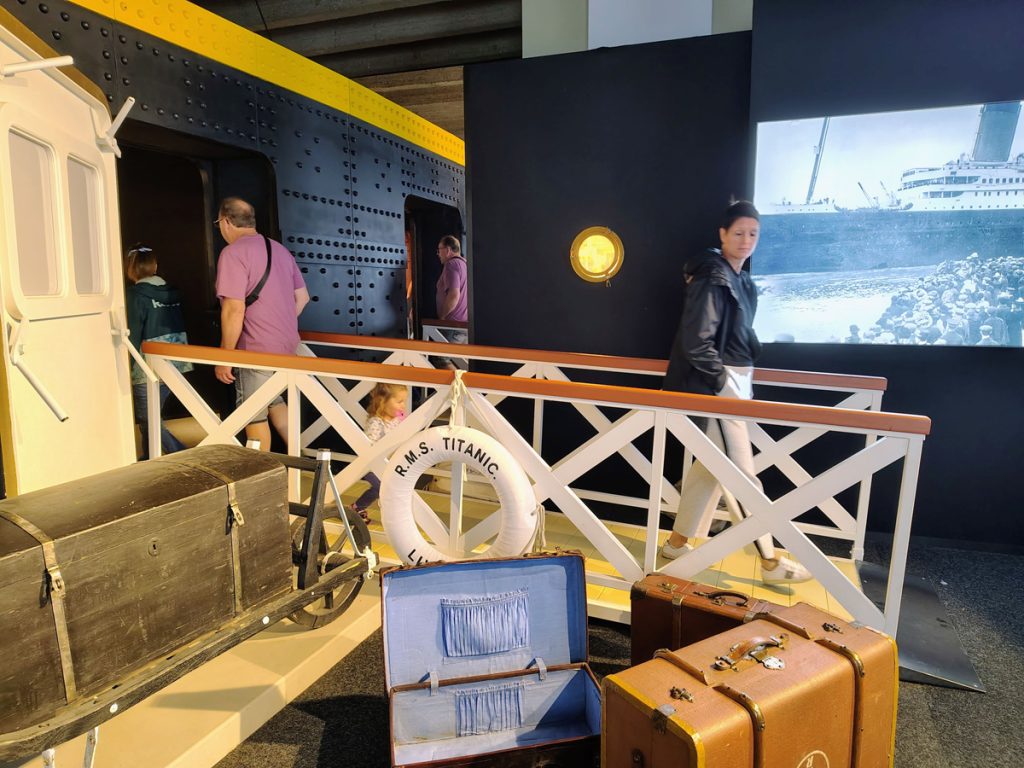
Extreme Immersion
The immersive aspect of the exhibition certainly lives up to its billing many times over. The moment the visitor sets foot into the exhibition space, they are immediately immersed into the world of Titanic and the golden age of travelling by steam-powered ocean liners, as if they are floating 5-star hotels. That ranges from actual scale recreations of the accommodations for all three classes of ticket holders, the dining rooms, the lounges and recreation rooms, the bridge of the ship, and even the massive engine rooms that kept the Titanic going with the constant feeding of coal by its crew of “firemen”.
Selfie Opps Galore
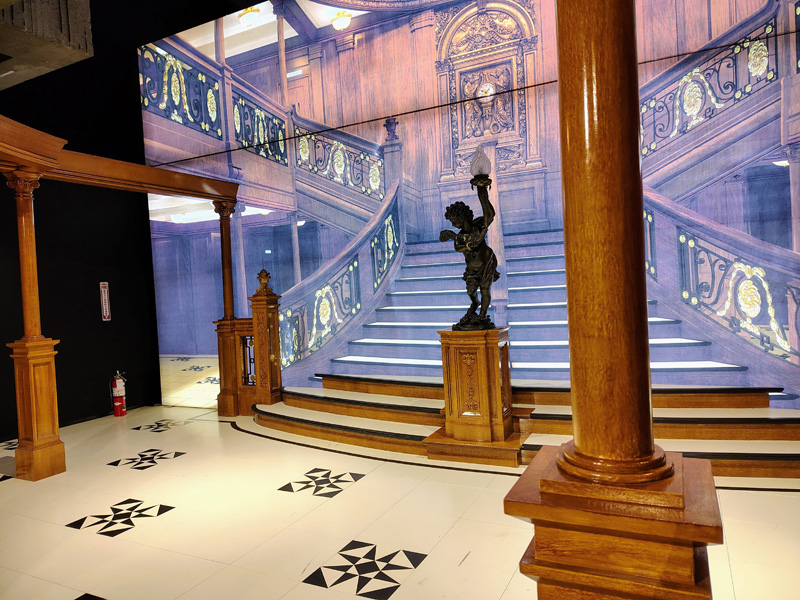
There are also photo opportunity spots where visitors can live their own Titanic moment, from the famous bow of the ship (the Leonardo Di Caprio/Kate Winslet “I’m flying” scene), the gangplank leading to the entrance of the ship, and its majestic, iconic Grand Staircase.
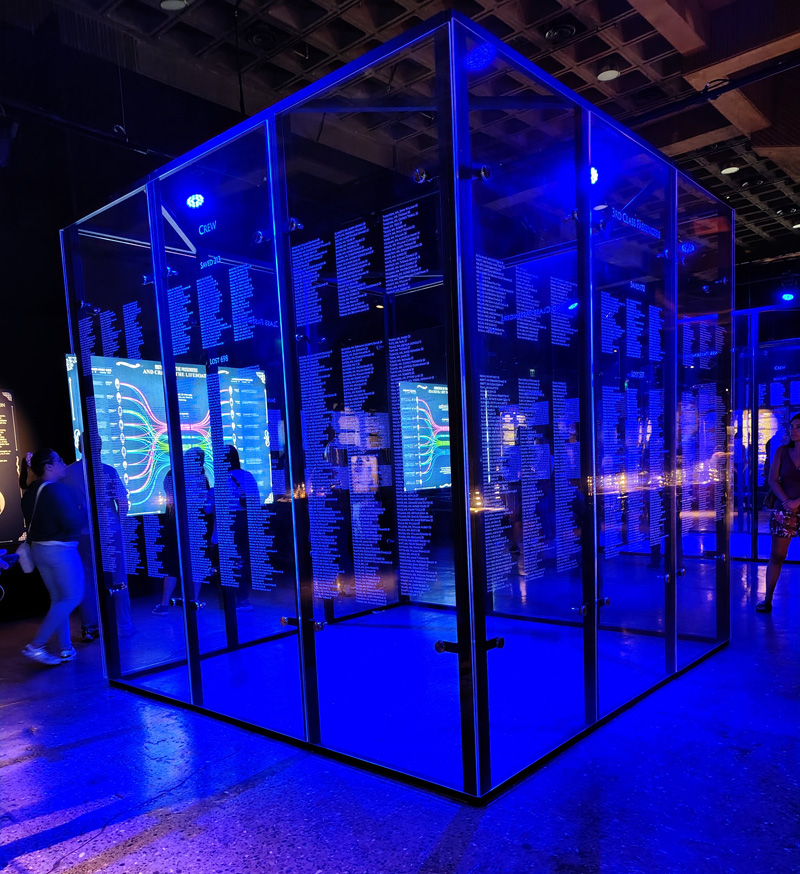
Chilling Minute by Minute Iceberg Encounter
Besides experiencing the splendour of the ship, visitors also get a “you are there” experience to the tragedy, including a minute-by-minute encounter with the iceberg from the point of view of the crow’s nest, where Seamen Frederick Fleet and Reginald Reed spotted the iceberg on that cold, dark April night.
That Sinking Feeling
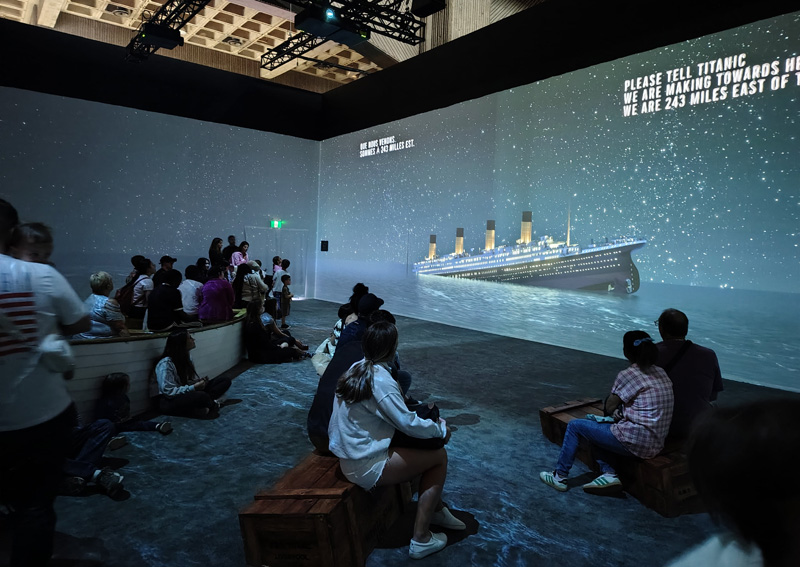
Perhaps the most riveting part of the immersive experience is the actual sinking. From the point of view of one of the lifeboats—or the discarded pieces of luggage and trunks floating in the frigid Atlantic Ocean—visitors view the tragedy on a massive circular screen, as they relive the drama via accurate computer generated graphics and actual telegraph dispatches between the Titanic and three other liners (the Carpathia, the Olympic, and the Californian), as they receive Titanic’s desperate distress signals and wait to see which other ship would provide that much needed rescue.
The atmosphere in this part of the exhibition is one of “you can hear a pin drop” silence, as visitors witness this maritime marvel descend to its watery grave.
Thorough Recounting
A major takeaway from this exhibition is its diligent factual research that leaves nothing out about the Titanic and its tragic sinking. Visitors will discover that it’s a story filled with ironies, misjudgements, wrong decisions and arrogance that if they were competently looked after, the sinking might not have happened.
Important Detail Not To Be Overlooked
One of the glaring ironies involved veteran crew member David Blair. He was removed from the ship’s crew because he was too senior for his new assignment of third officer; however, he forgot to return one of his issued keys before he disembarked from the ship. That certain key was for the lock that secured the cabinet which stored all of the binoculars for the crew’s use. As a result, they had to use only their eyes to spot any oncoming trouble along the way, including icebergs.
300-Plus Curated Artifacts
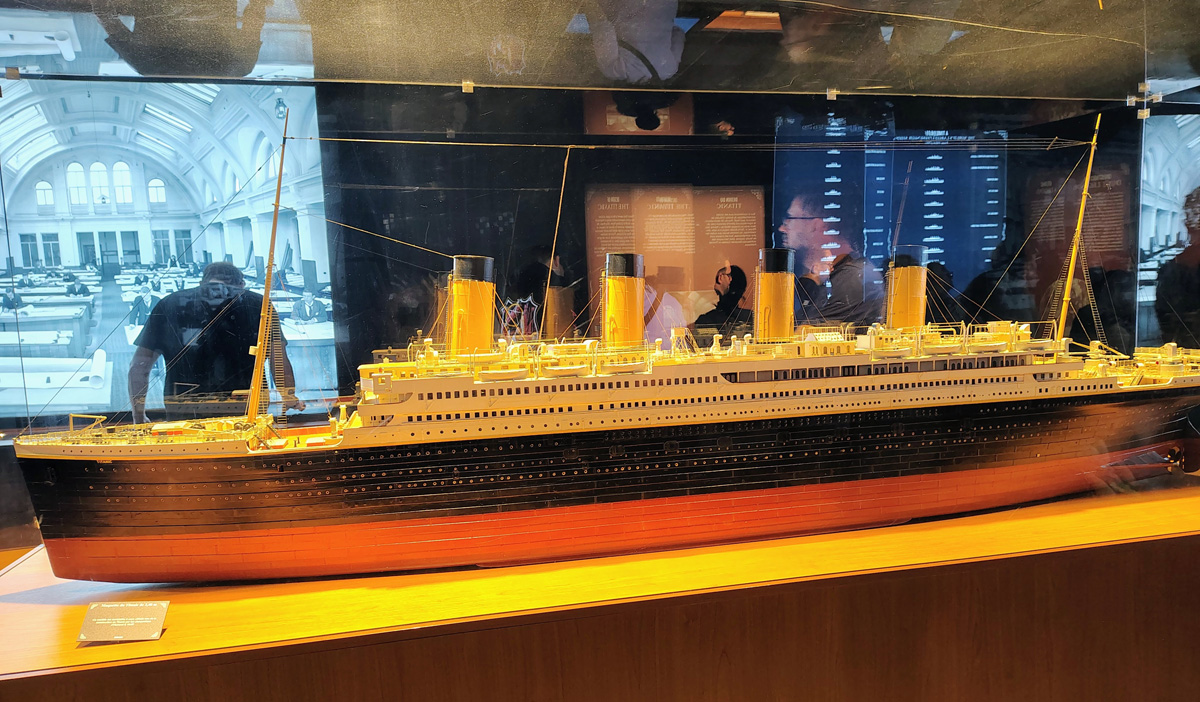
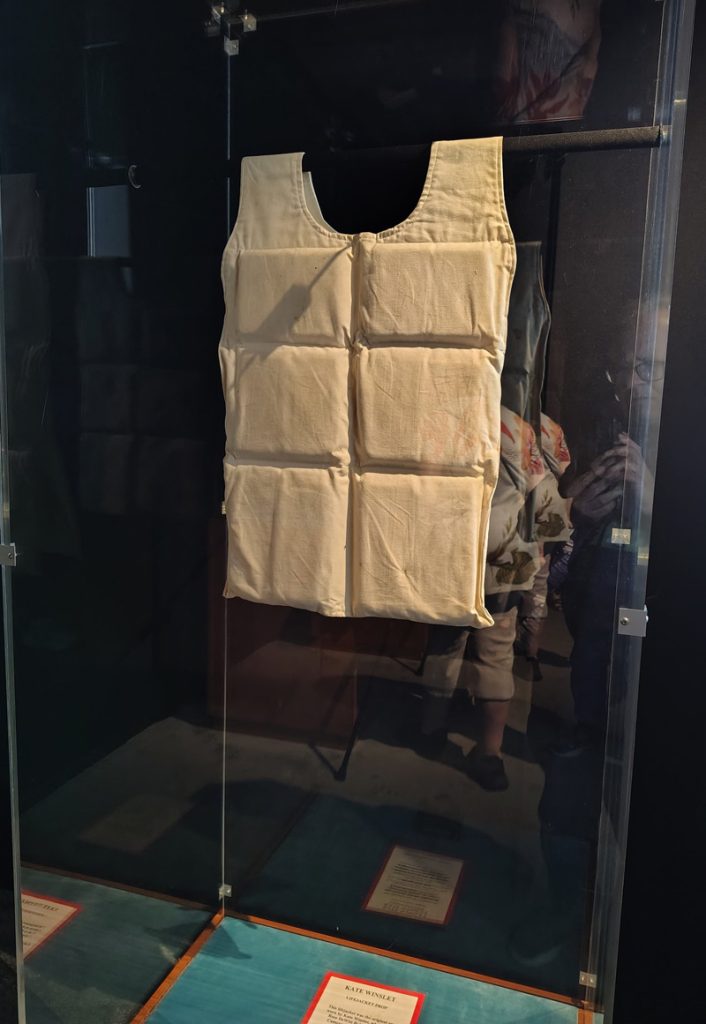
Another highlight is the more than 300 curated artifacts that are on display throughout the exhibition (from a total of over 2000 items). That includes documentation, uniforms, furniture, photographs, dinnerware, and even the life jacket that Kate Winslet wore during the filming of James Cameron’s “Titanic”.
VIP Perks
If you happen to purchase a VIP ticket, it comes with some certain perks. First, when you arrive to get your ticket scanned, you receive a souvenir commemorative poster, as well as a White Star Line boarding pass that carries the name and vital information of an actual Titanic passenger (my boarding pass was that of Patrick Connors, a 66-year-old native of Ireland who emigrated to New York and was returning home from a trip to his birthplace to visit his sister; he was a passenger in the third-class section).
Another perk of holding a VIP ticket is access to the exhibition’s virtual reality section. Located near the exit of the exhibition space, the VR section gives the visitor the opportunity to experience Titanic up close from the specially programmed VR goggles. It starts from the point of view of a deep sea submersible craft as it explores the wreckage of the ship, and then transforms into the way the ship looked like back in 1912, just before and during the sinking. It’s quite a fascinating—and somewhat harrowing—experience that is not to be missed.
A Living History
Titanic: An Immersive Voyage is a wonderful example of “living history” that is highly informative and entertaining. If one ever wondered why a single ocean liner and its tragic ending holds such widespread fascination with so many generations for over a century, this exhibition certainly provides those answers.
For more information, go to expo-titanic.com. To purchase tickets for its Montreal run at Place Bonaventure, go to feverup.com.

story and photography by Stuart Nulman
Other articles from mtltimes.ca – totimes.ca – otttimes.ca