Broadleaf weeds cause headaches for farmers across Canada. Throughout the growing season, from spring through fall, broadleaf weeds compete with crops for light, nutrients and moisture. When left unchecked, these weeds reduce yield, stunt emergence and increase input costs. Preventing weeds before they become problematic is a cornerstone of modern agronomy.
For growers and agronomists across Canada, controlling broadleaf weeds is a seasonal priority. Whether you grow cereal crops, pulses, oilseeds or specialty crops, effective weed control is a key part of any long-term crop protection in Canada. Here’s why broadleaf herbicides play an important role in your productivity.
Know your weeds: broadleaf types
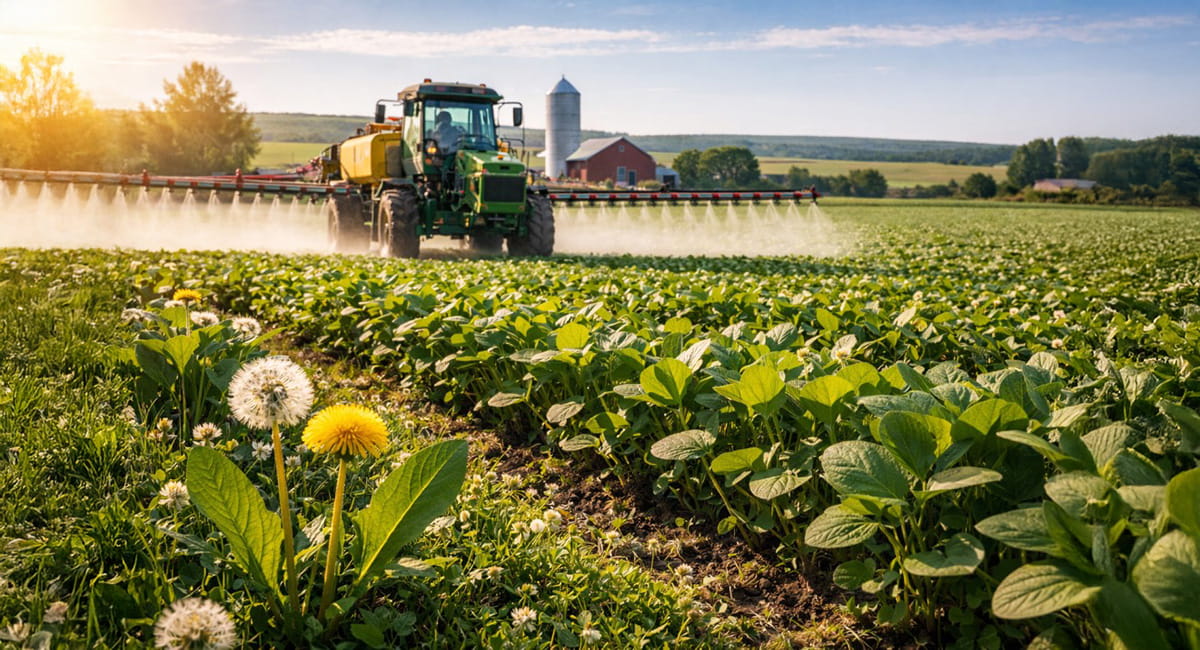
So called because of their wide, flat leaves, broadleaf weeds stand out from grassy weeds. Lamb’s-quarters, cleavers, ragweed, dandelion, pigweed and wild buckwheat are all examples of broadleaf weeds. Lamb’s-quarters and pigweed are often early-emerging weeds that aggressively compete with crops for soil nutrients.
Other broadleaf weeds, if left unchecked, can quickly overwhelm and smother young crops. Cleavers, for example, can rapidly cover a field. Preventing weeds early means your crops will have access to sunlight and nutrients when they need them most – at critical stages of development.
Broadleaf weed control products and practices

An effective weed control program should include products that control broadleaf weeds. Broadleaf weed killerare formulated to control common broadleaf weeds while leaving grasses and cereals intact when used as directed. Using the right herbicide at the right time promotes healthy crops and maximises yield potential.
Several herbicide families offer broadleaf control at multiple stages of the crop life cycle. Pre-seed burndown herbicides provide fast, effective weed control before your crop emerges. Many pre-emergent products prevent weeds from emerging from the soil. Choosing the right herbicide for your program now will set your crop up for success later.
Burndown herbicides often work quickly to control weeds before planting. When tank-mixed with the right partner, some broadleaf herbicides can function as contact products to immediately kill weeds. Others provide residual activity to control emerging weeds. Using multiple tactics will keep your fields clean and help maintain the effectiveness of in-crop herbicide options.
Rolling broadleaf killers into your weed control program
As with disease and insect control, prevention is the best approach to weed control and broadleaf herbicides should be one tool in your integrated toolbox. Building a successful weed control program starts long before planting season and lasts until harvest. Effective planning will ensure you always stay one step ahead of weeds.
One way to get ahead of weeds early is with a pre-seed burndown. Many pre-seed herbicides offer broad-spectrum control of grassy and broadleaf weeds and can be mixed together to create your own custom program. Soil-active, pre-emergent herbicides control weeds as they emerge, providing another layer of defence against grassy and broadleaf weeds. This is especially useful in fields where you observe repeated flushes or encounter resistant weed populations.
Controlling broadleaf weeds in Ontario, Quebec and Western Canada
Not all farms across Canada face the same weed pressures or crop rotations. A successful weed management strategy in Ontario will differ from one designed for Western Canadian wheat or barley growers. Understanding the weeds affecting your crop will help you tailor management practices to your operation for optimal results.
If you grow soybeans, corn or other specialty crops in southern Ontario or Quebec, you’ll want to make sure you have broadleaf herbicides ready for your pre-plant and early post-emergence programs. Warm temperatures and longer growing seasons create ideal conditions for weeds like fleabane and lamb’s-quarters. Western Canadian farmers who grow cereal and pulse crops battle different species of cleavers and wild mustard – broadleaf weeds that thrive in our prairie climate.
No matter what you grow or where you grow it, using effective herbicides as part of an Integrated Pest Management strategy (IPM) can reduce your risk of developing herbicide-resistant weeds. Combine effective products with good scouting, proper timing and crop rotation to not only control weeds, but to prevent future issues.
Building Resilient Fields for the Future
As agriculture continues to evolve, the importance of proactive and integrated broadleaf weed management cannot be overstated. By employing a combination of pre-seed burndown applications, selecting the most appropriate herbicides and rotating crops, growers can disrupt weed life cycles and minimise the risk of herbicide resistance taking hold. Regular field scouting and timely interventions further strengthen these efforts, allowing problems to be addressed before they affect yields. It is also essential to recognise that no single solution works for every farm or every season.. As new weed species emerge and resistance issues develop, staying informed about the latest agronomic research and product innovations is critical.
submitted post
Other articles from totimes.ca – otttimes.ca – mtltimes.ca