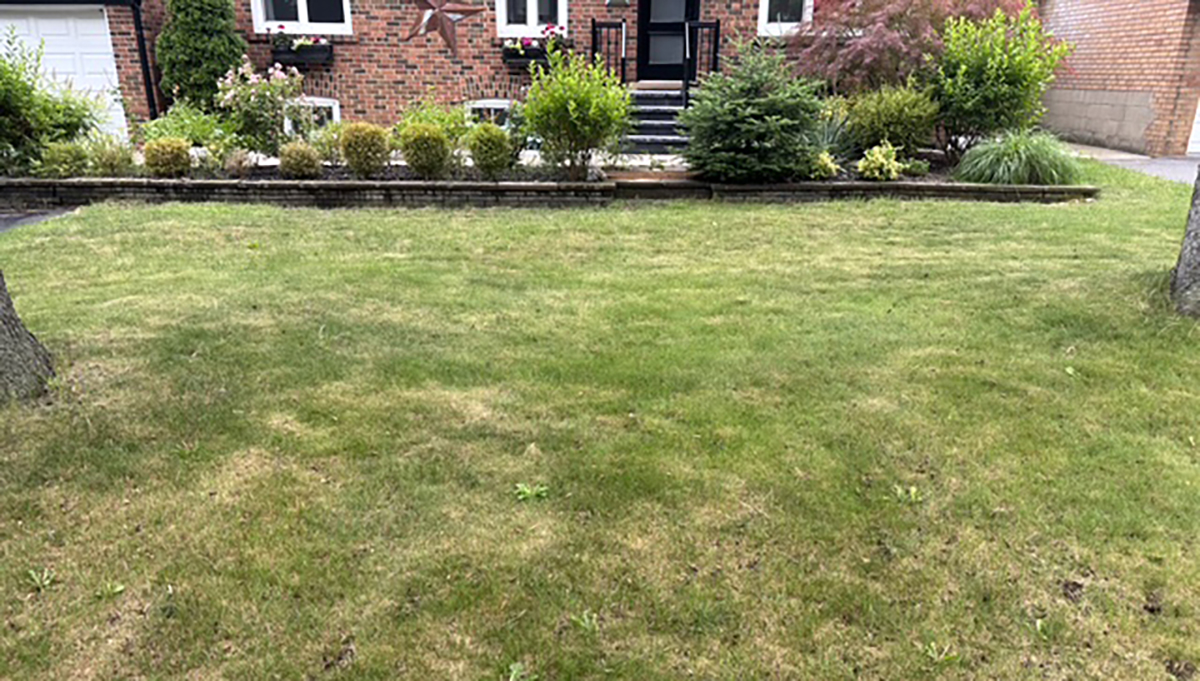
Buying a home in Greater Montreal comes with the dream of a lush, green backyard. You look forward to summer BBQs and watching the kids play on the grass. But then July hits, and suddenly your beautiful lawn starts developing ugly brown patches.
It is one of the most frustrating sights for a local homeowner. You are watering faithfully; the classic Quebec summer rains are coming, and yet the brown spots keep spreading. Most people assume the grass is just thirsty and turn on the sprinkler system.
However, brown grass in the summer is rarely a simple case of “needs more water.” In fact, pouring more water on the problem can ruin your soil and kill your turf. You need to know exactly what is happening under the surface to fix it right.
Cause #1: Uneven Irrigation Coverage
This is by far the most common culprit in Quebec yards, and it fools many homeowners. Look closely at the pattern of the dryness. If your brown spots are fairly defined—a patch here, a dry strip there—while the surrounding grass stays green, your sprinklers are not hitting those spots evenly.
Piling on more water does absolutely no good here. You are just drowning the healthy sections while the dry patches stay completely bone-dry.
Uneven coverage usually comes from a basic mechanical issue:
- A broken or clogged sprinkler head.
- A head that has been knocked out of alignment by the lawnmower.
- Mismatched heads on the same zone are spraying at different rates.
- Low water pressure is leaving some heads barely spraying.
Fixing this does not require a higher water bill. It requires correcting the alignment so every single inch of your lawn gets its fair share. Watch your system run through a full cycle. If you notice underwatered areas or significant pressure drops across multiple zones, it is time to call a local Montreal irrigation professional to check for cracks in underground lines.
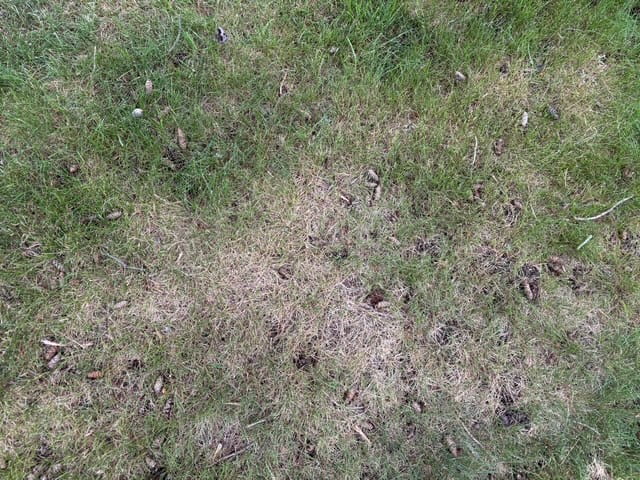
Cause #2: Summer Fungus and Disease
Montreal’s summer weather can be incredibly erratic. We often get intense, humid heat followed by sudden heavy downpours. This specific combination creates the perfect breeding ground for lawn fungus.
Fungal problems such as brown patch or dollar spot are often mistaken for drought stress. But they behave very differently. A telltale sign is that fungal patches are often roughly circular and have a distinct, darker ring around the edges.
Here is the cruel irony: overwatering actively feeds the fungus. If you see browning, assume the lawn is thirsty, and add more moisture; you are making the disease stronger.
If the browning looks blotchy and appears in damp, shady, or low-lying areas of your yard, stop watering immediately. Switch your schedule to the early morning so the sun dries the blades during the day, and let the soil breathe.
Cause #3: Chinch Bugs and Local Pests
While cool-season grasses like Kentucky Bluegrass are popular in Quebec, they have a massive summer enemy: the chinch bug. These tiny insects love hot, dry weather. They actively suck the liquid out of grass blades and inject a toxin that stops water movement inside the plant.
Chinch bug damage spreads outward quickly. It almost always starts near hot edges like sidewalks, asphalt driveways, and stone patios. Homeowners misdiagnose this as drought because it shows up in the hottest parts of the yard.
Pro-Tip:
If your lawn is browning right along the pavement, get down on your knees. Part the grass at the very edge of the damaged area and look closely at the soil surface. If you see tiny, fast-moving black and white insects, you are dealing with a pest infestation, not a dry spell.
Cause #4: Mowing Too Short (Scalping)
We get it—life gets busy, and it is tempting to cut the grass extra short to stretch out the time between mowings. However, this backfires badly during a Montreal heatwave.
Cutting your grass too low exposes the delicate soil and the lower stems to intense sunlight. This dries out the root system instantly and stresses the lawn precisely when it needs to be resilient.
Taller grass shades its own roots, retains moisture naturally, and resists weeds far better. Raise your mower blade height this summer. It is the easiest, cheapest way to protect your backyard investment.
How to Tell the Difference Before You Act
| Symptoms | Likely Cause | Quick Solution |
| Defined dry patches next to green areas | Irrigation Coverage Issue | Adjust sprinkler head alignment |
| Circular patches with dark outer rings | Fungal Disease | Reduce watering; water only in AM |
| Spreading brown spots near driveways/sidewalks | Chinch Bugs / Pests | Apply targeted pest control |
| Uniform, blue-grey fading across the whole yard | Actual Drought Stress | Deep, consistent watering |
A Green Yard Requires the Right Diagnosis
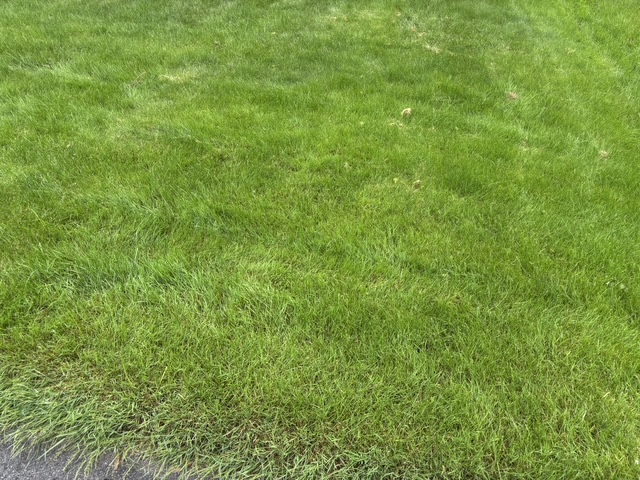
Every homeowner wants a beautiful outdoor space to enjoy during our short, precious Canadian summers. But achieving that means learning to read what your soil is actually telling you.
The homeowners who keep green lawns through a Florida or Montreal-style heatwave are the ones who look for patterns before grabbing the hose. Most of the time, the fix is not more water. It is even irrigation coverage, proper mowing heights, and catching pests early.
submitted post