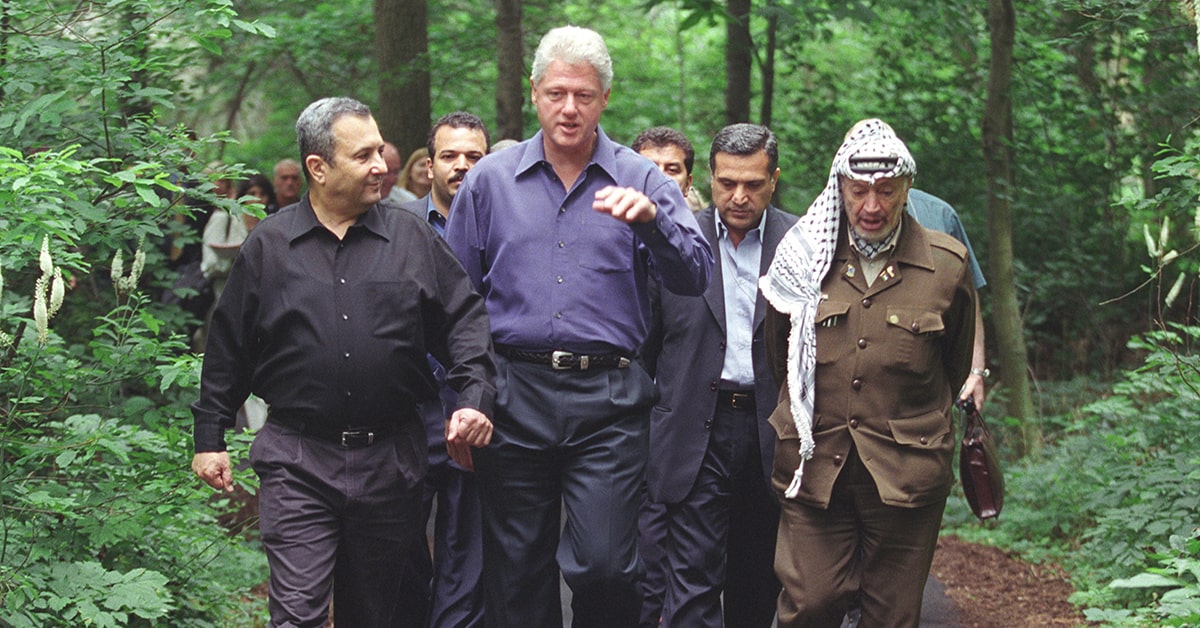
The search for peace in the Middle East is the subject of this documentary directed by Dror Moreh. However, more than the account of the talks, “The Human Factor”—faithful to its title—focuses on the individuals who played a significant role in this attempt at reaching peace that was so close to success. Of course, the role of individuals in shaping social processes, in this case, political leaders, has always been a subject of debate among historians, political scientists, philosophers, and other analysts. At the same time, however, there are circumstances that not even the most skillful leader can control. The Israeli Prime Minister Yitzhak Rabin was killed by a right-wing extremist Jew. A few years later, Yasser Arafat died, without concluding the peace process initiated in the 1990s.

The Israeli-Palestinian conflict is one of the longest in recent history. At times, finding a solution to it seems all but illusory. However, with the end of the Cold War in 1991 that left the United States as the only surviving superpower, Washington attempted to play the role of peacemaker in the region. Attempts were made to arrange peace talks between Syria and Israel. Then the efforts focused on the Palestinian-Israeli situation.

The film structure is based on interviews with the six members of the American team that negotiated and eventually facilitated the meetings between the Israeli and Palestinian leaders. Those skillful diplomats were Martin Indyk (twice ambassador to Israel), Gamal Helal (Arabic interpreter and Special Envoy to the Middle East), Aaron David Miller (long-time analyst for the State Department), Daniel Kurtze (who had been ambassador to Egypt and Israel), Robert Malley (Bill Clinton’s appointee for Arab-Israeli affairs), and Dennis Ross (adviser on the Middle East for four different American governments). Ross coined the term “human factor” about the importance of human contact during actual encounters, which made Moreh choose the title of his movie.
Even though we all know the end result of those attempts at peace in the Middle East, the director manages to introduce elements of surprise and suspense, thanks to the revelations made by the interviewees. That makes one of the interesting cinematic aspects of “The Human Factor”. Rabin, for instance, had some reservations regarding some formal aspects of his meeting with Arafat. He demanded that Arafat didn’t wear military uniform, a demand that the Palestinian leader at first rejected. He finally settled for a “safari-style” attire. What started as a strictly official affair without any sign of unnecessary warmth between the parties eventually evolved into an agreeable connection between the two leaders.
After the killing of Rabin, the talks would continue. Israel’s Ehud Barak would make a proposal that Arafat wouldn’t accept because it was presented as an end to a conflict that still had many issues unanswered for Palestinians. It would also leave the Temple Mount—a place sacred for Muslims—in Israeli hands. After the death of Arafat, Mahmoud Abbas became the Palestinian leader. But things have changed on both sides in terms of their internal politics. In Israel, the right became more and more influential, and the dominant presence of Benjamin Netanyahu as its leader is an indication of that. Religious parties and extreme right groups in the Jewish settlement have also increased their political weight. At the same time, the more liberal-minded Labour Party has lost influence. Palestine has experienced political changes, too: the secular PLO has had to cede some power to the Islamist Hamas in Gaza.
“We keep the (peace) process alive,” says one of the interviewees, “but that also keeps the status quo.” Another American negotiator is also candid about the U.S. role in the peace process, indicating that they are not really “honest brokers” since Israel is an ally. “We talk with the Israelis and try to persuade the Palestinians to accept those proposals. In a way, we are lawyers for the Israelis; there is no lawyer for the Palestinians in our team.”
“The Human Factor” is a documentary with many interesting behind-the-scenes revelations of the failed peace process, some anecdotes. It may also provide some insight for any future attempt at finding that elusive peace between Israelis and Palestinians.
A film that will appeal to those interested in contemporary international affairs, international politics, Jewish-Palestinian relations, and of course, the importance of human contact.
In English, Hebrew, and Arabic (English subtitles). Theatrical release: May 7, 2021. Duration: 118 min

Other articles from mtltimes.ca – totimes.ca – otttimes.ca

ESCAPE FROM AUSCHWITZ: The fight for credibility

MANK: The dark side of the dream factory