
In 2025 and 2026, an increasing number of Canadian homeowners are choosing to stay in their current home rather than list it for sale. This shift is especially visible in high-demand markets like Calgary and across Alberta, where elevated housing prices, persistent interest rate pressures, and critically low inventory have made finding a suitable replacement property increasingly difficult.
This article compares the real costs, lifestyle impacts, and long-term value of renovating versus moving, with a focus on common projects such as kitchens, basements, bathrooms, and modern design upgrades. The perspective comes from Space Reno, a Calgary-based renovation contractor, though the goal here is to provide neutral, educational guidance rather than a sales pitch. Whether you live in Calgary, Toronto, or anywhere across Canada, the considerations are remarkably similar.

Renovate or Move? Key Questions to Ask Yourself First
Before diving into spreadsheets or browsing real estate listings, the most important step is asking yourself a fundamental question: is it smarter for my family to renovate or move in Canada right now? The answer depends on several factors that only you can evaluate honestly.
Start by examining your current mortgage rate compared to what you would pay today. Many homeowners locked in rates between 1% and 3% during 2020–2022, and moving now means replacing that loan with one at 4% to 6% or higher. Even if the new home is similar in size, your monthly payments could jump by 30% to 50%. This alone makes staying put financially attractive for many Canadians.
Consider your space and layout needs. Has your family grown? Do you now work from home several days a week and need a dedicated office? Are there rooms sitting unused that could be converted into something more functional? These questions help clarify whether your house lacks fundamentals or simply needs updating.
Location matters enormously. Think about your commute, proximity to schools, and emotional attachment to your neighbourhood. In Calgary, where CTrain access and urban sprawl significantly affect daily life, staying in a well-located area often outweighs the appeal of more square footage farther out.
The reality of tight housing inventory in major Canadian cities makes finding that perfect house extremely difficult. Calgary, Toronto, and Vancouver all report listings at one to two months’ supply, far below the balanced six-month mark. Bidding wars inflate prices 10% to 20% above asking, and the homes that do come up rarely check every box. Encourage yourself to list your must-haves versus nice-to-haves, and see whether those priorities can be achieved within your current footprint through renovation.
The Real Cost of Moving in Canada vs Renovating Your Home
Moving costs in Canada can easily reach tens of thousands of dollars, much of which does not come back as equity in your new property. Understanding these expenses is essential before deciding to sell.
For a typical $700,000 home in Calgary, transaction and moving costs can aggregate $30,000 to $50,000 or more. Here is what that breakdown typically looks like:
| Expense | Approximate Cost | |
| Realtor commissions (3–5% split) | $21,000–$35,000 | |
| Legal and notary fees | $1,000–$3,000 | |
| Land transfer taxes (varies by province) | $0 (Alberta) to 2%+ elsewhere | |
| Professional movers | $2,000–$5,000+ | |
| Home inspections | $500–$1,000 each | |
| Staging and pre-sale repairs | $5,000–$10,000 | |
| Overlapping mortgage or rent | $3,000–$10,000 | |
| Contrast this with common renovation budgets. A mid-range kitchen refresh in Calgary runs $25,000 to $60,000, a bathroom project costs $15,000 to $30,000, and developing an unfinished basement typically ranges from $40,000 to $90,000. These investments often increase both daily comfort and resale value. |
For that same $700,000 Calgary home, transaction and moving costs alone can rival a serious renovation budget that transforms kitchens, bathrooms, or basements. The difference is where your money goes. Renovation spending is directed into a tangible asset—the home itself—whereas much of moving expense is transactional and non-recoverable.
Hidden and Ongoing Costs: Insurance, Utilities, and Commuting
Moving can also change your annual property taxes, home insurance premiums, and utility costs in ways that are easy to overlook during the excitement of house hunting. Larger suburban homes in Alberta’s winters can push assessments 10% to 20% higher, while insurance premiums may rise 15% to 30% for bigger footprints or updated property values.
Commuting changes deserve serious consideration. Calgary families relocating outward may face an additional 20 to 40 kilometres of daily driving, adding $2,000 to $4,000 in annual fuel costs and time losses equivalent to a full workday each month. That stress and expense compound year after year.
Compare this to renovating in place. Upgraded insulation, high-performance windows, or modern lighting can reduce long-term energy bills by 20% to 40% in cold Alberta winters. Rather than paying more to commute farther, you invest in making your existing home cheaper and more comfortable to operate.
Market Reality: High Prices, Limited Listings, and Interest Rate Pressure
The 2024–2025 Canadian housing market has been defined by low inventory, intense competition for family homes, and many mortgages renewing at significantly higher rates. Surveys show that 94% of Canadian homeowners intend to stay in their current home for at least the next year, with 24% explicitly citing the rising cost of living as their primary deterrent to moving.
In Calgary and other Alberta cities, demand has remained strong. Average prices for family homes have pushed into the $650,000 to $750,000 range, making trading up to a larger property harder than ever. Many Canadians who might have moved five years ago now find themselves priced out of the upgrade market.
Moving often means giving up a low-rate mortgage taken between 2020 and 2022 and replacing it with a higher-rate loan in 2025–2026. Even if the new home is similar in size, monthly payments can increase by $500 to $1,000. For many families, this financial penalty simply does not make sense.
Limited listings also make it extremely difficult to find a home with the exact mix of features—an extra bedroom, a home office, a modern kitchen, a finished basement. This scarcity is why many owners choose to customize what they already have rather than compete in bidding wars for imperfect alternatives.
Pandemic-Era Shifts: More Time at Home, New Space Needs
The pandemic and subsequent hybrid work trend fundamentally changed space needs for many Canadians. Home offices, better sound insulation, multi-use basements, and more comfortable living areas became priorities rather than luxuries.
Many Canadians realized their existing homes had good bones but poor layouts or outdated finishes. This made the renovation more attractive than competing in a hot market for properties that still needed work.
Material and labour shortages during 2020–2022 caused delays and cost spikes of 20% to 30% on many projects. By 2025–2026, however, supply chains have largely stabilized, making planning more predictable and budgets more reliable. This improved environment benefits homeowners ready to invest in their current house.
How Renovations Improve Comfort, Function, and Long-Term Value
Modern renovations are not just cosmetic. They can dramatically change how a home functions day to day, addressing the specific needs that might otherwise drive a family to move.
Targeted projects—kitchens, bathrooms, basements, lighting, and ceilings—can add both livability and resale appeal for Canadian buyers. Research shows that 37% of planned renovations target kitchens and bathrooms, reflecting these rooms’ outsized impact on daily life and property value.
Most buyers in Calgary and other Canadian cities look for move-in-ready homes with updated finishes, energy-efficient features, and functional layouts. Homes with recent improvements can command a 8% to 12% premium over dated properties.
Homeowners should balance renovating for themselves with renovating for the market. Extremely personal design choices—like ultra-custom finishes or unusual colour schemes—might hurt resale value even if they bring short-term enjoyment. Neutral palettes and timeless designs tend to appeal to the broadest range of future buyers.
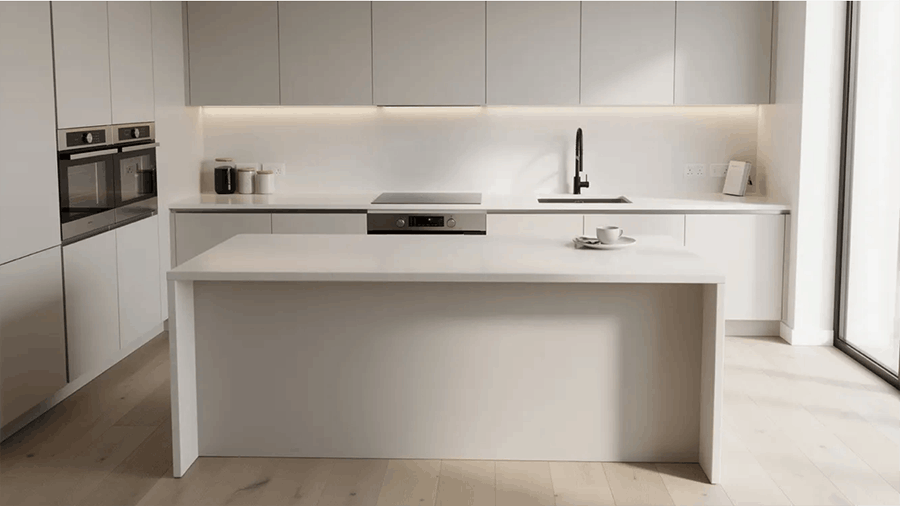
Kitchens and Bathrooms: High-Impact, Everyday Upgrades
Kitchens and bathrooms remain two of the most influential spaces for both quality of life and resale value in Canadian homes. These rooms see heavy daily use and make an immediate impression on potential buyers.
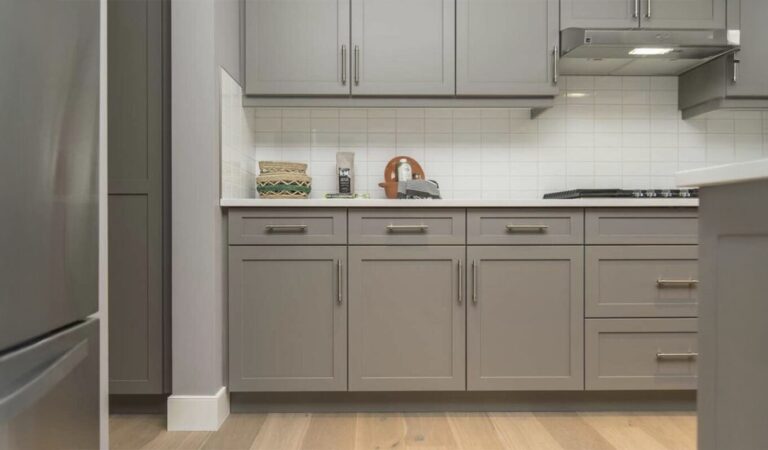
Typical Calgary kitchen projects include refacing cabinets ($10,000 to $20,000), replacing countertops with quartz ($100 to $200 per square foot), updating backsplashes, adding soft-close storage, and installing efficient fixtures. A well-planned kitchen refresh costs $20,000 to $40,000, while full gut remodels run $60,000 or more.
Bathroom projects in the $15,000 to $30,000 range can include modern tiling, improved ventilation to prevent mold, waterproofing, and quality fixtures. Space Reno’s approach to bathroom renovation in Calgary , including walk-in showers and vanities, emphasizes clean lines, durable materials, and neutral palettes that fit both condos and detached homes.
Prioritize ventilation, waterproofing, and quality installation in these rooms. Cutting corners on bathroom waterproofing, for example, can lead to $5,000 or more in repair costs down the road from leaks and water damage.
Basements in Calgary and Across Canada: From Storage to Living Space
Unfinished or underused basements represent one of the biggest opportunities for Canadian homeowners seeking additional space without moving. These areas can become family rooms, guest suites, rental suites where permitted, home gyms, or dedicated offices.
Rough 2025 Calgary cost ranges run $40,000 to $90,000 to turn an unfinished basement into a functional living area, depending on size and features such as bathrooms, bedrooms, bars, or specialized rooms. This works out to approximately $40 to $90 per square foot for a typical 1,000-square-foot space.
The lifestyle benefits of a finished basement are immediate, though the return on investment at resale is partial rather than full, typically 50% to 70% recouped. A well-designed basement is attractive to buyers but may not return 100% of its cost. Still, if the alternative is spending $40,000 or more on moving costs that provide zero equity return, basement development often makes more sense.
Cold-climate planning points matter in Calgary: R-20+ insulation, vapor barriers to prevent moisture problems, egress windows for safety and code compliance, and soundproofing between floors all contribute to a basement that feels like genuine living space rather than a dark afterthought.
Modern Ceilings, LED Lighting, and Acoustic Comfort
Ceilings and lighting are often overlooked but have a major impact on how updated a home feels, especially in older Calgary houses and condos with dated finishes.
Stretch ceilings represent a modern option that Space Reno specializes in: eco-certified materials, sleek finishes including matte, glossy, and printed options, minimal maintenance, and seamless integration with LED lighting. These systems can transform the perceived quality of any room without the mess of traditional ceiling replacement.
LED lighting offers significant benefits for Canadian homes: lower energy use during long winters when lights run many hours daily, better colour rendering with CRI ratings of 90+, and flexible layouts including pot lights, cove lighting, and feature pendants. LEDs can reduce lighting energy use by up to 80% compared to incandescent bulbs.
Acoustic improvements through sound-absorbing surfaces—including certain stretch ceiling and wall solutions—can reduce noise transfer by 20 to 40 decibels in multi-storey homes and condos. These infrastructure-style upgrades subtly increase perceived quality and value even when buyers cannot immediately identify the specific products used.
Energy Efficiency and Eco-Friendly Upgrades
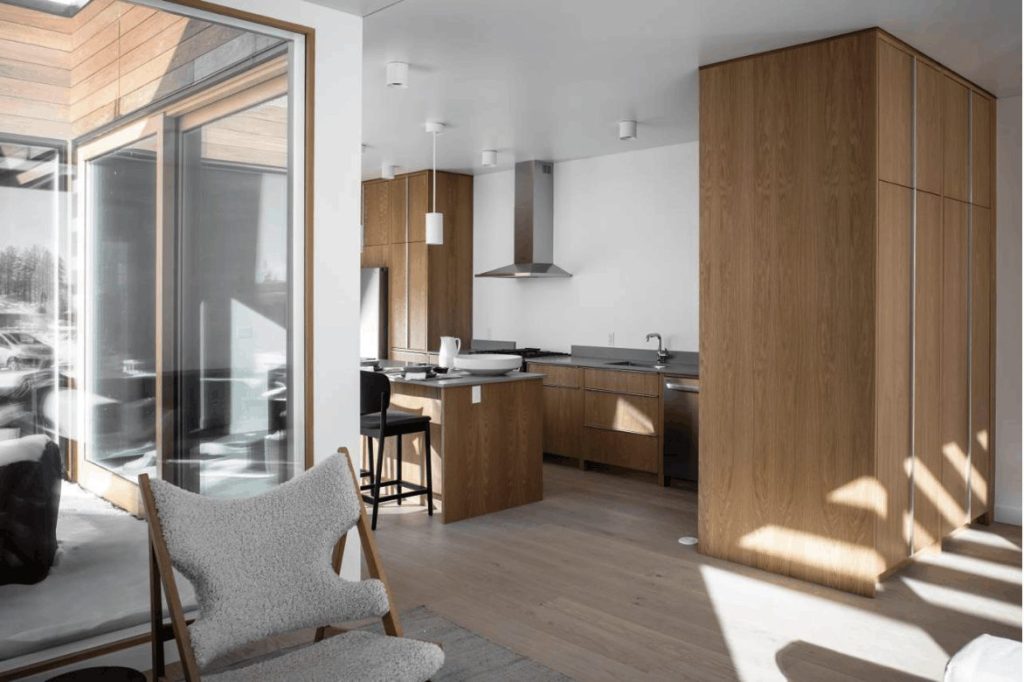
Upgrades that matter in Canadian climates include improved insulation (R-50 in attics can reduce heat loss by 30%), high-performance triple-pane windows, better air sealing, efficient heating systems, and LED lighting throughout.
While items like windows or insulation may not return 100% of their cost at resale, they can significantly reduce monthly bills and improve comfort. Research shows that 62% of Canadian homeowners now prioritize energy-efficient features, with Atlantic Canada leading at 71% adoption.
Space Reno uses eco-certified ceiling materials and pairs them with efficient lighting to reduce energy use while improving indoor air quality and humidity control—particularly important in Alberta’s variable climate.
Homeowners should check federal and provincial rebate programs for energy-efficient renovations, as these can offset project costs and accelerate payback periods.
Planning a Renovation Instead of Moving: Steps for Canadian Homeowners
Successful renovation planning for full home renovations Calgary and complete house remodeling in follows a logical sequence that helps avoid costly surprises and ensures the final result matches your vision.
Start by defining your goals clearly. Are you renovating primarily for your own lifestyle, or with an eye toward maximizing resale value in the future? These priorities can sometimes conflict, and knowing your primary driver helps guide every subsequent decision.
Set a realistic budget based on current Calgary and Canadian market rates. Add a contingency of 10% to 20% for surprises—older homes, especially, can reveal outdated wiring, problematic plumbing, or structural issues once walls come down. Industry data suggests roughly 30% of renovation projects encounter unexpected extra work.
Assess your current structure before committing to plans. For projects involving load-bearing walls or significant layout changes, consulting an engineer ensures safety and code compliance. This step is especially important in older Calgary homes.
Design the space using 3D renders or detailed plans to visualize flow and function before construction begins. Select materials that balance durability, aesthetics, and code requirements. Schedule work realistically—most projects run 4 to 12 weeks depending on scope.
Early conversations with contractors who understand local codes in Calgary and across Alberta are essential. Condo owners should also verify strata rules and approval processes, which can add time to project timelines.
Consider phasing larger renovations. Doing a basement one year and a bathroom the next spreads both cost and disruption, making ambitious projects more manageable for household budgets.
Living Through Renovations vs Moving Twice
Compare the disruption of living through a renovation—dust, noise, partial access to rooms—with the disruption of staging, selling, and moving to a new home. Neither option is stress-free, but they involve different types of inconvenience.
Large projects may require temporary relocation for two to four weeks, but many smaller renovations allow homeowners to stay on-site. For example, a family can use a finished basement while the main floor kitchen undergoes a remodel.
Strategies for living through renovations include setting up temporary kitchens with microwaves and hot plates, establishing clear boundaries with contractors about work hours (typically 7 AM to 5 PM), and designating one part of the house as a quiet zone.
While renovations are undeniably inconvenient, they avoid the stress of bidding wars, house hunting, and adapting to a new neighbourhood. The disruption is temporary—measured in weeks rather than the permanent adjustment of moving to an unfamiliar location.
When Moving Might Still Make More Sense
Even for renovation-focused homeowners, there are situations where moving remains the better choice. Honest self-assessment is essential.
Renovation cannot fix certain core issues. If your lot size is too small for a necessary addition, if structural limitations make your desired layout impossible, or if major foundation problems would cost $20,000 to $100,000 to address, moving may be more practical than dealing with these constraints.
If your renovation budget would exceed what the local market can support on resale by a large margin, you risk over-improving for the neighbourhood and losing money when you eventually sell. A $100,000 kitchen in a $600,000 home rarely makes financial sense.
Some scenarios simply require more space than renovation can provide. Families needing significantly more bedrooms, multigenerational living arrangements that cannot be accommodated by existing layouts, or those wanting acreage rather than city lots will likely find moving the only realistic option.
Speak with both a local realtor and a renovation contractor to compare best- and worst-case scenarios. Understanding your options from both perspectives helps you decide with confidence.
Location, Schools, and Lifestyle Considerations
Location often matters more than square footage. Proximity to work in downtown Calgary, access to the CTrain, quality schools, parks, and community ties all contribute to quality of life in ways that floor space alone cannot replace.
If you already live in a desirable neighbourhood, it can be significantly more cost-effective to renovate than to move to a similar area at 2025–2026 prices. The security and amenities of an established location have real value.
Conversely, if your area no longer feels safe, convenient, or aligned with long-term plans, even a beautiful renovation might not solve the deeper issue. No amount of upgrades can fix a problematic commute or a school district that does not meet your family’s needs.
Think in five- to ten-year horizons. Where do you want to be in 2030 or 2035 in terms of work, family size, and lifestyle? If your current location supports that future, investing in renovations makes strong sense. If fundamental changes are coming, moving might be the wiser investment of your resources.
Renovating Instead of Moving: Making the Decision with Confidence
The decision to renovate instead of moving comes down to several key themes that many Canadians are weighing right now: rising costs of moving, limited housing inventory, the ability to customize and modernize existing homes, and the benefits for comfort and potential resale value.
For many Canadian homeowners—especially those in strong markets like Calgary—renovating offers a way to stay in a preferred location while upgrading everyday life. Renovation spending dominated 2024 residential investment at 56%, representing $103 billion directed into improving existing homes rather than buying new construction. This trend reflects a practical response to market conditions.
Run your numbers carefully. Compare total moving costs plus new mortgage payments versus a well-planned renovation budget directed at your current property. The math often favours staying put, especially for those holding lower-rate mortgages from recent years.
Create a simple side-by-side comparison of renovate versus move, considering money, time, stress, and lifestyle factors. Involve the whole household in the discussion—different family members may weigh these factors differently.
For Calgary and Alberta homeowners ready to explore what is possible in their current home, consulting with a local renovation specialist like Space Reno can clarify feasibility and costs. Homeowners across Canada should seek reputable, experienced contractors in their own cities who understand local codes and market expectations. The right advisor helps you expect realistic outcomes and avoid costly surprises, whether you ultimately decide to renovate or move.
Other articles from totimes.ca – otttimes.ca – mtltimes.ca