
Impaired Driving
Impaired driving continues to be one of the leading causes of criminal death in Canada. Despite decades of awareness campaigns, enforcement programs, and evolving legislation, hundreds of lives are lost every year due to drivers under the influence of alcohol or drugs. In response to these ongoing tragedies—and in anticipation of cannabis legalisation—Canada overhauled its impaired driving laws in 2018 and 2019 through major updates to the Criminal Code and provincial legislation.
Key changes included the introduction of mandatory roadside alcohol screening, the use of oral fluid drug testing devices, and the establishment of new criminal offences based on drug concentration levels in the blood. These measures aimed to modernise enforcement, increase detection, and ultimately deter impaired driving more effectively than before.
But now that several years have passed since the reforms were enacted, the critical question remains: have these tougher laws actually worked? Have they made Canadian roads safer—or simply led to more charges being laid? This article explores the legal changes, trends in enforcement, statistical outcomes, expert insights, and ongoing challenges to determine whether Canada’s stricter impaired driving regime is delivering real results.
The Legal Overhaul: What Changed and Why?
The most significant legal reforms to Canada’s impaired driving laws came with the passing of Bill C-46, which came into force in two parts: the first in June 2018, just before recreational cannabis was legalised, and the second in December 2018. These changes represented one of the most comprehensive updates to impaired driving laws in Canadian history.
Mandatory Alcohol Screening (MAS)
One of the most controversial and impactful changes was the implementation of mandatory alcohol screening. This allows police officers to demand a roadside breath test from any lawfully stopped driver, even if there are no visible signs of impairment. The goal was to eliminate the “reasonable suspicion” requirement that had previously limited testing. Countries like Australia and Ireland have seen major declines in impaired driving after introducing similar policies.
Drug-Impaired Driving and Oral Fluid Testing
In preparation for cannabis legalisation in October 2018, the federal government also addressed drug-impaired driving. Police officers were granted the authority to use oral fluid screening devices (such as the Dräger DrugTest 5000 and SoToxa) to detect the presence of drugs like THC (tetrahydrocannabinol), the primary psychoactive compound in cannabis. If the screening test is positive, officers can demand a blood sample or perform a more detailed Drug Recognition Expert (DRE) evaluation.
New “Per Se” Drug Offences
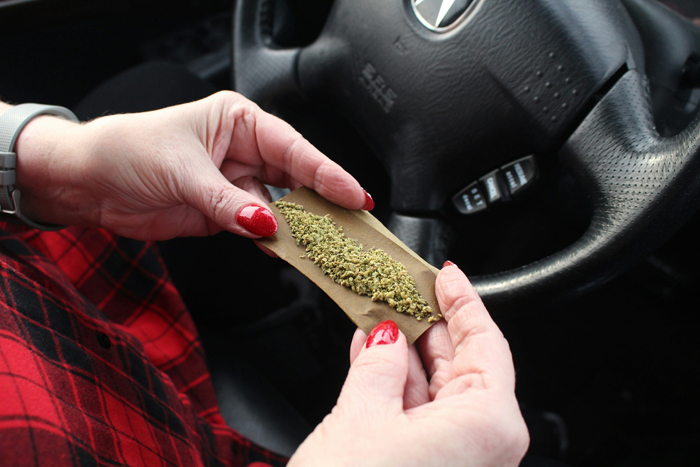
Bill C-46 also introduced new offences based on specific blood-drug concentrations, much like the existing 0.08% blood alcohol limit. These include:
- Having 2 to 5 nanograms of THC per millilitre of blood within two hours of driving (a summary offence).
- Having more than 5 nanograms of THC per millilitre (a more serious offence).
- A combination offence for drivers with both alcohol and THC in their system at certain levels.
These thresholds aimed to create clear, enforceable standards—but they’ve also raised questions about fairness, given the complex relationship between THC levels and actual impairment.
Streamlining the Legal Process and Increasing Penalties
In addition to creating new offences, the reforms simplified and modernised the impaired driving provisions in the Criminal Code. They eliminated outdated legal loopholes and defences, such as the “bolus drinking” defence, and increased penalties for serious offences:
- Minimum fines for first-time offenders rose.
- Maximum prison sentences were increased—up to life imprisonment in cases causing death.
Provincial Measures and Zero-Tolerance Policies
Alongside the federal changes, provinces and territories introduced complementary administrative sanctions, including:
- Immediate roadside licence suspensions
- Vehicle impoundments
- Zero-tolerance rules for cannabis and alcohol use among young, novice, and commercial drivers
For example, Ontario introduced stricter penalties for drivers caught with cannabis in their system, even in the absence of clear impairment. These administrative penalties operate separately from criminal charges and can be applied immediately by police officers at the roadside.
The Numbers: Are Impaired Driving Rates Going Down?

One of the key ways to assess the impact of Canada’s tougher impaired driving laws is by looking at national statistics—charges laid, collisions prevented, and lives saved. While initial numbers may suggest that enforcement has improved, the broader picture is more nuanced.
Rise in Charges Post-Legislation
According to Statistics Canada, the number of police-reported impaired driving incidents increased significantly following the 2018 legislative changes. In 2019, there were over 85,000 incidents, a 19% rise from the year before—the first major increase in almost a decade.
This spike was largely attributed not to a surge in impaired drivers, but to enhanced detection:
- Mandatory alcohol screening allowed officers to test more drivers without suspicion.
- Increased use of roadside drug screening and better training for officers led to more drivers being charged with drug-impaired driving.
Sharp Increase in Drug-Impaired Driving Cases
One of the clearest trends post-legalisation has been the dramatic rise in drug-impaired driving charges:
- In 2019, drug-impaired driving cases rose by 43%, reaching over 6,400 incidents nationally.
- Although these cases still represented less than 10% of total impaired driving charges, the jump was significant—driven in part by the use of oral fluid testing devices and public confusion over cannabis use and driving.
Yet, proving impairment by drugs in court remains more complex than alcohol-related cases. The science linking THC levels to driving behaviour is still evolving, and this has resulted in lower conviction rates compared to alcohol charges.
Fatalities Show a Promising Decline
Despite the increase in charges, a more promising trend emerged in terms of public safety. In 2019, the number of impaired driving deaths dropped by a lot, reaching the lowest rate ever recorded in Canada.
This suggests that:
- Deterrence may be improving—drivers are more cautious, knowing they could be randomly tested.
- Police are removing more impaired drivers from the road before serious harm occurs.
- Public awareness campaigns about cannabis and driving may have had some positive effect.
Regional Disparities
Impaired driving rates continue to vary significantly by province:
- Prince Edward Island, Saskatchewan, and Newfoundland and Labrador recorded the highest per-capita rates.
- Ontario and Quebec consistently reported the lowest, likely due to differing enforcement models and urban density.
Additionally, provinces like British Columbia rely more heavily on administrative penalties (such as Immediate Roadside Prohibitions) rather than laying criminal charges. This enforcement style may impact how trends are interpreted across jurisdictions.
The COVID-19 Effect
It’s important to note that 2020 and 2021 saw a drop in overall impaired driving incidents, primarily due to COVID-19 lockdowns, travel restrictions, and fewer vehicles on the road. As a result, 2019 remains the most relevant benchmark for measuring the immediate impact of the new laws under typical conditions.
On the Ground: How Are These Laws Being Enforced?
While Canada’s impaired driving laws have become stricter on paper, their real impact depends heavily on how they are enforced at the roadside and in the courtroom. From mandatory testing to evolving technology, police services across the country have had to adapt quickly to this new legal landscape.
Mandatory Screening in Practice
With the introduction of mandatory alcohol screening (MAS), police officers no longer need to observe signs of intoxication to demand a roadside breath test. Any driver who is lawfully stopped—whether for speeding, a broken taillight, or at a RIDE checkpoint—can be tested immediately.
This change has significantly increased the number of roadside tests conducted, particularly during high-enforcement periods like long weekends and holidays. According to police services, MAS has removed officer discretion, helping reduce bias and increase overall detection.
Drug Testing Challenges
For drug-impaired driving, enforcement is more complex. Officers must still have reasonable grounds to suspect drug use before demanding an oral fluid sample. Devices like the Dräger DrugTest 5000 and SoToxa are used to detect substances like THC, cocaine, and methamphetamines.
However, early concerns have been raised:
- The accuracy of roadside oral fluid testers can be affected by cold weather, a significant issue in many parts of Canada.
- Devices have produced false positives or inconclusive results, leading to concerns about wrongful penalties.
- Officers must still rely on Drug Recognition Experts (DREs) to perform evaluations and confirm impairment—yet not all detachments have immediate access to trained DREs.
Training and Resources
To support the rollout of these new laws, the federal government invested over $160 million in police training, public education, and new equipment. This included:
- Increasing the number of certified Drug Recognition Experts.
- Training officers in Standard Field Sobriety Testing (SFST).
- Distributing roadside screening devices to law enforcement agencies across the country.
Still, rural and northern communities sometimes lack sufficient resources to enforce the laws uniformly, creating regional disparities in how impaired driving is policed.
Use of Administrative Penalties
Some provinces, particularly British Columbia, rely heavily on administrative penalties like Immediate Roadside Prohibitions (IRPs) rather than criminal charges. In these cases:
- Drivers can lose their licence, have their vehicle impounded, and face fines—without ever being criminally charged.
- IRPs allow for swift penalties and are often seen as more efficient than lengthy court proceedings.
This model has been praised for reducing court backlogs, but some legal experts warn that administrative penalties offer fewer procedural protections for drivers.
Concerns About Racial Profiling
Mandatory screening has also raised concerns about racial profiling, particularly among Indigenous, Black, and other racialised communities. Civil liberties advocates argue that while MAS is supposed to be neutral, it could still be applied unevenly depending on who gets stopped in the first place.
Some police forces, including the RCMP, have responded by adopting “test everyone” policies at traffic stops to avoid bias. However, calls remain for more data transparency and oversight to ensure fair and equitable enforcement across all communities.
Public Opinion and Expert Insight
General Public Sentiment
Surveys conducted around the time of cannabis legalisation showed that impaired driving was a top public concern. In fact, nearly 1 in 5 Canadians said their biggest worry about legal cannabis was the risk of increased drug-impaired driving.
Public support for mandatory alcohol screening has generally been high. Many Canadians welcome the idea that impaired drivers are more likely to be caught, especially during high-risk times like holiday weekends or late-night checkpoints.
Advocacy Groups: Strong Support for Tougher Measures
Organisations like MADD Canada (Mothers Against Drunk Driving) have long advocated for stricter impaired driving enforcement. MADD strongly supported Bill C-46 and continues to endorse mandatory screening and zero-tolerance policies.
According to MADD, random breath testing is a proven deterrent that has helped reduce impaired driving deaths in countries like Australia and Ireland.
“Mandatory alcohol screening saves lives—period,” said MADD CEO Andrew Murie in a 2018 press release.
Legal Community: Mixed Reactions
Not all experts agree. Many criminal defence lawyers and legal scholars have raised concerns about Charter rights, particularly Section 8, which protects Canadians against unreasonable search and seizure.
Critics argue that allowing police to conduct breath tests without suspicion could pave the way for arbitrary stops, especially in communities that already experience over-policing. Several constitutional challenges to mandatory screening are still before the courts, although no major ruling has overturned the legislation so far.
Additionally, legal experts point out that roadside drug screening technology is still evolving, and its results are not always reliable—raising concerns about wrongful suspensions or charges based on flawed test results.
Law Enforcement Perspective
Police forces across Canada have largely praised the new laws, especially mandatory alcohol screening, which they say makes enforcement simpler, safer, and more consistent.
Some officers report that the ability to test any driver has reduced accusations of bias because they no longer need to justify suspicion before requesting a breath sample. However, many acknowledge that drug-impaired driving remains difficult to detect, prosecute, and prove—despite having better tools than in the past.
RCMP and municipal police have also called for ongoing investment in training and equipment, particularly in remote and northern areas.
Community Voices
Among the public, opinions vary depending on personal experience. Some citizens have expressed support after seeing friends or family affected by impaired drivers, while others worry about increased police powers and the potential for discrimination during traffic stops.
There is also growing concern in racialised communities that members may be disproportionately targeted under the guise of “routine stops,” even though mandatory screening laws are supposed to apply equally to all drivers.
Source List:
- Statistics Canada – Impaired Driving in Canada, 2019
- Statistics Canada – The Daily (July 15, 2021)
- Public Safety Canada – 2021 National Data Report on Drug-Impaired Driving
- Justice Canada – Bill C-46 Summary
- RCMP Manitoba – Mandatory Alcohol Screening Release
- MADD Canada – Statement on MAS
- Global News – Roadside Drug Testing Accuracy
- Government of British Columbia – IRP Program Fact Sheet
- Canadian Civil Liberties Association – MAS and Charter Concerns
Other articles from mtltimes.ca – totimes.ca – otttimes.ca