Waze APP – Last autumn the City of Montreal announced it was partnering with Waze, a ‘community-based traffic and navigation app’ aimed at helping drivers avoid traffic by displaying road conditions in real-time and helping them find the fastest route to their destination.

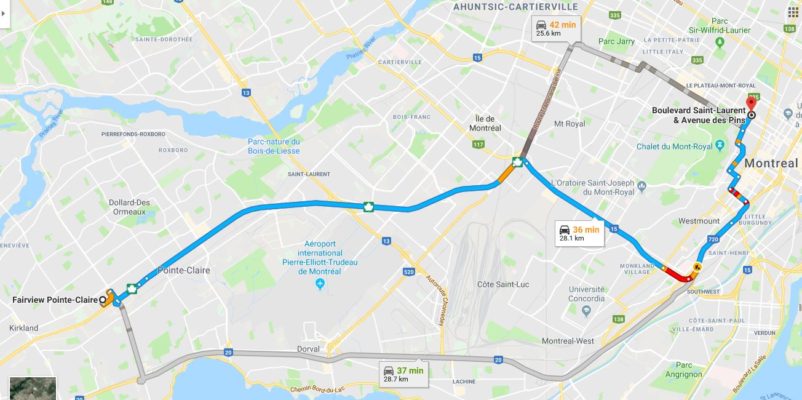
The partnership’s goal was to help drivers navigate the tsunami of road work and detours plaguing the city. All 19 boroughs were partnered with Waze and any road construction project posted on the city’s Info-Travaux page would be posted on the app, including Transport Quebec updates on all major traffic issues due to construction – especially the work around the Turcot Interchange revamp and construction of the new Champlain Bridge. But now that it is in action, is it really working for drivers?
With all the other infrastructure work going on in Montreal, including the tearing up of Ste. Catherine street from Bleury to Atwater over a 2-3 year period, one would hope it truly does help ease the pain.
In general, the majority of reviews on several Canadian websites and forums for the Waze app, were quite positive – although there is no other city with Montreal’s unique and extreme traffic conditions. Many users found it extremely helpful, very reliable and often better than Google Maps for mobile users – which is interesting enough, since Google bought Waze in 2013. Waze even supplies some data on collisions or slow-downs directly onto Google Maps. Another little tidbit many people might not be aware of is the app was first developed by Waze Mobile, an Israeli company.
Positive reviews ranged from ‘Highly accurate and informative’ to ‘Haven’t experienced any issues with it whatsoever’. Just recently, during another weekend of major road and highway closures, several drivers weighed in on their experience using Waze – especially drivers from the West Island area having to head east to get to their destinations. Most of the drivers were very happy with the results – with the app constantly collecting data, it adapted quickly and provided the fastest route possible.
But there were a few people who said it proved to be unreliable. One user claimed the app directed her to make a left turn at a busy intersection, where it was not allowed. Another user said the app had him heading down a one-way street, the wrong way. And it wasn’t the only complaint.
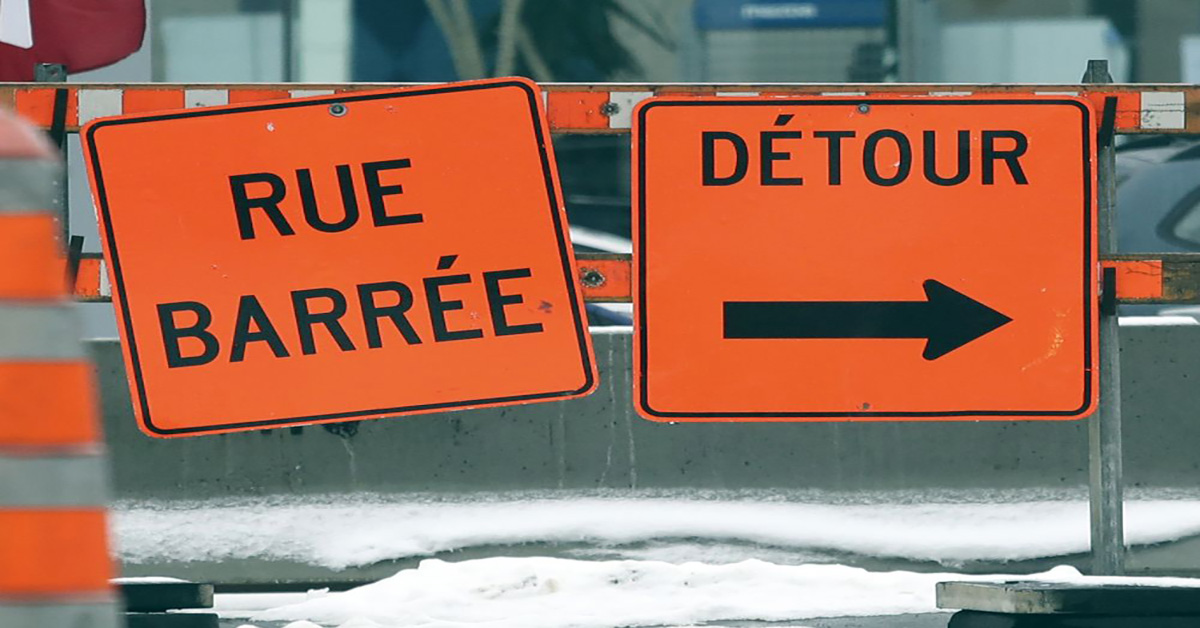
A visitor from Toronto claimed the app took him and his family ‘on a wild goose chase’ trying to get into the downtown area. He said the app directed them one way, but the detour signs on the roads directed them another. It got to the point that they found themselves heading back east, until a Good Samaritan kindly helped them navigate their way. It brings up the question again if Waze is reliable enough for Montreal’s orange-cone woes. One needs to pay careful attention to the actual, physical detour signs, which in our city can quickly override any app available.
There is one complaint both sides seem to agree on, but don’t consider a real deterrent, is their cellphone battery being drained far too quickly – as the app still sends data to Waze, even when it’s not navigating the roads. But that could easily be resolved by having your cellphone charger on hand.
For those not familiar with Waze, it is really quite simple to understand and use. The app consistently recommends the fastest routes, based on real-time driving data. You enter your destination address and just drive with the app open on your cellphone (which at the same time sends Waze traffic and other road data) and you can also choose to take ‘a more active role by sharing road reports on accidents, police traps, or any other hazards along the way, helping to give other users in the area a ‘heads-up’ about what’s to come’.
Waze also collects data from groups of online map editors who ensure the data in their area is as up-to-date as possible. With over 90 million users worldwide to date, it is becoming the ‘go to’ option for drivers to navigate the roads. And if it can actually take on Montreal roads and traffic with real-time accuracy and reliability, it would be very impressive.
Other articles from mtltimes.ca – totimes.ca – otttimes.ca

Airspace to Russian aircraft closed by Canada and European Union

Mtl Wine Gal bringing affordable high-end private imported wine to your table
The New COVID-19 travel rules for Canada