Throughout Canada’s long history, it has prided itself with the fact that the multiculturalism mosaic has built this country, and is one of the distinctions that it is widely known for.
However, according to Professor George Elliott Clarke, the E.J. Pratt Professor of Canadian Literature at the University of Toronto, it is not exactly the case, especially when it comes to the Black community’s role in this example of nation-building.
“For so many years, Canada has hidden our history. There have been lies that were perpetuated to erase the Black fact, as if we only arrived yesterday. However, there must be a move to add the Black community to that history, and they should be recognized as one of Canada’s founding peoples,” he said during a recent phone interview. “Canada as an entity, society, nation and culture was always seen as a country that was superior to the United States, and we continue to vaunt ourselves as quite superior to the rabble and mobs of the American democracy. But in actuality, we ourselves are not really better than America.”
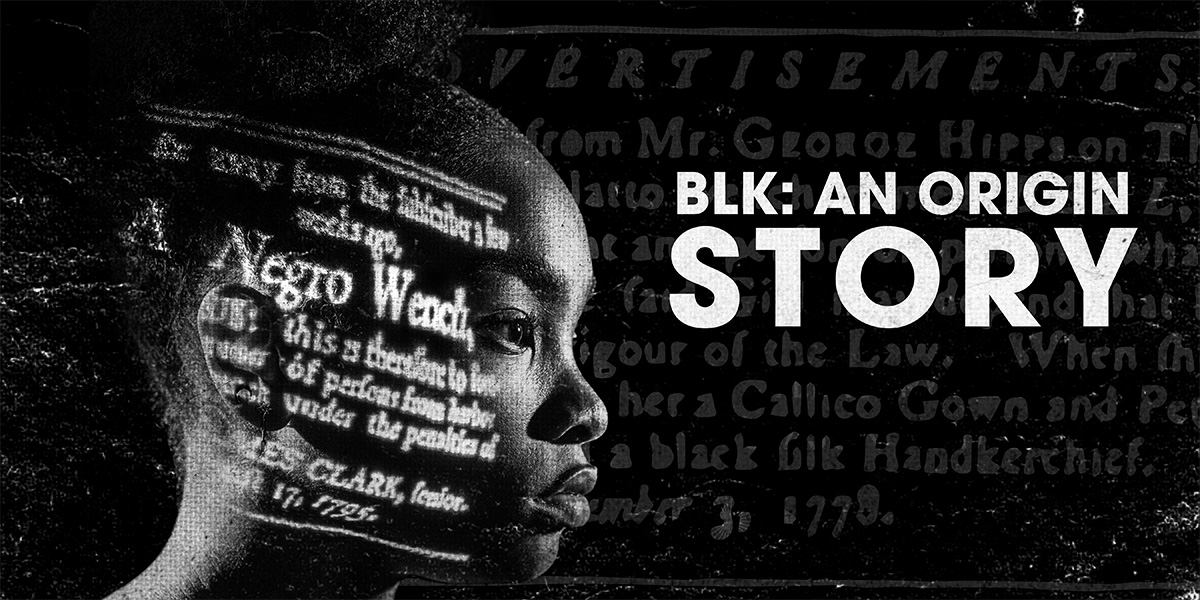
One example of bringing this hidden aspect of Canadian history to light is “BLK: An Origin Story”, a four-part documentary series that aired on History Television and is now available for streaming on the Global TV app and on STACK TV. The series, which loudly proclaims the theme that “Black History is Canadian History”, examines four parts of Canada, and how their respective Black communities played a major role in the founding and development of Canada. The four episodes deal with Nova Scotia, Ontario, Vancouver and Montreal, in particular the Little Burgundy district.
Professor Clarke states that the reason Little Burgundy became a magnet for Montreal’s Black community was due to the city’s then-mighty reputation as the financial capitol of Canada, as well as a major hub for trading, finance and transportation.
“A lot of major railways ran through Montreal, and those railways employed a lot of Black men who resided in the city as porters,” he said. “And these porters were looking for the areas that surrounded Windsor Station to live in, and that’s how they discovered Little Burgundy. It was seen as a great place to live that was close to where they worked.”
Besides being a convenient neighborhood to live for the many railroad porters, Little Burgundy’s reputation also grew as a major entertainment hub for Montreal, with the legendary nightclub Rockhead’s Paradise being its nucleus, which showcased many of the greatest Black American musicians and entertainers such as Louis Armstrong, Duke Ellington, Ella Fitzgerald and Sammy Davis, Jr.; it also nurtured the talents of up and coming local jazz musicians like Oscar Peterson and Oliver Jones.
“Little Burgundy helped put Montreal on the map and solidified its place as a major go-to area for great nightclub entertainment,” said Professor Clarke. “During the 1920s and 30s, many Americans gravitated to Montreal and Little Burgundy as a place to escape Prohibition and satisfy their endless thirst for alcoholic beverages and good times; it was the closest big city that catered to those appetites.”
However, the glamourous reputation of Little Burgundy as a major entertainment attraction also came with a double-edged sword. Professor Clarke states that although there were better employment opportunities and a better modicum of respect for Montreal’s Black community than that of their counterparts in Nova Scotia, Montreal’s nightclubs still practiced segregation during that heyday period.
“There was still discrimination against Black performers in Montreal, as well as the perception that Black people were a lower class in Quebec society. That unfortunately was further enforced when then-Premier Maurice Duplessis began to shut down the entertainment industry because he followed the thinking of theologians and the Catholic Church that these type of entertainment activities were lewd, and a crackdown was necessary,” he said.
Professor Clarke recognizes the fact that the Black community’s roots in Quebec goes back to the colonial New France era of the 17th century, where out of the 5,000 slaves who inhabited the colony, 2,000 of them were Blacks. And with the growing tensions within the province’s Black community over the past 45 years – which were exemplified by the police shootings of Anthony Griffin and Marcelus Francois, the deteriorating relations with the police, the ghettoization of Montreal North and Bill 21, to name a few – he hopes that such projects like “BLK: An Origin Story”, can open many eyes and minds to the hidden history of Canada’s Black communities and their contributions to the making of a nation.
“Quebec society needs to reflect on behalf of the descendants of the original settlers,” he added. “They must be recognized as a founding people, not as perpetual interlopers.”

Other articles from mtltimes.ca – totimes.ca – otttimes.ca

Airspace to Russian aircraft closed by Canada and European Union

Mtl Wine Gal bringing affordable high-end private imported wine to your table

The New COVID-19 travel rules for Canada