

How a Quebec credit union helped build the payment network that transformed Canadian banking
When you tap your card at a Montreal café or send money to a friend via e-Transfer, you’re using a uniquely Canadian innovation that has quietly revolutionized how we handle money. Interac, the payment network that processes over 20 million transactions daily across Canada, has deep roots in Quebec and its story is one of collaboration, innovation, and distinctly Canadian problem-solving.
In 1984, five major Canadian financial institutions came together with an ambitious goal: create a single national network that would allow Canadians to access their money from any bank machine, anywhere in the country. Royal Bank, CIBC, Scotiabank, TD Bank, and crucially, Quebec’s Desjardins Group, formed the Interac Association a cooperative venture that would fundamentally change Canadian banking.
Before Interac, withdrawing cash meant finding your own bank’s ATM during limited hours. “What started as a solution for shared cash dispensing evolved into Canada’s most trusted payment brand,” explains the company’s history. By 1986, Bank of Montreal, Canada Trust, Laurentian Bank, National Bank, and Credit Union Central of Canada had joined, creating a coast-to-coast network that set Canada apart from other countries still relying on fragmented banking systems.
The Numbers Tell the Story
In 2024, the network processed 1.4 billion e-Transfer transactions alone, up from 1.2 billion the previous year: a 23% increase. Overall, Canadians use Interac products over 20 million times per day on average.
Recent data shows that 82% of Canadian adults now regularly use Interac e-Transfer, making it more popular than traditional debit transactions for online purchases and regular transfers. The service moved over $554 billion CAD in a 12-month period in 2024, demonstrating just how central it has become to the Canadian economy.
Business adoption has been particularly strong. Small business transactions via Interac e-Transfer grew 38% in 2022, with entrepreneurs using the service to accept customer payments, pay suppliers, and even handle payroll. By 2024, over 20% of all e-Transfer transactions involved a business as either sender or receiver.
How Interac Technology Actually Works
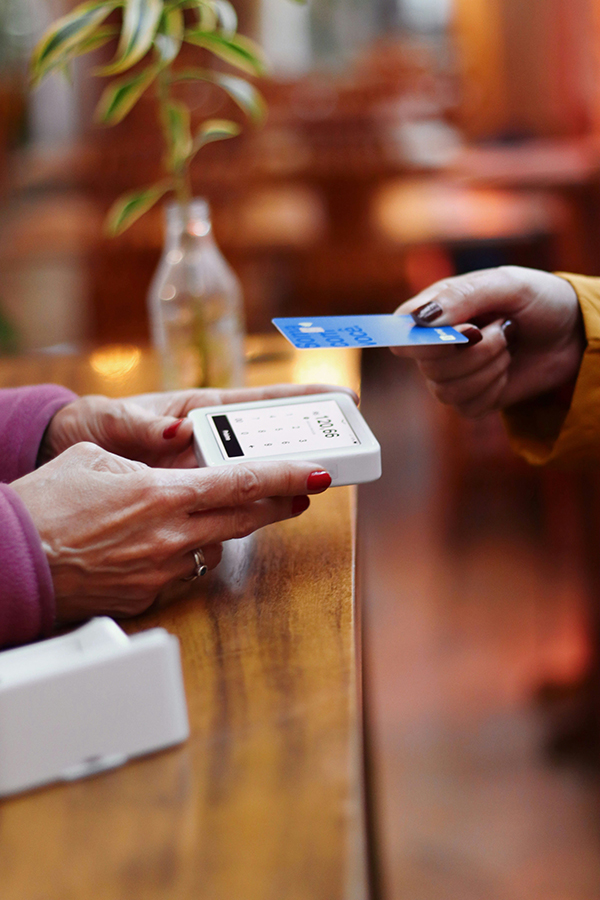
What makes Interac unique is its infrastructure. Unlike international payment processors like Visa or Mastercard that route transactions through global networks, Interac operates entirely within Canada, connecting nearly 300 financial institutions through a domestic network.
When you use Interac Debit, the transaction is processed through a PIN-based encryption system where your information is verified at a central server rather than stored on your card. This makes it significantly more secure than traditional magnetic stripe transactions. The network moved to EMV chip technology in 2007, adding layers of encryption that make cards virtually impossible to counterfeit.
Interac e-Transfer works differently. When you send money, the funds don’t actually move through email or text messages, these are just notification methods. The actual transfer happens through the secure Interac network, moving money directly between bank accounts. The recipient receives a notification and can deposit the funds, usually within minutes, by answering a security question or through auto-deposit settings.
The system’s security is bank-grade: 256-bit encryption, multi-factor authentication, and continuous fraud monitoring. The organization maintains one of the lowest fraud rates globally among payment networks.
Applications Across Industries
While most Canadians know Interac for splitting restaurant bills or paying rent, the network has expanded into virtually every sector of the economy. Retailers, utilities, landlords, and increasingly, digital businesses rely on Interac for fast, secure payments.
One growing application is in the online entertainment sector. Canadian online casinos and gaming platforms have widely adopted Interac e-Transfer as a preferred payment method because it offers players instant deposits with bank-level security while keeping transaction costs lower than credit card processing.
“Interac e-Transfer provides a fast and highly secure payment method that allows Canadians to transfer money from their Canadian bank accounts without risking divulging sensitive financial details,” notes industry analysis. For gaming platforms, this means players can fund accounts instantly while maintaining privacy, they share only an email address rather than credit card details.
Sites specializing in e-Transfer casino rankings, such as etransfercasinos.ca, have emerged to help Canadian players navigate which platforms offer the most seamless Interac integration, fastest withdrawals, and best security practices. The gaming industry’s embrace of Interac demonstrates how a payment method designed for everyday transactions has proven versatile enough for specialized applications.
The 2018 Restructuring
In February 2018, Interac underwent a significant transformation. The original Interac Association and Acxsys Corporation merged into a single for-profit entity called Interac Corp. This consolidation was designed to streamline governance, accelerate innovation, and better position the organization to meet evolving consumer expectations.
“This is an important milestone for Interac and a critical step in our continued success as one of Canada’s leading, economical payments providers,” said Mark O’Connell, President and CEO, at the time. “Our new corporate structure will allow us to better invest in our innovation pipeline and potential, while continuing to provide the essential payment services that millions of Canadians, thousands of businesses and hundreds of financial institutions rely on every day.”
The move proved prescient. The COVID-19 pandemic, arriving just two years later, accelerated Canada’s shift to digital payments. Interac e-Transfer usage surged as Canadians sought contactless ways to pay and businesses pivoted to online operations. The unified corporate structure allowed Interac to respond quickly, supporting small businesses and consumers through the transition.
Innovation for the Digital Economy
Today, Interac is pushing beyond payments into digital identity verification. The company launched Interac Verified, a service that leverages the banking information Interac already holds to let Canadians verify their identity online for government services, age-restricted purchases, and sensitive transactions.
“Why show a stranger where you live and how much you weigh?” asks Lauren Mostowyk, Interac’s VP of product experience and innovation. “A credential on your phone could verify your age through our network, because we already have these details through your banking information.”
The company acquired 2Keys, a digital identity specialist, and obtained exclusive Canadian rights to SecureKey’s digital ID technology. In 2025, Interac launched Konek, a service enabling cardless transactions and enhanced security features.
Perhaps most significantly, in September 2025, Interac expanded e-Transfer access to payment service providers under the new Retail Payment Activities Act. This opens the network to more financial technology companies while maintaining strict security standards.
Keeping Money in Canada
One often-overlooked advantage of Interac is its Canadian ownership structure. Unlike Visa and Mastercard, which route transactions internationally and collect fees that leave the country, Interac keeps payment infrastructure in Canada.
This became a talking point during 2025’s trade tensions. Research showed that 42% of Canadians were unaware that using Interac Debit helps small businesses save on transaction fees compared to credit cards. When tariff discussions heightened awareness of supporting Canadian businesses, Interac transaction volumes at small and medium businesses increased notably, with 15 million more Interac Debit transactions from April to July 2025 compared to the same period in 2024.
The Quebec Connection Continues
Throughout its evolution, Desjardins has remained a key Interac stakeholder, ensuring Quebec’s unique financial landscape is represented in the network’s development. The credit union’s cooperative model —focused on member benefit rather than shareholder profit— aligns with Interac’s original vision of collaboration over competition.
Today, Interac’s board includes representatives from financial institution shareholders, maintaining the cooperative spirit that launched the network four decades ago. Desjardins continues as one of eight major shareholders in the modernized Interac Corp., alongside the big banks.
For Montreal residents, this means seamless access to a payment system that works whether they’re banking with Desjardins, National Bank, one of the big five banks, or smaller credit unions. The network’s inclusivity —a direct result of that 1984 decision to build a truly national system— means nearly every Canadian financial institution participates.
Looking Forward
As Interac celebrates over 40 years of operation, the organization is positioning itself as a digital infrastructure company rather than simply a payments processor. Beyond moving money, Interac aims to become the backbone of Canada’s digital identity system and a platform for secure data exchange.
The company processes an estimated $18.6 million in transactions daily, connecting Canadians to their money and increasingly, to digital services that require verified identity. From filing taxes through the Canada Revenue Agency to accessing provincial health services, Interac Verified is expanding the network’s role beyond commerce into civic infrastructure.
For Montreal and Quebec, Interac’s story is a reminder that major Canadian innovations can emerge from cooperation rather than competition, and that Quebec’s financial institutions have played —and continue to play— essential roles in building national systems. The Desjardins employee who uses Interac to grab lunch at a food truck in Place des Arts is using technology their institution helped create in 1984, now supporting transactions that were unimaginable at its founding.
In an era of global tech giants and borderless digital payments, Interac remains distinctly Canadian, built by Canadian banks including Quebec’s Desjardins, regulated by Canadian authorities, and designed specifically for how Canadians live and transact. From its cooperative origins to its current role as a digital infrastructure provider, Interac’s four-decade evolution reflects broader Canadian values: collaboration, security, and the belief that financial services should serve people first.
And it all started with five institutions, including one from Quebec, deciding to work together to solve a problem. That spirit of cooperation, very much alive in Montreal’s business community today, helped create a payment system that processes billions of transactions while maintaining trust and security, a distinctly Canadian success story with Montreal at its heart.
Other articles from totimes.ca – otttimes.ca – mtltimes.ca