Food waste is a pressing issue globally, and Quebec is no exception. Studies indicate that nearly 58% of food produced in Canada is lost at various stages of the food supply chain—from production to final consumption. This waste carries serious economic, environmental, and social consequences, including financial losses for businesses, increased greenhouse gas emissions, and persistent food insecurity.
In response, professionals in the food sector—restaurants, hotels, and distributors—are increasingly aware of the need to adopt sustainable practices and implement effective food management strategies. Colabor, a well-established company in Quebec, serves as a credible partner, helping businesses reduce food waste while optimizing their resources.
Understanding the Impact of Food Waste
Food waste is more than just discarded food. It encompasses losses throughout the supply chain: over-purchasing, improper storage, unused surplus, oversized portions in restaurants, and expired products. For businesses, these losses translate not only into direct costs but also into indirect costs, including reputational damage, especially among consumers who prioritize social responsibility and sustainability.
From an environmental perspective, wasted food contributes significantly to organic waste. When sent to landfills, it generates methane, a potent greenhouse gas. Socially, food waste exacerbates inequalities, with large amounts of edible food being lost while many people struggle to access sufficient nutritious meals.
Practical Steps for Better Food Management
Reducing food waste requires a structured, proactive approach. Colabor highlights practical measures that are realistic and actionable for businesses in the food sector:
- Optimizing procurement: Planning purchases based on actual needs and consumption forecasts reduces surplus and unsold items.
- Monitoring and analyzing inventory: Tracking product shelf life and identifying loss points helps businesses make informed decisions.
- Employee training: Educating staff on proper storage, handling, and preparation of food can significantly reduce waste.
- Redistribution and donation: Surplus food that is still safe for consumption can be donated to community organizations, addressing food insecurity while reducing waste.
- Innovative kitchen practices: Adapting menus, offering flexible portion sizes, and creatively using ingredients can maximize the use of available food.
Colabor: A Credible and Committed Partner
In Quebec, Colabor stands out for its commitment to sustainability and resource optimization. The company provides not only efficient logistical solutions for responsible procurement but also shares its expertise to help clients implement measurable practices that reduce food waste. This collaborative approach enables businesses in restaurants, hotels, and distribution to turn a complex challenge into a real opportunity for economic and environmental performance.
Colabor’s role extends beyond supplying food products; it includes education and guidance, helping decision-makers and employees adopt sustainable habits. Reducing food waste becomes a shared goal, engaging all participants along the food supply chain.

Turning Food Waste into Sustainable Opportunities
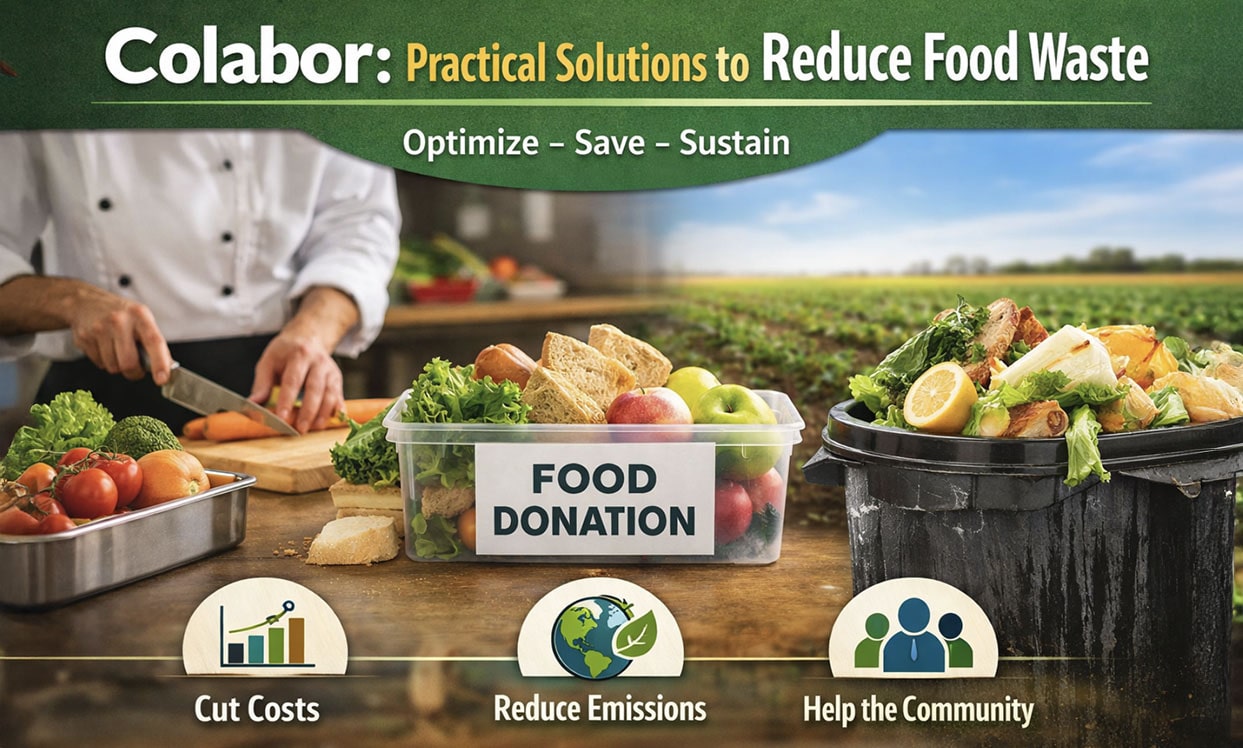
Food waste is a growing concern in Quebec and around the world, impacting the economy, the environment, and society. Businesses in the food, restaurant, and hospitality sectors face not only financial losses but also reputational risks when surplus food goes to waste. Colabor provides practical solutions to manage inventory efficiently, train staff, and redistribute surplus food, helping organizations reduce waste, cut costs, and support their communities. By adopting these strategies, companies can turn food waste into an opportunity for sustainability and operational improvement.
A Collective Challenge and Business Opportunity
Reducing food waste is not solely a matter of social responsibility—it is also an opportunity for business optimization. Efficient food management lowers costs, improves profitability, and builds consumer trust. Adopting sustainable practices meets the growing expectations of customers and communities for responsible, transparent businesses.
By raising awareness and offering concrete solutions, Colabor plays a central role in promoting sustainable practices and combating food waste. The company’s recommended practices demonstrate that it is possible to combine economic performance, environmental responsibility, and positive social impact.
Final Thoughts
Food waste remains a significant challenge in Quebec and worldwide. Yet practical solutions exist, and their adoption brings measurable benefits for businesses and society. As a credible and committed partner, Colabor equips the food sector with the tools and guidance needed to manage resources better, reduce losses, and contribute to a more sustainable future. Reducing food waste is a collective effort, but it also presents an opportunity to create value and enhance efficiency across the food supply chain.
Other articles from totimes.ca – otttimes.ca – mtltimes.ca