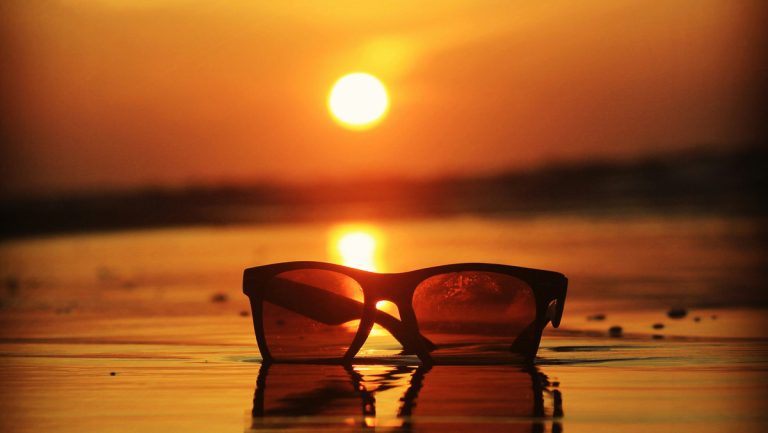

Imagine a world without eye glasses. Difficult right? For this to happen everyone would need to have a perfect vision. But for some of us, this isn’t possible. If you think about it, eyewear technology has advanced greatly for centuries allowing for glasses to correct many different visual impairments.
Glasses have been around for over 700 years evolving century after century to what we now know as modern and trendy eyewear. The use of glasses has shifted and nowadays some just simply wear them because they look cool.
But how did it all start?

13th-century eye glasses
We can’t begin without at least mentioning the invention of the first glasses. Made from metal, leather and even bones, the first pair of glasses were essentially 2 magnifying glasses united by the materials mentioned.
The main problem with these glasses was that they wouldn’t stay on your face. As the demand for innovative eyewear grew so did the technological advancement in producing different designs of glasses. Initially, many tried uniting the glasses’ frame with ribbons or leather straps.
Then in the early 1700s, the first eye glasses with temples were invented, two rodes fitted to the frame that would sit on your ears. From there onwards, glasses were experimented with and brought us other innovations that we still use today.
Two in one eye glasses
The most common glasses used are to help correct single visions, such as farsightedness and nearsightedness. If you find it difficult to see things up close but looking further away is not blurry, then you may need a pair of glasses to correct Hyperopia (farsightedness). The latter means you can see the bus on its way to the bus stop but the timetable in front of you is blurry.
Farsightedness can also be mild and you may only require a pair of reading glasses or computer glasses to help correct your near vision.
If far objects instead are blurry but your near vision is clear, this would be called Myopia (nearsightedness). The bus timetable is now clear but you have difficulty seeing the bus far away.
But for some, it’s not as simple as correcting a single visual impairment. If you find yourself needing to correct multiple visions then you may want to thank who invented bifocals. Another glasses innovation to dominate the scene allowed for spectacles to correct both far and nearsightedness in one frame. The first pair of bifocals were invented back in the 1760s and have developed into trifocals and progressive glasses.
Bifocals, trifocals and progressive are one and the same, meaning that they all correct more than 1 power value. Progressive glasses are however an evolution of bifocals, they allow for a smoother visual transition between the visual corrections and aesthetically look better.
A sustainable wear
As glasses increased in demand and were mass-produced goods, easier and quicker ways were found to satisfy the consumer’s needs. The fastest and inexpensive material used is plastic and many glasses are made from it.
But over the years, eyewear manufactures and designers have found more sustainable materials. Online eyewear retailers like SmartBuyGlasses are part of this sustainable journey, they help give back to the community and find innovative ways for you to find a pair of trendy eco-friendly glasses, like their Oh My Woodness! Collection.
Other articles from mtltimes.ca – totimes.ca – otttimes.ca

Quebec new measures due to COVID-19 surging cases – List of mandatory closures

Latest data sees rise in separation anxiety as Canadian pet owners start to return to office