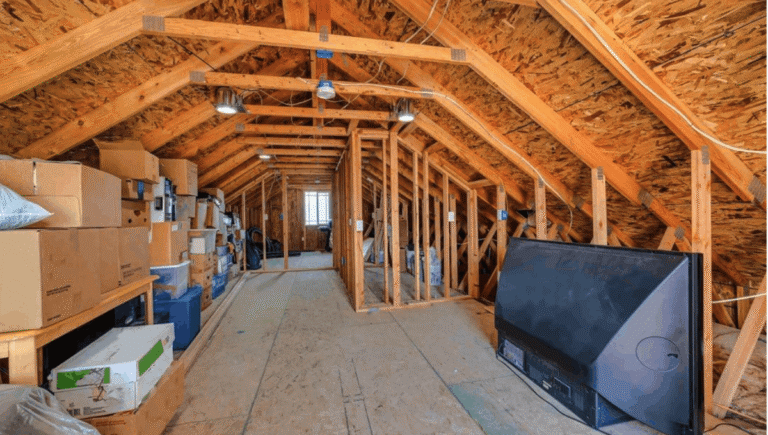
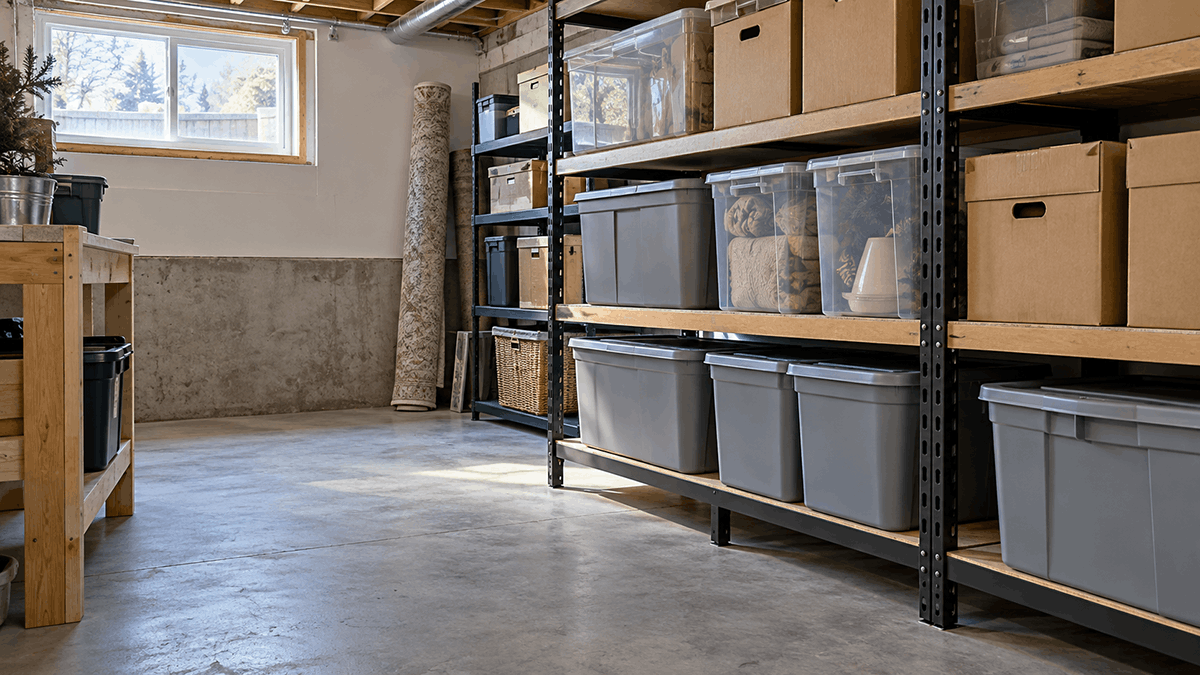
A basement shelf can go untouched for months. That makes it a useful place to check for pest activity before a problem spreads into living spaces. The goal isn’t to empty the entire room at once, but to make signs easy to spot and understand where they are coming from.
Start with the items nearest exterior walls, windows and plumbing. Look for damaged packaging, gnaw marks, small droppings, shed insect skins or unusual debris in corners. Check the shelf beneath each box as well as the contents. If you find droppings or nesting material, avoid stirring up dust and follow your local public health guidance for safe cleanup.
Cardboard boxes are convenient but can conceal damage and absorb moisture. For long-term storage, closed storage bins make it easier to see whether the container has been disturbed. Keep belongings off the floor where possible, leave enough room to inspect behind shelving, and discard unnecessary clutter. Food and pet supplies belong in well-sealed containers rather than open bags.
Pay attention to the room itself. Water near a foundation wall, a leaking pipe or a damp window well deserves repair regardless of whether pests are present. Inspect openings around pipes and cables, but do not block a vent that serves a building function. If insects keep appearing in one area, identifying the species is more useful than treating every insect as the same problem.
Take a dated photo of any new signs, and check the spot again after you’ve safely cleaned it. This makes it easier to distinguish an old issue from continuing activity. If the evidence returns, or if you cannot find where animals are entering, an inspection can help identify the cause before more belongings are affected.
For readers with property in Durham Region, local pest control information is available at https://pestcontroldurhamregion.ca/.
contributed post
Illustrative image of organized basement storage, created for this article | AI generated